News

Explore the latest news related to the Institute for Advanced Study and its community of scholars.

The Institute welcomes inquiries from the press regarding coverage of the Institute and its scholars, interviews, and filming. Please direct all inquiries to Lee Sandberg at lsandberg@ias.edu.
Type:

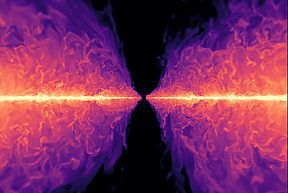
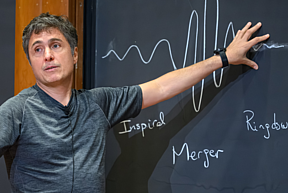
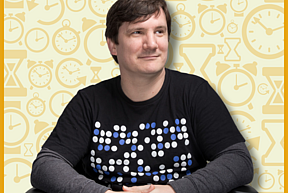
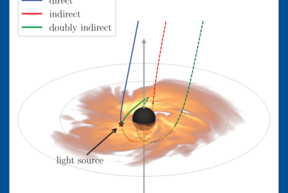
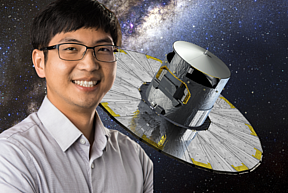
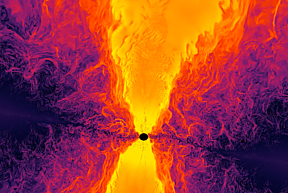
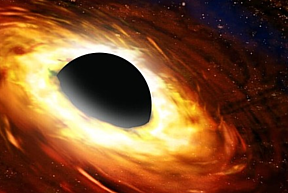
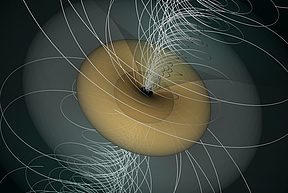
Building on decades of effort, Lizhong Zhang, Member (2023–24) in the School of Natural Sciences; James Stone, Professor in the School; and a team of astrophysicists have achieved a major milestone: developing the most comprehensive model to date of luminous black hole accretion. Their breakthrough allows scholars to "observe" such black hole systems not through a telescope, but through a computer.
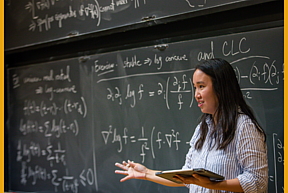
According to a recent article from Quanta Magazine, researchers working at the frontier of quantum physics have uncovered a “puzzling conundrum.” The story began nearly three decades ago, when Juan Maldacena, Carl P. Feinberg Professor in the School of Natural Sciences, demonstrated that complex calculations in string theory could be dramatically simplified using concepts from particle physics through a “holographic” correspondence. 

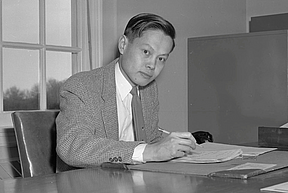
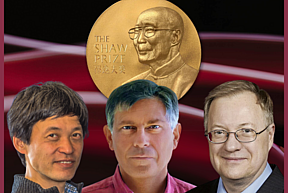
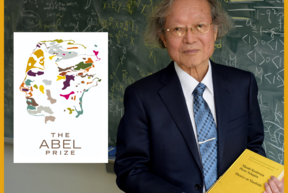
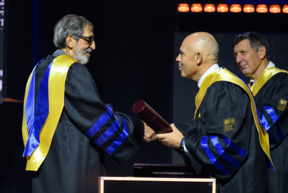
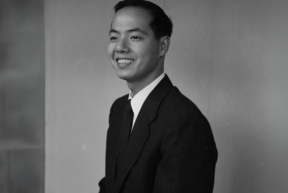
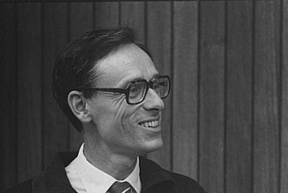
Chen Ning Yang (杨振宁), Faculty (1955–66) and Member (1949–54) in the Institute for Advanced Study’s School of Mathematics/Natural Sciences, passed away on October 18, 2025 at the age of 103. At the Institute, he produced a body of work which redefined how scientists conceptualize the fundamental symmetries of the universe. 

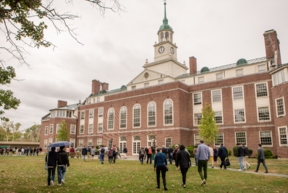
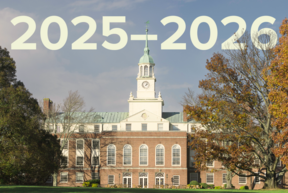
On September 22, the Institute officially began its 2025–26 academic year, bringing together scholars from around the globe to pursue a range of individual and collaborative projects. The 259 visiting scholars, representing 39 nations and more than 108 institutions, will work alongside the 26 permanent Faculty and 22 Emeriti, all of whom are leaders in their respective fields.

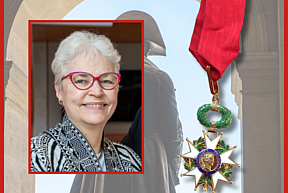
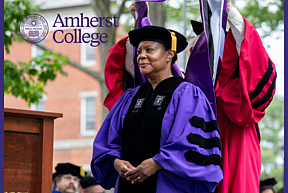
Victoria B. Bjorklund, IAS Trustee since 2006, will be presented with the insignia of Knight of the Légion d’Honneur, France’s most prestigious decoration, on September 10, 2025. The honor recognizes Bjorklund’s extraordinary commitment to building French-American ties through philanthropy and her remarkable service to French nonprofit initiatives.

In an article for Nature, Ananyo Bhattacharya, science writer at the London Institute for Mathematical Sciences and biographer of John von Neumann, founding Professor (1933–55) in the School of Mathematics, lays out the significance of a "major advance" in research into the Langlands program—the "grand unified theory of mathematics" first laid out by Robert Langlands, Professor Emeritus in the School.

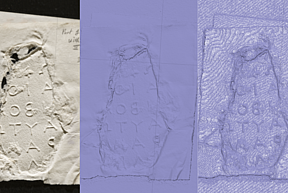
Renowned papyrologist Sofía Torallas Tovar from the School of Historical Studies has opened a new exhibition exploring the history and influence of Ezekiel’s Papyrus at the National Library of Spain. The exhibition invites visitors to view both original pages of the papyrus and digital recreations of the text in a journey that traverses both centuries and civilizations.

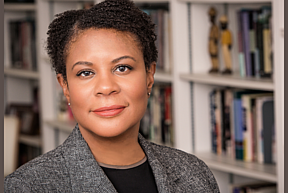
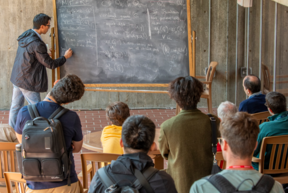
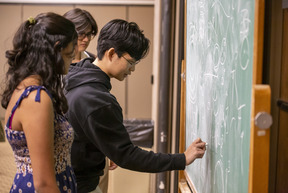
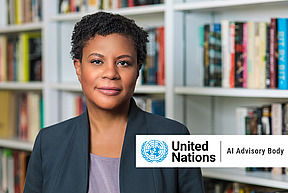
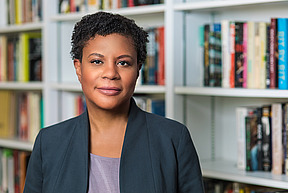
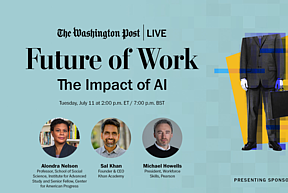
Does artificial intelligence have a role to play in pure mathematics—the kind of math still worked out on blackboards over decades? To interrogate this question, The New York Times spoke to IAS scholars from diverse disciplinary perspectives: Members Patrick Shafto (2021–23) and Andrew Granville (1989–91, 2007, 2009–10) in the School of Mathematics, and Alondra Nelson, Harold F. Linder Professor in the School of Social Science.

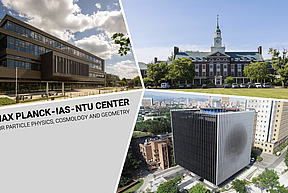
The Max Planck-IAS-NTU Center (MPC) for Particle Physics, Cosmology, and Geometry is a new global research center established to better understand the universe at all scales. The collaborative initiative will be led by Co-Directors Nima Arkani-Hamed, Gopal Prasad Professor in the School of Natural Sciences, Johannes Henn (MPP), and Daniel Baumann (NTU), both past Members in the School.

The Institute for Advanced Study is creating a new professorship in the theory of computing, supported by a gift from John Overdeck, the chair of the Institute’s Board of Trustees. The Betsey Lombard Overdeck Theory of Computing Professorship, in the Institute’s School of Mathematics, will be held by Irit Dveer Dinur, a preeminent theorist in computational complexity.

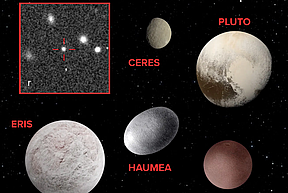
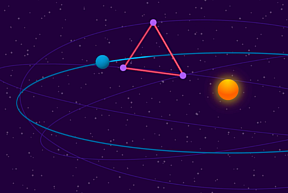
A small team led by Sihao Cheng, Martin A. and Helen Chooljian Member in the School of Natural Sciences, has discovered an extraordinary trans-Neptunian object (TNO) at the edge of our solar system. The TNO is potentially large enough to qualify as a dwarf planet, the same category as the much more well-known Pluto. The discovery has significant implications for our understanding of the Kuiper Belt and hypotheses that surround the existence of Planet Nine.

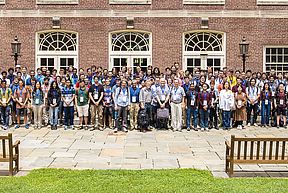
This month, an effort to unite three astrophysical research communities who exploit common techniques to understand waves in gaseous disks, galaxies, and stars was made by three scholars from the School of Natural Sciences. John N. Bahcall Fellow Chris Hamilton and Members Callum W. Fairbairn and Uddipan Banik organized a workshop titled IAStrophysical Waves, at which over thirty astrophysicists from across the globe were in attendance.

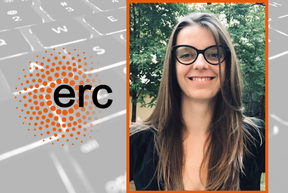
Magdalena Małecka, Deutsche Bank Member (2020–21) in the School of Social Science, has been awarded a Consolidator Grant by the European Research Council for a project titled “Encoded Knowledge: Epistemology of Computer Technology in Modern Economics.” Małecka's time at the Institute, which included visits to the Shelby White and Leon Levy Archives Center, was formative for her project.

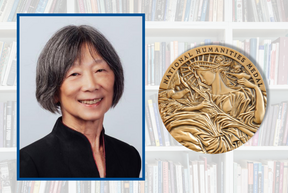
Sofía Torallas Tovar, a renowned papyrologist, has joined IAS as long-term Distinguished Visiting Professor in the School of Historical Studies. A prolific scholar of the ancient Mediterranean, Torallas Tovar's work encompasses Greek and Coptic magical texts, funerary practices and culture, patristic literature, the Coptic Bible, and Philo and Alexandrian Judaism.

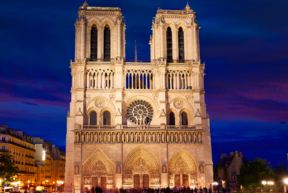
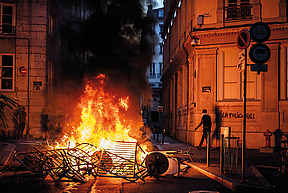
Drawing on her perspective as a historian of medieval religion and society and her specialization in medieval France, Anne Elisabeth Lester, Visitor in the School of Historical Studies, recounts the devastating fire that engulfed Notre-Dame Cathedral in Paris in April 2019, and the subsequent efforts to rebuild it, for the American Historical Association's newsmagazine Perspectives on History.

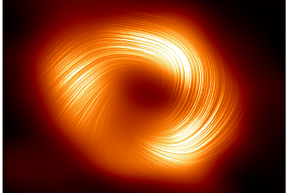
Frank and Peggy Taplin Member George N. Wong, Visitor Lia Medeiros, and Professor James Stone, all from the Institute's School of Natural Sciences, have developed an innovative technique to search for black hole light echoes. Their novel method, which will make it easier for the mass and the spin of black holes to be measured, represents a major step forward, since it operates independently of many of the other ways in which scientists have probed these parameters in the past.

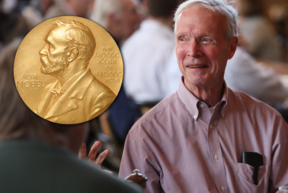
John J. Hopfield, Visiting Professor (2010–13) in the School of Natural Sciences, was named a recipient of the 2024 Nobel Prize in Physics “for foundational discoveries and inventions that enable machine learning with artificial neural networks.” He remains active within the Institute’s Simons Center for Systems Biology, which concentrates on research at the interface of molecular biology and the physical sciences.

The Institute for Advanced Study commenced its 2024–25 academic year on September 23, 2024, welcoming scholars from around the globe to its storied campus. The 267 visiting scholars, who began arriving earlier in the month, represent 35 nations and more than 130 institutions. Each is selected by the Institute’s permanent Faculty based on the promise of their research, spanning the sciences and humanities.

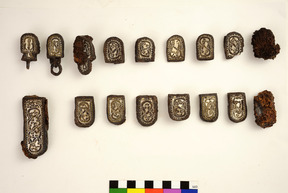
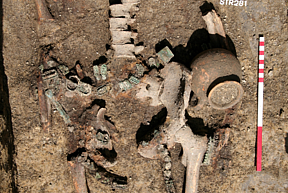
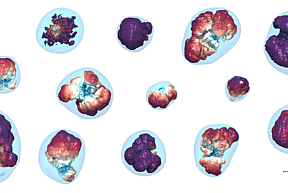
A new study of ancient DNA by a team of international researchers, including Patrick Geary, Professor Emeritus in the Institute for Advanced Study’s School of Historical Studies, provides insight into the development of and social structures within European rural communities following the fall of the Roman Empire. Some of these communities, about the formation of which little was previously known, would eventually become the basis for many modern European countries.

Tsung-Dao Lee (李政道), Member (1951–53, 1957–58) and Faculty (1960–62) in the Institute’s School of Mathematics/Natural Sciences, died on August 4. During his time at IAS, Lee was awarded the Nobel Prize in Physics alongside his Institute colleague Chen-Ning Yang (楊振寧) for revolutionary work on parity violation which fundamentally changed our understanding of the laws of physics.

Designed to facilitate work on projects and topics that are beyond the reach of a single scholar, discipline, or institution, the Jonathan M. Nelson Center for Collaborative Research has been launched at IAS, expanding the Institute's capacity for discovery across fields. The Center will provide the funding, space, infrastructure, and expertise for collaborative projects with partners across the globe. 

Daniela V. Gabor, Roger W. Ferguson, Jr., and Annette L. Nazareth Member in the School of Social Science, argues that the U.K. Labour party will aim to "rebuild the infrastructure that is crumbling after years of Tory underinvestment" by turning to private investment companies. She contends that this "will generate windfalls for investors and leave the rest of us worse off."

"As gig work grows ever more prevalent, critics have voiced major issues with these jobs, from their lack of labor protections to income instability and more. But if gig work is so bad, why do so many people do it?" In a piece for the Harvard Business Review, Lindsey D. Cameron, Member in the School of Social Science, reflects on the seven years that she spent conducting a wide-ranging study of the ins and outs of ride-hail work.

This Spring, the Institute's Arts lineup includes free, public programs with world renowned concert pianists, a three-time Grammy Award winning mezzo soprano, a finalist for the Pulitzer Prize, and a star Principal Dancer and current Artistic Director of the San Francisco Ballet.

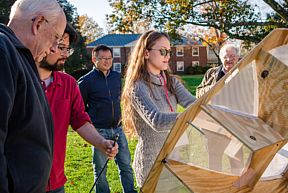
Scholars from the School of Natural Sciences brought together astrophysicists from across the world for a workshop focused on improving understanding of observations from the Event Horizon Telescope (EHT). The organizers also hosted an observing night for the IAS community, featuring a specially constructed radio telescope.

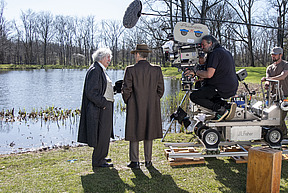
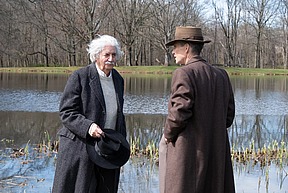
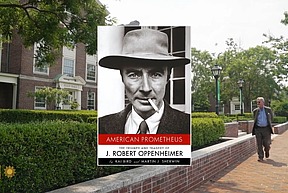
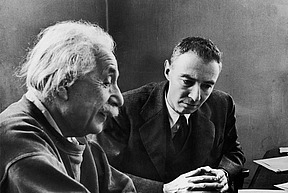
April 2022 saw Hollywood come to the Institute as filming for Christopher Nolan's Oppenheimer biopic took place on campus. This article, featuring comments from Members and Visitors across all four IAS Schools, provides insight into what it was like to share the campus with the production team and highlights our community's reactions to the film.

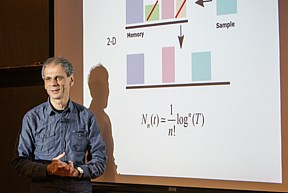
With the launch of chatbots such as ChatGPT and Bard, artificial intelligence (AI) has never been more prominently placed in the popular imagination. At IAS, the technology has been the subject of interdisciplinary discussion for some time. This article, featuring comments from scholars across all four IAS Schools, demonstrates the breadth of debate.

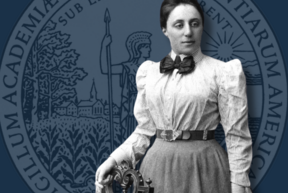
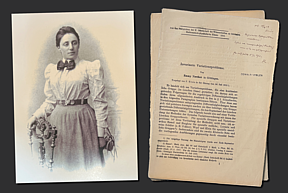
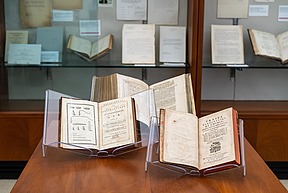
Regarded by Hermann Weyl as “the greatest [woman mathematician] that history has known”, Emmy Noether, past Visitor in the School of Mathematics (1933–35), was a pioneer in the field of abstract algebra. This June, the Institute is hosting a conference celebrating her contributions, which is accompanied by a display of archival materials in Fuld Hall.

On May 19, 2023, the IAS community came together to celebrate Founders Day, an annual event that honors sibling philanthropists Louis Bamberger and Caroline Bamberger Fuld, whose gift secured the foundation and endowment of IAS.

The Institute’s Communications team welcomes inquiries from the press regarding coverage of the Institute and its scholars, interviews, and filming. For information about the Institute and current research, visit About and the Ideas sections of the website.

Please direct all public relations inquiries to Lee Sandberg at lsandberg@ias.edu.