How "Effectively Zero-Knowledge" Proofs Could Transform Cryptography
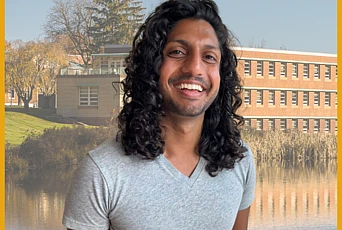
In a recent Scientific American article, a paper on zero-knowledge proofs by computational complexity theorist Rahul Ilango, Member in the School of Mathematics, was described as “the most creative and most consequential paper in the field [...] at least in the past decade.”
Zero-knowledge proofs—“the closest cryptography gets to magic”—are a special kind of protocol in which the author of the proof (the “prover”) can convince the reader (the “verifier”) that a given statement is true, without revealing anything further. This has many applications, from authentication systems to nuclear disarmament.
The article explains how Ilango has changed what we thought we knew about these kinds of proofs: He “realized there was a gap between how zero knowledge is defined and how it’s used.”
Ilango relied on ideas from Kurt Gödel, who was associated with the Institute’s School of Mathematics from 1933–34 until his death in 1978, to make this breakthrough.
Read the article in full at Scientific American and learn more about Rahul Ilango’s work in this Q&A.