IAS Welcomes 259 New and Returning Scholars for 2025–26
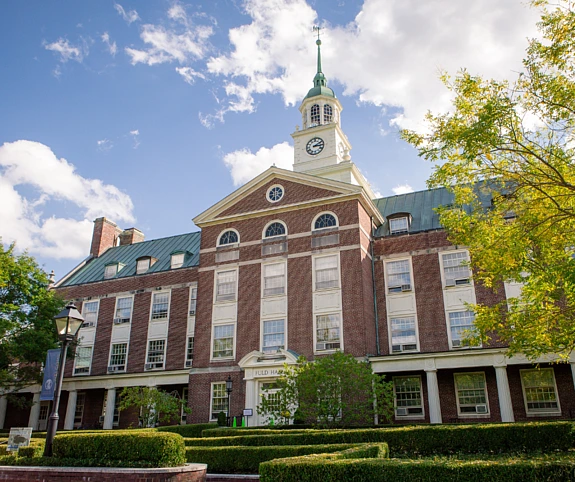
On September 22, 2025, the Institute for Advanced Study officially began its 2025–26 academic year, bringing together scholars from around the globe to pursue a range of individual and collaborative projects. The 259 visiting scholars, each selected by the Institute’s permanent Faculty based on the preeminence and potential of their work, represent 39 nations and more than 108 institutions. This year’s class—which includes promising thinkers at various stages of their academic careers, from postdocs to distinguished professors—will work alongside the 26 permanent Faculty and 22 Emeriti, all of whom are leaders in their respective fields.
All scholars are based within one of the Institute’s four Schools—Historical Studies, Mathematics, Natural Sciences, and Social Science—or the newly established Jonathan M. Nelson Center for Collaborative Research. The following four scholars represent a unique cross-section of this year’s class:
- Zeynep Çelik Alexander, Hans Kohn Member in the School of Historical Studies, studies the history and theory of architecture since the Enlightenment. Her current work examines nineteenth-century institutions in London (e.g., the Museum of Economic Geology, the Kew Herbarium, and the Imperial Institute) in which information collected from around the British empire was aggregated, structured, and made retrievable to serve imperialist ends.
- Nadine Soliman, NASA Hubble Fellow in the School of Natural Sciences, studies star and planet formation, including processes such as the collapse of molecular clouds, the birth of stellar clusters, and the formation of protoplanetary disks. She received her Ph.D. from the California Institute of Technology.
- Corey Robin, Member in the School of Social Science, specializes in political theory and the history of political thought. His books and essays have been translated into thirteen languages, and he has appeared on NPR, MSNBC, and other media outlets. While at IAS, he will be working on a political theory of capitalism.
- Rahul Ilango, Member in the School of Mathematics, studies computational complexity theory, which quantifies the amount of resources—like time and hardware—needed to solve computational tasks. He completed his Ph.D. at the Massachusetts Institute of Technology, where he was advised by Ryan Williams, von Neumann Fellow in the School for 2025–26.
Read more about these four scholars’ work and journeys to IAS. To learn about the remarkable breadth of scholarship at the Institute, visit our current scholar directory.
The start of the 2025–26 academic year also sees new and continuing projects supported by the Institute’s Jonathan M. Nelson Center for Collaborative Research, which catalyzes complex collaborations that may extend beyond the resources of a single scholar, discipline, or organization. The Nelson Center is already funding more than a dozen projects, exploring subjects from the “History of Modern Mathematics” to “Critical Perspectives on the AI Ecosystem,” all of which are outlined on the Nelson Center website.
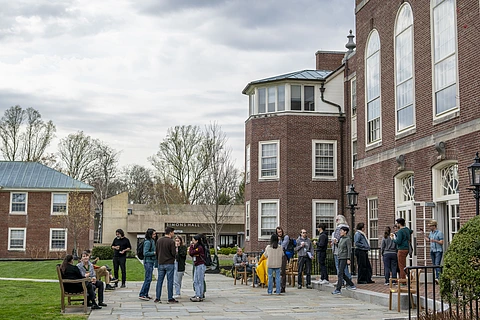
Additionally, in 2025–26, the Schools of Social Science and Mathematics will convene specialists to work on selected year-specific topics.
The theme seminar of the School of Social Science is titled “Digital (In)Equality.” Bringing together scholars of anthropology, public policy, economics, sociology, and law, the seminar will address questions about the double-edged nature of digital advancement’s impact on society. The theme seminar will be led by Alondra Nelson, Harold F. Linder Professor in the School.
The School of Mathematics’s special year will cover arithmetic geometry, Hodge theory, and o-minimality. The goal of this year will be to bring together researchers in these different fields, with the aim of extending the collaboration between areas, sharing key insights, and investigating how far existing methods can be pushed. Jacob Tsimerman joins from the University of Toronto as Distinguished Visiting Professor in the School to facilitate a range of academic activities and workshops for the special year.
Take a glimpse into the experience of living and working at IAS through Institute Instances, one- to two-minute videos featuring scholars, administrators, and visitors.
The Institute is also currently accepting applications for the 2026–27 academic year.
About the Institute
The Institute for Advanced Study has served as one of the leading independent centers for theoretical research and intellectual inquiry since its establishment in 1930, advancing the frontiers of knowledge across the sciences and humanities. From founding IAS Faculty Albert Einstein, Erwin Panofsky, and John von Neumann to influential figures Emmy Noether, George Kennan, and J. Robert Oppenheimer to the foremost thinkers of the present, IAS is dedicated to enabling independent inquiry and fundamental discovery.
Each year, the Institute welcomes more than 250 of the world’s most promising post-doctoral researchers and scholars who are selected and mentored by a permanent Faculty, all of whom are preeminent leaders in their fields. Among present and past Faculty and Members, there have been 37 Nobel Laureates, 46 of the 64 Fields Medalists, and 24 of the 28 Abel Prize Laureates, as well as winners of the Turing Award; the Pulitzer Prize in History; the Wolf, Holberg, and Kluge prizes; and many MacArthur and Guggenheim fellows, among other honors.