News

Explore the latest news related to the Institute for Advanced Study and its community of scholars.

The Institute welcomes inquiries from the press regarding coverage of the Institute and its scholars, interviews, and filming. Please direct all inquiries to Lee Sandberg at lsandberg@ias.edu.
Type:

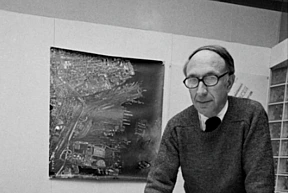
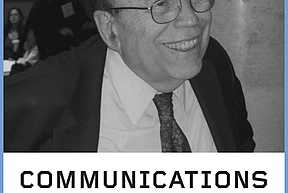
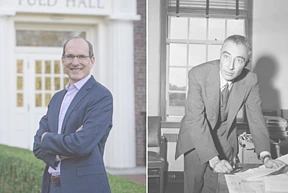
In an article for Nature, Ananyo Bhattacharya, science writer at the London Institute for Mathematical Sciences and biographer of John von Neumann, founding Professor (1933–55) in the School of Mathematics, lays out the significance of a "major advance" in research into the Langlands program—the "grand unified theory of mathematics" first laid out by Robert Langlands, Professor Emeritus in the School.
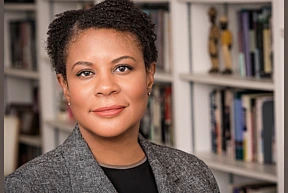
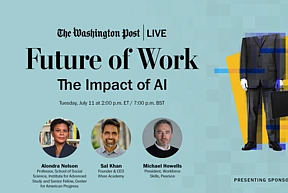
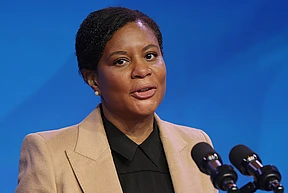
Does artificial intelligence have a role to play in pure mathematics—the kind of math still worked out on blackboards over decades? To interrogate this question, The New York Times spoke to IAS scholars from diverse disciplinary perspectives: Members Patrick Shafto (2021–23) and Andrew Granville (1989–91, 2007, 2009–10) in the School of Mathematics, and Alondra Nelson, Harold F. Linder Professor in the School of Social Science.

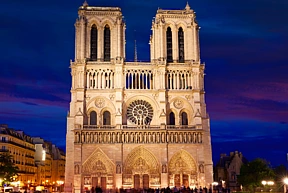
Drawing on her perspective as a historian of medieval religion and society and her specialization in medieval France, Anne Elisabeth Lester, Visitor in the School of Historical Studies, recounts the devastating fire that engulfed Notre-Dame Cathedral in Paris in April 2019, and the subsequent efforts to rebuild it, for the American Historical Association's newsmagazine Perspectives on History.

In 2014, Nathan Seiberg, Charles Simonyi Professor in the School of Natural Sciences, "demonstrated that the most important symmetries of 20th-century physics could be extended more broadly to apply in quantum field theory, the basic theoretical framework in which physicists work today."

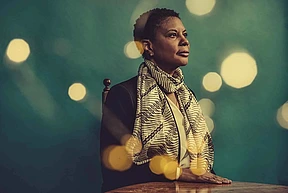
"What does a public vision for A.I. actually look like? What do we as a society want from this technology, and how can we design policy to orient it in that direction? There are few people who have thought as deeply about those questions as Alondra Nelson." On this episode of The Ezra Klein Show, the Harold F. Linder Professor in the Institute's School of Social Science explores the A.I. policy challenge and more.

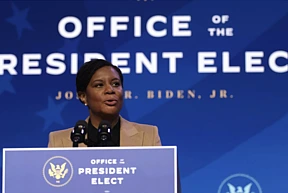
Alondra Nelson, Harold F. Linder Professor in the School of Social Science, and the first woman of color to lead the White House Office of Science and Technology Policy (OSTP) earlier in the Biden administration, is set to step down from her current post as a deputy director on February 10, 2023.

By Alyssa Battistoni, current Member in the School of Social Science:

"When the multi-hyphenate scholar of science Bruno Latour died last October at the age of 75, tributes poured in from all corners of academia and many beyond. In the aughts, Latour had been a ubiquitous reference point for Anglophone social and cultural theory, standing alongside Judith Butler and Michel Foucault on the list of most cited academics in fields ranging from geography to art history."

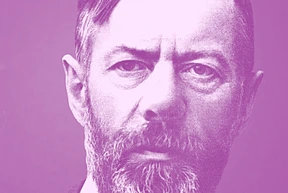
By Joan Wallach Scott, Professor Emerita in the School of Social Science: 

"[The Hamline case] is not an example of any tension between diversity and academic freedom, but of the confusion between fair treatment of minority students (respect and care for their well-being) and capitulation to religious censorship. The one does not require the other."

By David Nirenberg, Director and Leon Levy Professor: 

"What counts as antisemitism? Is it on the rise, and if so, who’s to blame—the left or the right, Christians or Muslims? Or is it “the Jews” and their actions that are at fault, as some maintain. These questions may feel new, but the resurgence of antisemitism didn’t begin in 2022, and it’s not only happening in the U.S."

"It is a cliché to refer to the long economic boom in France that followed the Second World War—the three decades between 1945 and 1975—as les trente glorieuses. The phrase has no satisfying translation, though 'golden' hints at the éclat thrown off by the final adjective. Adopting this terminology for our ends, we might refer to the 1980s as Yve-Alain Bois’ décennie glorieuse."

The Institute’s Communications team welcomes inquiries from the press regarding coverage of the Institute and its scholars, interviews, and filming. For information about the Institute and current research, visit About and the Ideas sections of the website.

Please direct all public relations inquiries to Lee Sandberg at lsandberg@ias.edu.