Ideas

Explore firsthand accounts of research and questions posed by IAS scientists and scholars. From art history to string theory, from moral anthropology to the long-term fate of the universe, contributions span the last decade to the research of today.
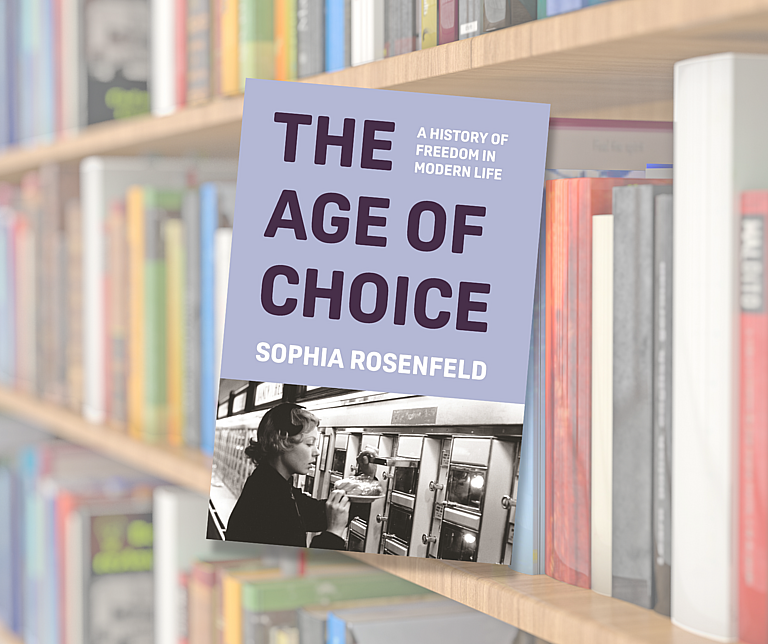
"There is a uniquely U.S. story to the legal undoings following Dobbs v. Jackson Women’s Health Organization. The American divide on abortion finds its contested space reinvigorated by the recent majority decision from the U.S. Supreme Court that overturned Roe and Casey. This distinctly American institution of politically appointed judges is unparalleled to any other top courts in other liberal democracies."

The unparalleled resolution of the Event Horizon Telescope (EHT) images of the black holes at the center of the M87 galaxy and at the center of our galaxy, called Sagittarius A* (Sgr A*), allows us to test assumptions, predictions, and alternatives to Einstein’s theory of gravity. 

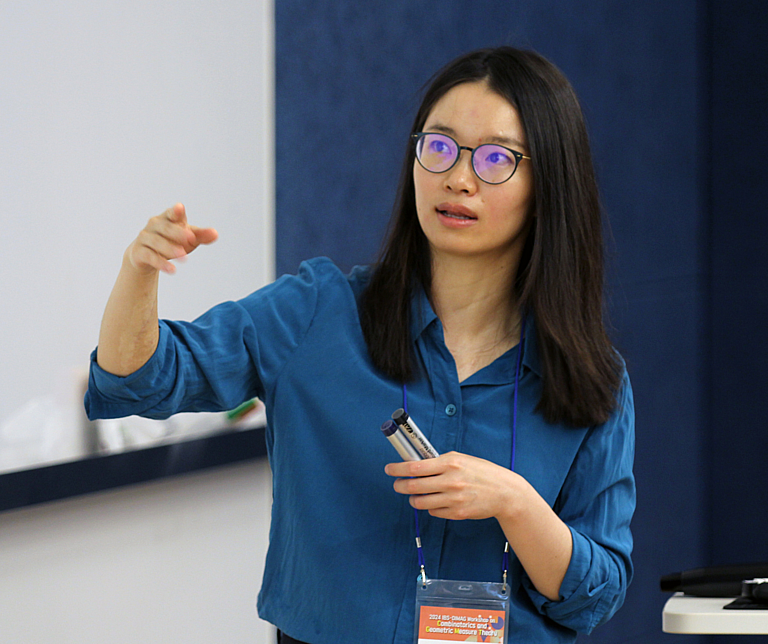
Shira’s work explores symplectic geometry, combining the study of geometry and Hamiltonian dynamics. Watch to learn how her interest in math was fostered by reading books by Paul Hoffman and Donal O’Shea, and how the creativity required to solve mathematical problems inspires her to this day.

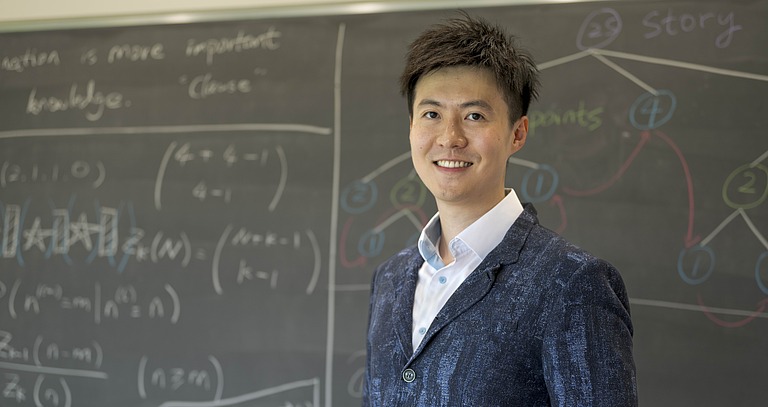
This installment of our "Paths to Math" video series features Patrick Shafto, Member in the Institute’s School of Mathematics and Professor of Mathematics and Computer Science at Rutgers University. Learn how Patrick’s unexpected start studying physical therapy at Northeastern eventually led to his current research, which explores the intersections of human and machine learning.

Can AI Teach Science?

Motivated by the growing interest in using artificial intelligence for teaching purposes, IAS scholars from the Schools of Mathematics and Natural Sciences have conducted an innovative study to assess the correctness and helpfulness of large language models in STEM education. Their research yielded surprising results, including highlighting the importance of training models on conversations rather than textbooks.

Organization, Communication, and Decision

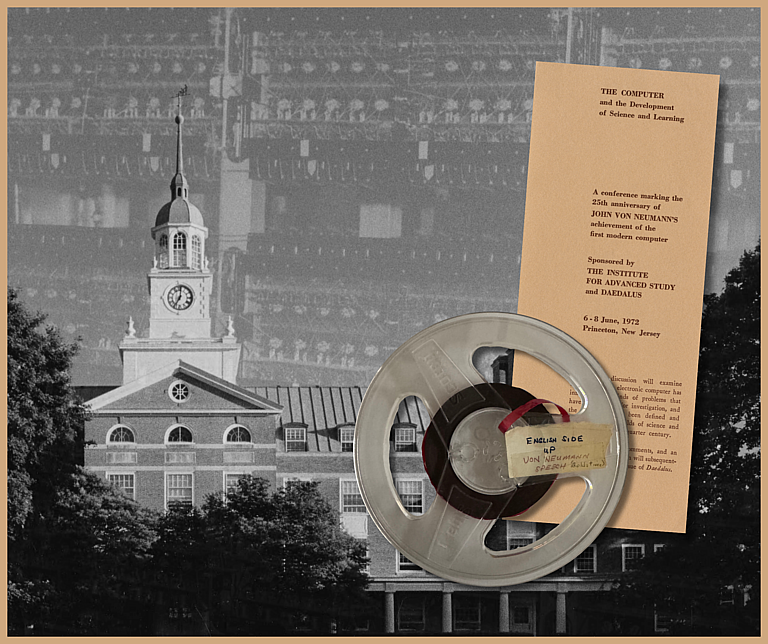
In the cognitive revolution, psychologists, recognizing that developments in information processing had potential for studying the human mind, sought for the first time to apply new ideas in early artificial intelligence, computer science, and neuroscience to psychology. The Institute, as the home of one of the first modern computers, was uniquely poised to serve as a hub for this nascent field of study.