Ideas

Explore firsthand accounts of research and questions posed by IAS scientists and scholars. From art history to string theory, from moral anthropology to the long-term fate of the universe, contributions span the last decade to the research of today.

What is required for science to continue to advance human understanding and spark discoveries that benefit the world? Robbert Dijkgraaf joins experts in science policy and public engagement to discuss  "Science—The Endless Frontier," a 1945 blueprint for U.S. scientific research in the post-World War II era that empowered government support for innovation and basic research at the nation’s universities and policies that ultimately drove U.S. prosperity, health, and national security.

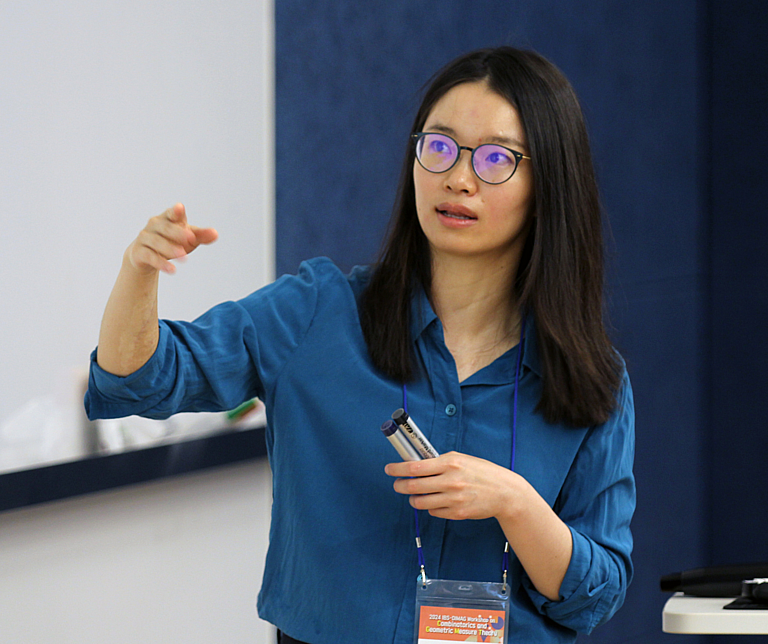
Meet the newest Members at the Institute for Advanced Study and discover their unique passion for curiosity-driven research in the Scholar Spotlight video series.

In this video, we ask IAS Members in each of our Schools to describe the legacy they...

Meet the newest Members at the Institute for Advanced Study and discover their unique passion for curiosity-driven research in the Scholar Spotlight video series.

In this episode Jeffrey Fung, Member in the School of Natural Sciences, details his...

Meet the newest Members at the Institute for Advanced Study and discover their unique passion for curiosity-driven research in the Scholar Spotlight video series.

In today’s episode, Søren Fournais, Member in the School of Mathematics, discusses...

Meet the newest Members at the Institute for Advanced Study and discover their unique passion for curiosity-driven research in the Scholar Spotlight video series.

In today’s episode, we asked our Members to talk about famous films that intersect...

Can AI Teach Science?

Motivated by the growing interest in using artificial intelligence for teaching purposes, IAS scholars from the Schools of Mathematics and Natural Sciences have conducted an innovative study to assess the correctness and helpfulness of large language models in STEM education. Their research yielded surprising results, including highlighting the importance of training models on conversations rather than textbooks.

Organization, Communication, and Decision

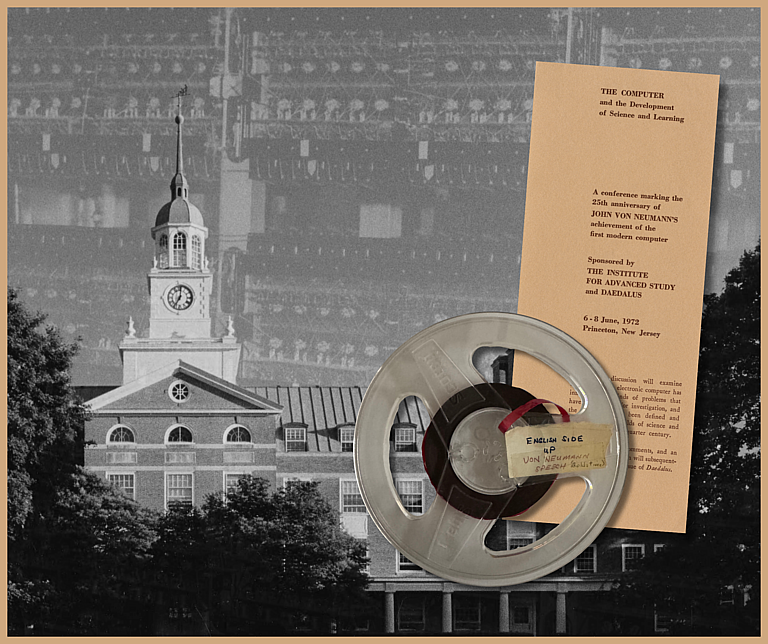
In the cognitive revolution, psychologists, recognizing that developments in information processing had potential for studying the human mind, sought for the first time to apply new ideas in early artificial intelligence, computer science, and neuroscience to psychology. The Institute, as the home of one of the first modern computers, was uniquely poised to serve as a hub for this nascent field of study.