Ideas

Explore firsthand accounts of research and questions posed by IAS scientists and scholars. From art history to string theory, from moral anthropology to the long-term fate of the universe, contributions span the last decade to the research of today.
The work of plasma fusion physicists may seem completely divorced from the realm of theoretical astrophysics, but, as Chris Hamilton, John N. Bahcall Fellow in the School of Natural Sciences, explains, the mathematical methods developed to exploit the power of the electrons, ions, and magnetic fields in fusion plasmas are precisely the same as those needed to describe the dynamics of stars, spiral arms, and dark matter in galaxies like the Milky Way. 

Predicting thousands of years of forest growth with just an afternoon of fieldwork and a simple calculator might seem like an impossible task, but Jonathan Levine, Chair of Princeton’s Department of Ecology & Evolutionary Biology, who runs annual classes in “Forest Succession” in the Institute Woods, enables his students to achieve precisely this.

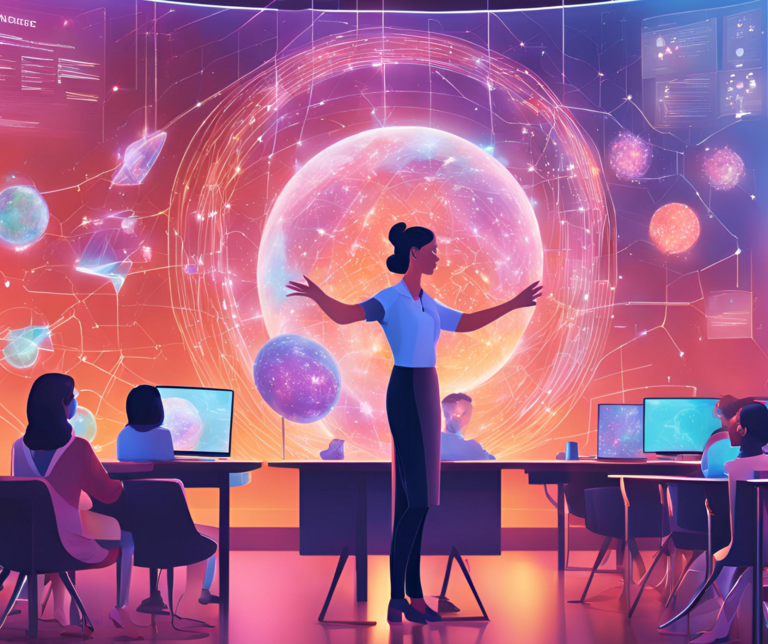
Can AI Teach Science?

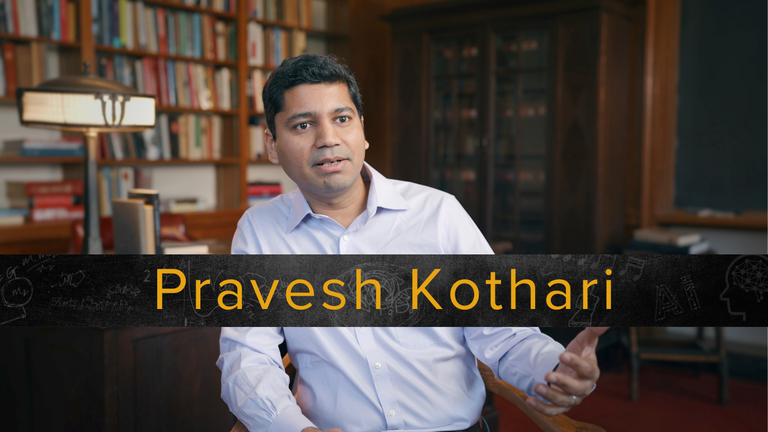
Motivated by the growing interest in using artificial intelligence for teaching purposes, IAS scholars from the Schools of Mathematics and Natural Sciences have conducted an innovative study to assess the correctness and helpfulness of large language models in STEM education. Their research yielded surprising results, including highlighting the importance of training models on conversations rather than textbooks.

Organization, Communication, and Decision

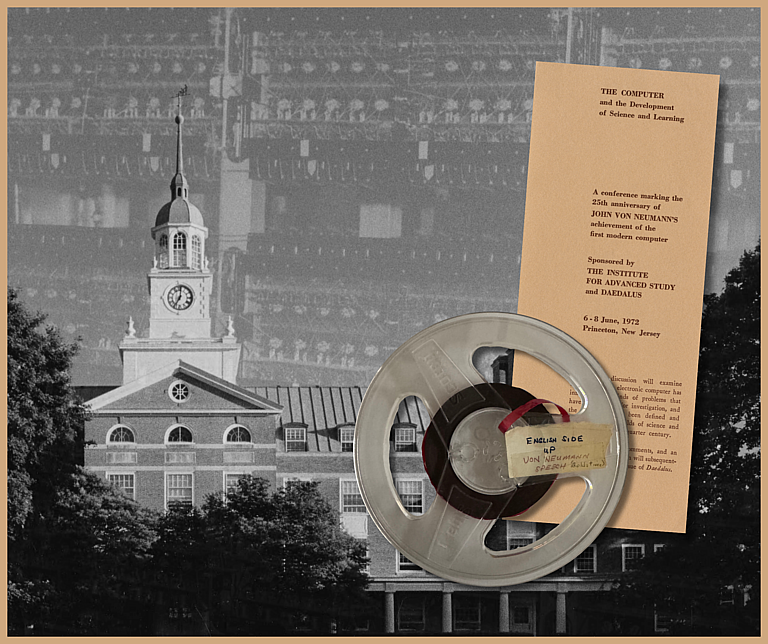
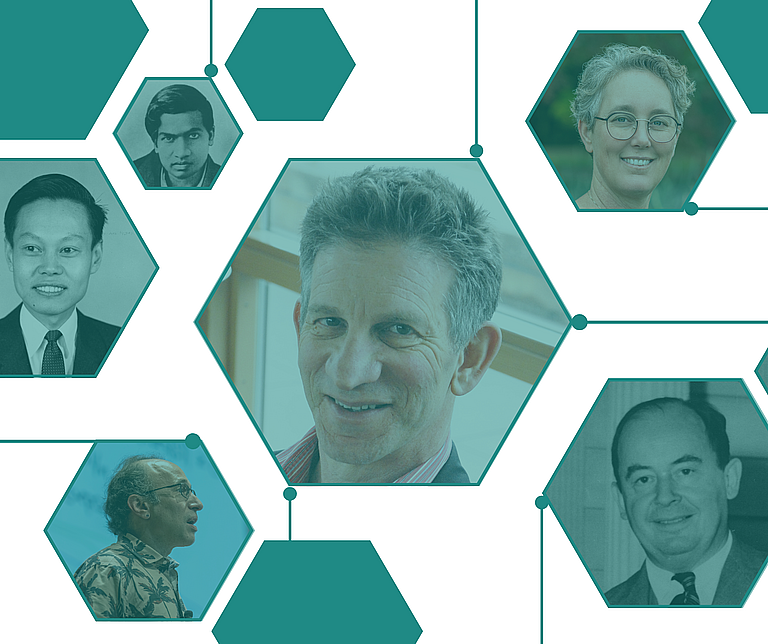
In the cognitive revolution, psychologists, recognizing that developments in information processing had potential for studying the human mind, sought for the first time to apply new ideas in early artificial intelligence, computer science, and neuroscience to psychology. The Institute, as the home of one of the first modern computers, was uniquely poised to serve as a hub for this nascent field of study.