Ideas

Explore firsthand accounts of research and questions posed by IAS scientists and scholars. From art history to string theory, from moral anthropology to the long-term fate of the universe, contributions span the last decade to the research of today.

Explore a collection of Robert Langlands’s papers, as well as some of his lectures and correspondence, on topics ranging from functoriality, representation theory, and base change to endoscopy, Shimura varieties, percolation, and geometric theory.

Jean Bourgain, IBM von Neumann Professor in the School of Mathematics, was bestowed the title of Baron by the Belgian government in July 2015. In association with the honor, Bourgain designed a coat of arms inscribed “In hope against hope.” Bourgain...

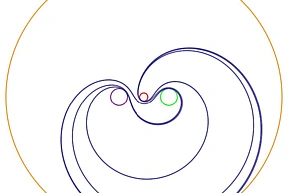
Symplectic and contact structures first arose in the study of classical mechanical systems, allowing one to describe the time evolution of both simple and complex systems such as springs, planetary motion, and wave propagation. Understanding the evolution and distinguishing transformations of these systems led to the development of global invariants of symplectic and contact manifolds.

Since 1994 with the support of the National Science Foundation, the Institute, together with Princeton University, has hosted an intensive 11-day mentoring program for undergraduate and graduate women in mathematics.

The program brings together...

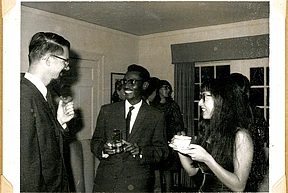
This event celebrates the work and life of Emmy Noether, one of the first Visitors at the Institute from 1933–35. A highly prolific mathematician who published groundbreaking papers in rarefied fields of abstract algebra and ring theory, Noether is...

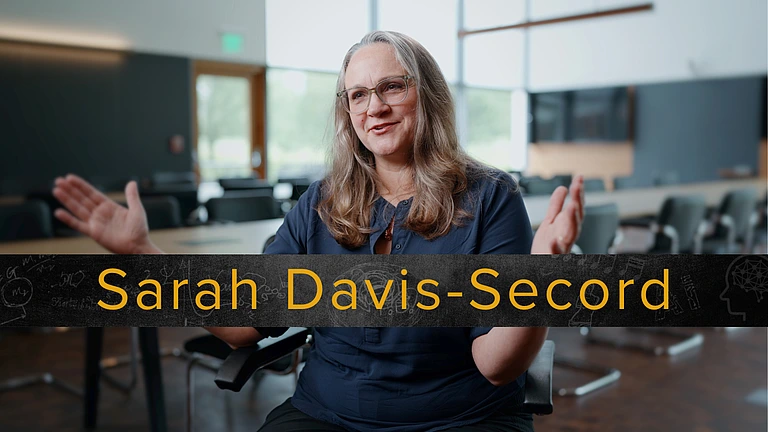
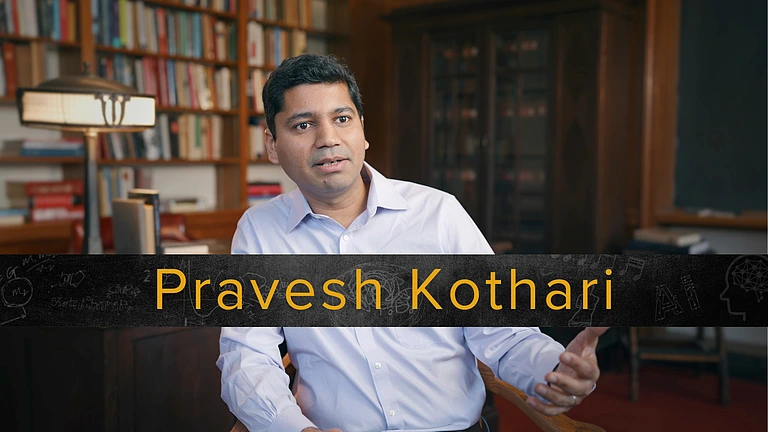
Can AI Teach Science?

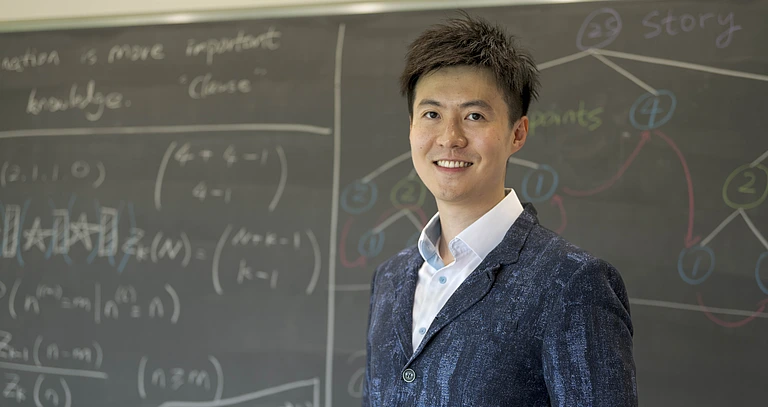
Motivated by the growing interest in using artificial intelligence for teaching purposes, IAS scholars from the Schools of Mathematics and Natural Sciences have conducted an innovative study to assess the correctness and helpfulness of large language models in STEM education. Their research yielded surprising results, including highlighting the importance of training models on conversations rather than textbooks.

Organization, Communication, and Decision

In the cognitive revolution, psychologists, recognizing that developments in information processing had potential for studying the human mind, sought for the first time to apply new ideas in early artificial intelligence, computer science, and neuroscience to psychology. The Institute, as the home of one of the first modern computers, was uniquely poised to serve as a hub for this nascent field of study.