Ideas

Explore firsthand accounts of research and questions posed by IAS scientists and scholars. From art history to string theory, from moral anthropology to the long-term fate of the universe, contributions span the last decade to the research of today.
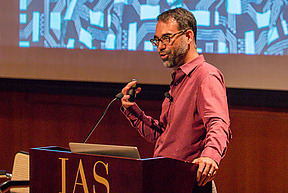
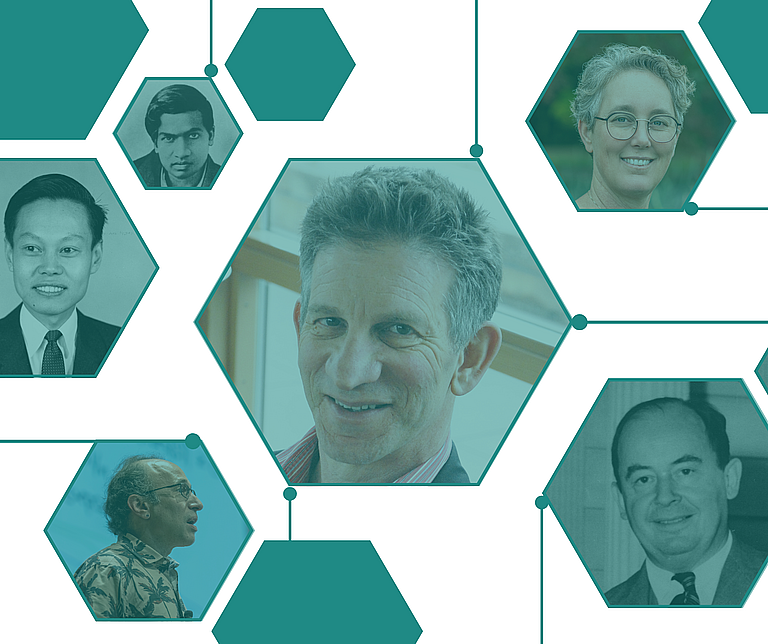
“From the perspective of gravity, [a black hole] is the simplest object we know of, no more than a hole in space. At the same time, according to quantum theory, it is the most complex object, the most compact way to store matter and information.” Robbert Dijkgraaf, Director and Leon Levy Professor, discusses the paradoxical nature of black holes and their role in twenty-first-century physics.

On April 4, 2019, Stephen Kotkin, John P. Birkelund '52 Professor in History and International Affairs at Princeton University, gave a public lecture on "Stalin at War."

Jonathan Haslam, George F. Kennan Professor in the School of Historical Studies...

On March 14, 2019, Albert Einstein's 140th birthday, the Institute for Advanced Study held the inaugural IAS Einstein Gala to honor trailblazing mathematician, investor, and philanthropist Jim Simons. The New York event, which raised $3.5 million to support basic research at IAS, was attended by more than 550 leaders from the worlds of business, philanthropy, technology, art, and academia, among them Ellen Futter, Larry Gagosian, Vartan Gregorian, Jeff Koons, Eric Schmidt, Diana Taylor, James and Merryl Tisch, and Sir James and Elaine Wolfensohn.

On March 5, 2019, Yulia Frumer, Bo Jung and Soon Young Kim Professor of East Asian Science and Technology at Johns Hopkins University, gave a public lecture titled "Robocon is Zazen: Psychology and Buddhism in Mori Masahiro's Robotics" as part of...

Can AI Teach Science?

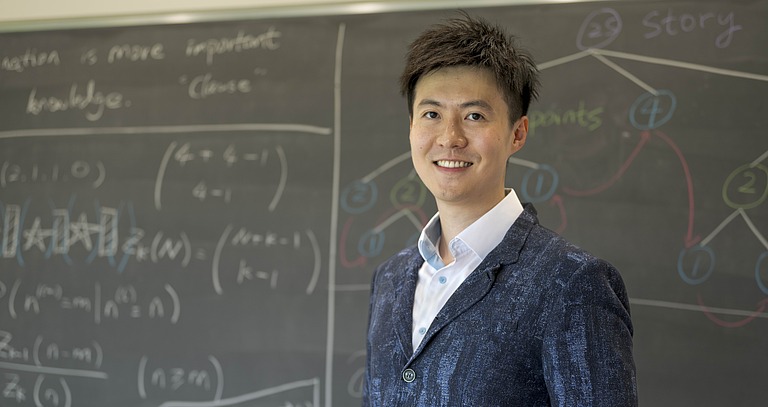
Motivated by the growing interest in using artificial intelligence for teaching purposes, IAS scholars from the Schools of Mathematics and Natural Sciences have conducted an innovative study to assess the correctness and helpfulness of large language models in STEM education. Their research yielded surprising results, including highlighting the importance of training models on conversations rather than textbooks.

Organization, Communication, and Decision

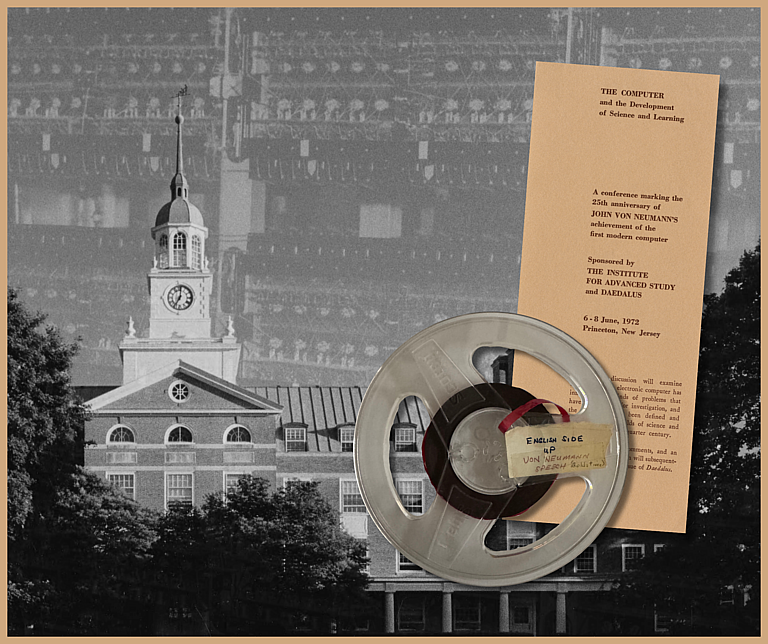
In the cognitive revolution, psychologists, recognizing that developments in information processing had potential for studying the human mind, sought for the first time to apply new ideas in early artificial intelligence, computer science, and neuroscience to psychology. The Institute, as the home of one of the first modern computers, was uniquely poised to serve as a hub for this nascent field of study.