The Institute Letter, Fall/Winter 2026

Delve into the paradoxes of digital (in)equality, examining how technology simultaneously creates new opportunities and entrenches systemic inequalities. Investigate the untold story of a mathematician whose groundbreaking contributions were obscured by history, and learn how her work is inspiring new perspectives today. Explore the revolutionary connections between Einstein’s work on quantum entanglement and wormholes, as well as cutting-edge research moving us towards understanding quantum gravity in our universe. Reflect on how “free gifts of nature” reveal deeper truths about capitalism and environmental justice. Discover a newly identified trans-Neptunian object that offers clues into the existence of a ninth planet.
Download the pdf

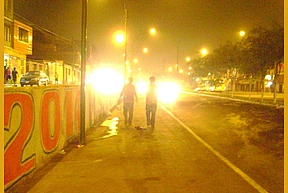
From Einstein and Gödel’s cherished walks to today’s “peripatetic cogitation,” the Institute’s winding paths and quiet Woods remain an essential part of how ideas take shape at IAS. In this article, scholars from all four Schools share how walking—alone and together—creates space for reflection, conversation, and discovery.

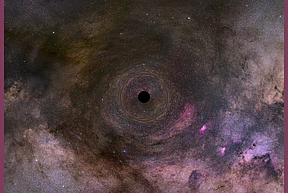
Resolving the deep conflict between the principles of gravity and quantum mechanics—and more generally, developing a theory of “quantum gravity”—is a major open question in theoretical physics. By building on and extending one another’s research, IAS scholars past and present have made substantial progress in this area, generating insights that continue to influence research. 

The Institute’s School of Social Science turned its focus for the 2025–26 academic year to the theme of Digital (In)Equality. The parentheses in the title gesture to what Alondra Nelson, Harold F. Linder Professor in the School and the theme year’s organizer, refers to as the “double-edged-ness” of the contemporary digital ecosystem. Nelson’s convening insight challenges the dominant narratives around technology: both techno-optimism and techno-pessimism miss the point.

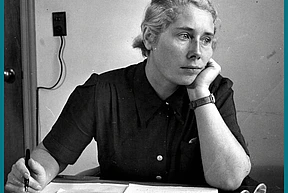
When Ellen Eischen, von Neumann Fellow (2024–25) in the School of Mathematics, followed a stray thread of “lost math” into the Institute’s Shelby White and Leon Levy Archives Center, she uncovered the story of Hel Braun—and a mid-century perspective that still has consequences for research today. Eischen's investigations show what mathematics can forfeit when it treats its truths as untouched by the human, institutional, and political realities that shape them.