Ideas

Explore firsthand accounts of research and questions posed by IAS scientists and scholars. From art history to string theory, from moral anthropology to the long-term fate of the universe, contributions span the last decade to the research of today.
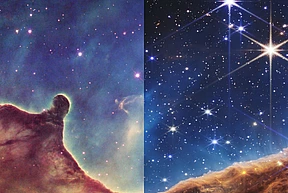
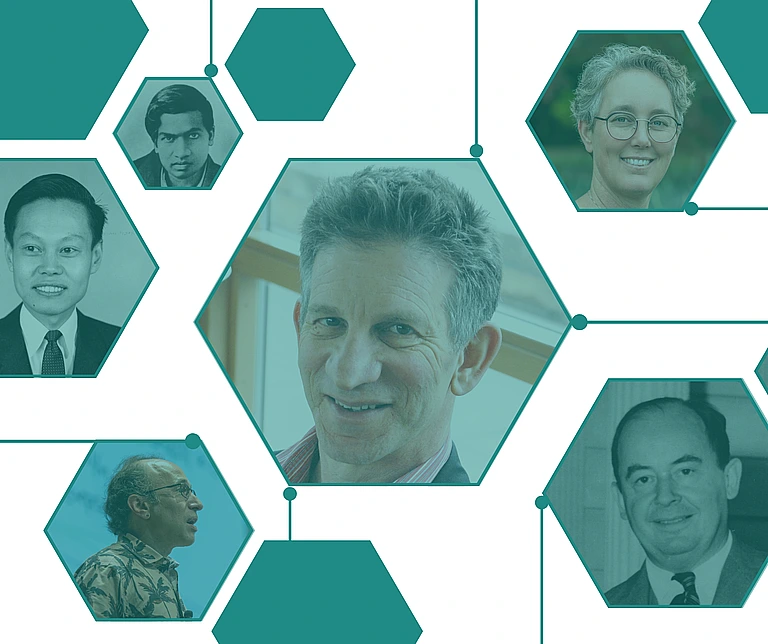
Past Members in the School of Natural SciencesRobert J. Vanderbei (2019–20) and Michael A. Strauss (1991–95), along with Neil deGrasse Tyson and J. Richard Gott, have authored a unique journey into the cosmos titled Welcome to the Universe in 3D: A Visual Tour, the fourth in a series of astrophysical tours for Princeton University Press

In colloquial speech the word “duality” connotes two contrasting facets of a single entity, often at odds with one another. The concept is anthropomorphized in mythology by deities or monsters with multiple faces, like the two-faced Janus, Roman god of doorways. It is also enshrined in pop culture in the double visages of Jekyll and Hyde, and in the Batman villain Harvey Dent (alias Two-Face). In physics and mathematics, the concept of “duality” takes on a more positive connotation because of its ubiquity, utility, and power. 

Can AI Teach Science?

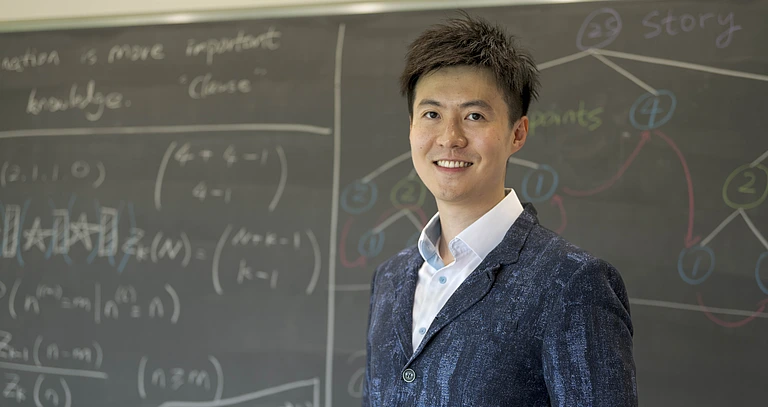
Motivated by the growing interest in using artificial intelligence for teaching purposes, IAS scholars from the Schools of Mathematics and Natural Sciences have conducted an innovative study to assess the correctness and helpfulness of large language models in STEM education. Their research yielded surprising results, including highlighting the importance of training models on conversations rather than textbooks.

Organization, Communication, and Decision

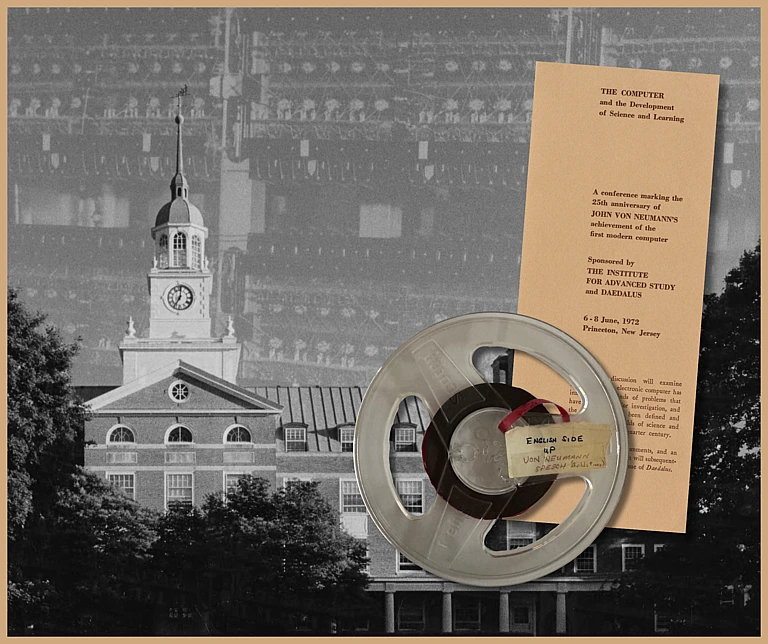
In the cognitive revolution, psychologists, recognizing that developments in information processing had potential for studying the human mind, sought for the first time to apply new ideas in early artificial intelligence, computer science, and neuroscience to psychology. The Institute, as the home of one of the first modern computers, was uniquely poised to serve as a hub for this nascent field of study.