Ideas

Explore firsthand accounts of research and questions posed by IAS scientists and scholars. From art history to string theory, from moral anthropology to the long-term fate of the universe, contributions span the last decade to the research of today.
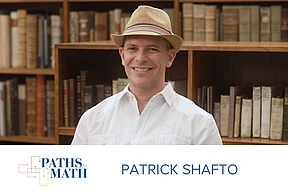
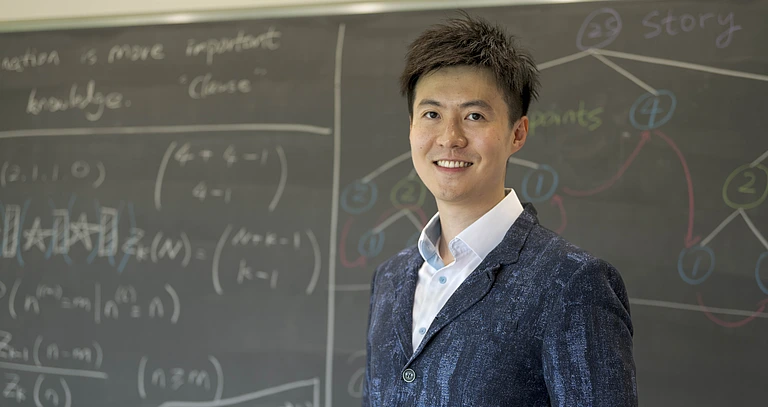
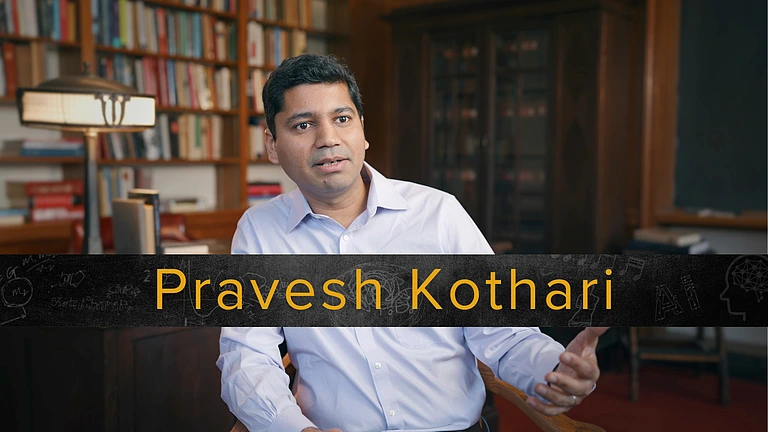
This installment of our "Paths to Math" video series features Patrick Shafto, Member in the Institute’s School of Mathematics and Professor of Mathematics and Computer Science at Rutgers University. Learn how Patrick’s unexpected start studying physical therapy at Northeastern eventually led to his current research, which explores the intersections of human and machine learning.

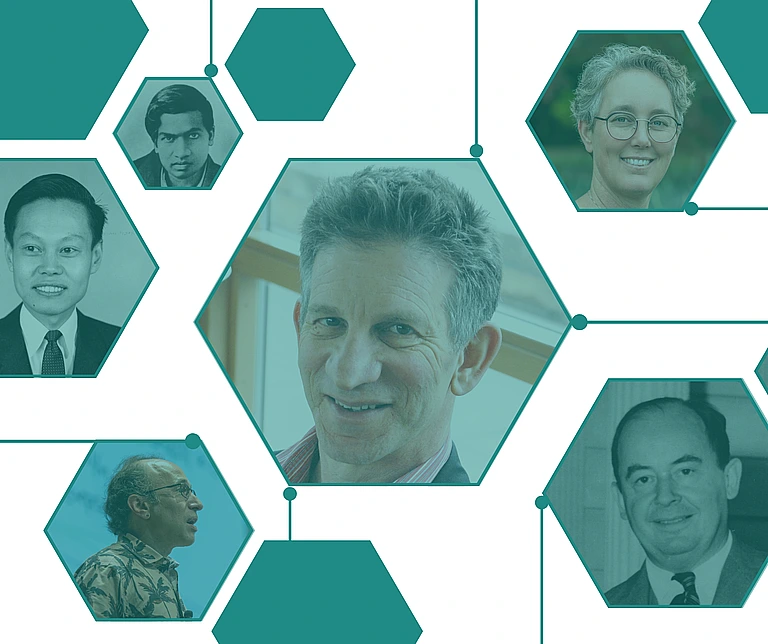
When Karen Uhlenbeck was a MacArthur fellow, between 1983–88, she went on a series of incredible adventures visiting other MacArthur fellows and learning about their projects. “This was actually one of the high points of my life,” Uhlenbeck said to me, laughing. She recalls whale watching in Hawaii with Roger Payne, a trip to the Amazon to see Philip DeVries’s work with butterflies, studying lemurs in Madagascar with Pat Wright, and a Montana dinosaur dig with Jack Horner.

Mathematics Member John Urschel works on linear algebra, specifically matrix analysis. In this video, he shares his journey from the NFL to a career in mathematics, having worked on his Ph.D. at MIT during the offseason while playing for the Baltimore Ravens. Now retired from the NFL, Urschel is able to focus completely on math.

Ukrainian mathematician Svitlana Mayboroda was initially undecided on her career path. She had every intention of going into business until an opportunity presented itself to attend a mathematics graduate program in the United States.

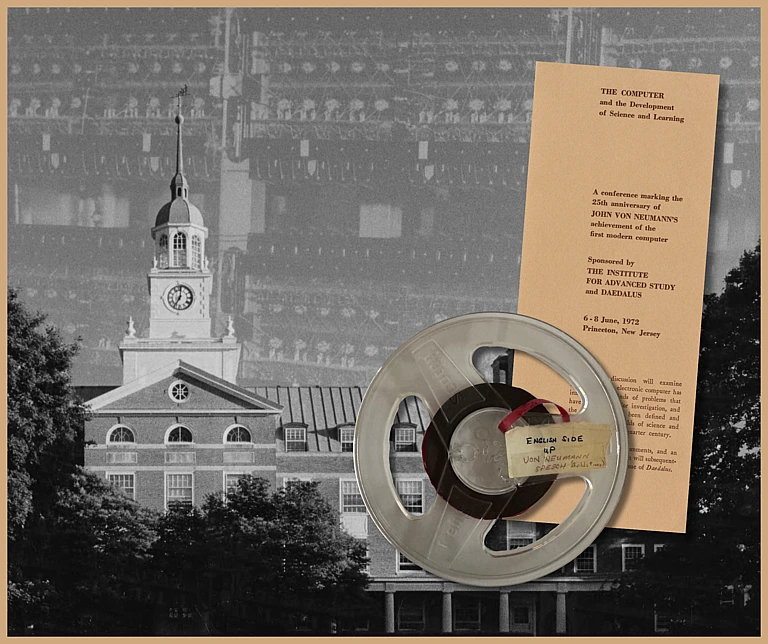
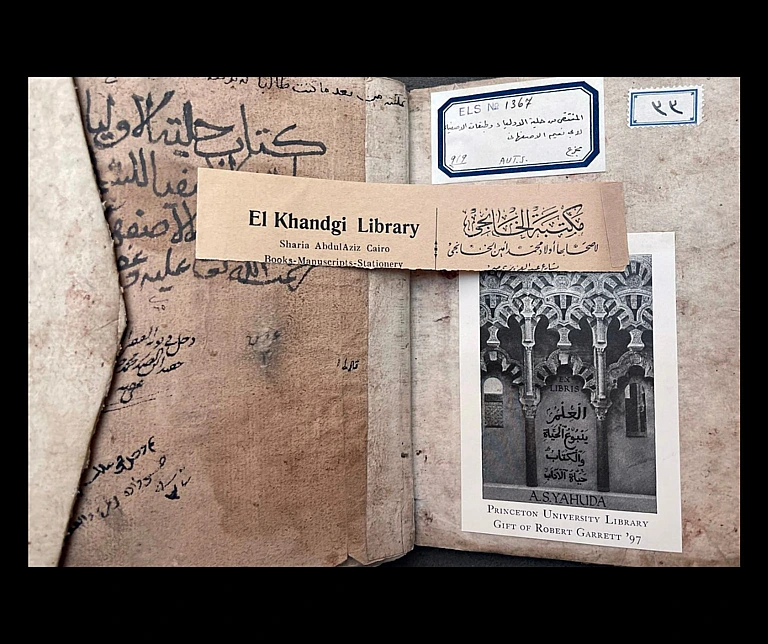
The Institute for Advanced Study distributed $21,742.50 in stipends for mathematics and $10,000 for theoretical physics during the academic year 1935–36. Three hundred dollars, sufficient to secure entry to the United States, was awarded to the Polish mathematician Stanislaw Ulam (1909–84), who had written to John von Neumann about a problem in measure theory in 1934.

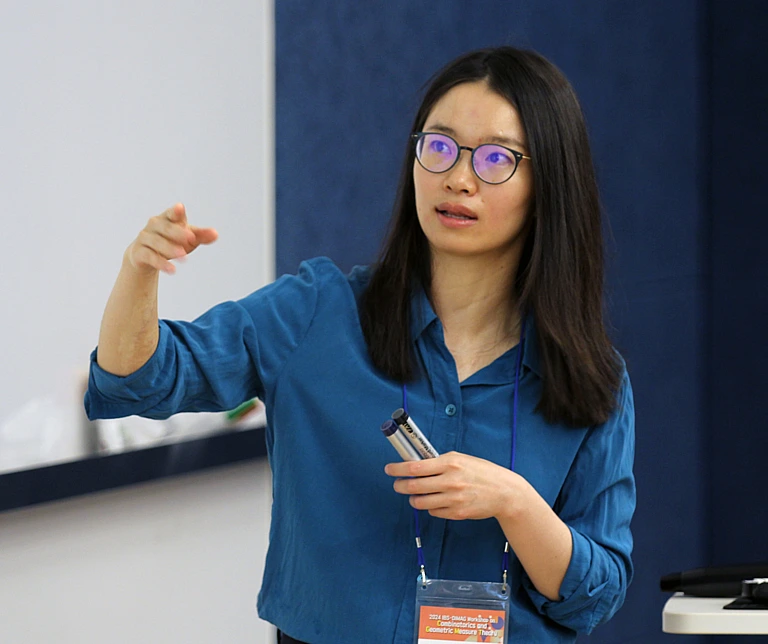
Jinyoung Park is a first-generation college graduate, and after seven years as a secondary school teacher in South Korea, she went on to earn a mathematics Ph.D. from Rutgers University. Jinyoung’s story demonstrates the importance of role models at all levels of one’s education and the fact that it is never too late to begin anew.

Can AI Teach Science?

Motivated by the growing interest in using artificial intelligence for teaching purposes, IAS scholars from the Schools of Mathematics and Natural Sciences have conducted an innovative study to assess the correctness and helpfulness of large language models in STEM education. Their research yielded surprising results, including highlighting the importance of training models on conversations rather than textbooks.

Organization, Communication, and Decision

In the cognitive revolution, psychologists, recognizing that developments in information processing had potential for studying the human mind, sought for the first time to apply new ideas in early artificial intelligence, computer science, and neuroscience to psychology. The Institute, as the home of one of the first modern computers, was uniquely poised to serve as a hub for this nascent field of study.