In the 2025–26 academic year, the Institute’s School of Mathematics hosted an unusual seminar. Titled “Mathematical Folklore,” the seminar centered on readings of historical works that originated concepts standing at the heart of mathematics today. The goal was to reach beyond the technical thickets that surround modern mathematics and reconnect with the vital roots that have nourished the field.
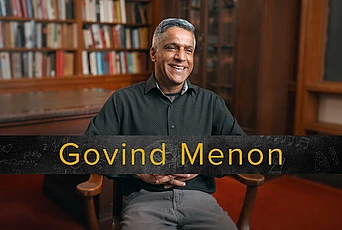
The weekly seminar was led by Akshay Venkatesh, Robert and Luisa Fernholz Professor in the School of Mathematics, and Govind Menon, Erik Ellentuck Fellow (2025–26) in the School and professor in the Division of Applied Mathematics at Brown University.
The seminar was born of “the need to revitalize the humanistic part of mathematics, the idea of mathematics as a humanistic discipline,” said Venkatesh. That idea “has never vanished, but it’s diminished, at least in the outward practice of mathematicians.”
As mathematics research has become increasingly specialized and technical, its connection to the elemental stuff of human experience has been obscured. With artificial intelligence poised to accelerate this trend, said Venkatesh, “we really need to look at the human aspect of what we are doing.”
Eternal Questions
The seminar provided a forum for mathematicians to encounter fundamental ideas and modes of thought unadulterated by later developments in the field. While the seminar readings required considerable mathematical background, the discussions tended toward the philosophical rather than the technical. Big questions about the nature of thought, intuition, and knowledge arose spontaneously.
In addition to Menon and Venkatesh, the seminar participants included several IAS scholars, from within the School of Mathematics and without. Among them was Alma Steingart, Robbert Dijkgraaf Member (2025–26) in the School of Social Science; also occasionally joining the group was Myles Jackson, Ernst and Elisabeth Albers-Schönberg Professor in the History of Science in the School of Historical Studies. Taking part regularly were three freelance writers: myself, Evelyn Lamb, and Leila Sloman.
But most of the participants were young mathematicians, mainly IAS Members with a sprinkling of graduate students from nearby Princeton University, whose idealism and open-mindedness leavened the discussions. Michael Chapman, Member (2025–26) in the School of Mathematics, initially thought the seminar might be a “pat on the back” affair in which mathematicians gush about how wonderful and important their own field is. Instead, he said, “it was a serious intellectual activity.” He was a frequent and active participant.
Readings ranged over original writings from the sixteenth century up to the present, together with profile articles, expository pieces, and correspondence. In their encounters with thinkers of the past, the seminar participants pondered questions about the nature of mathematical knowledge, the sources of mathematical inspiration and intuition, and where the field might go in the future.
"Unlearning" Newton
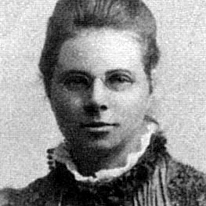
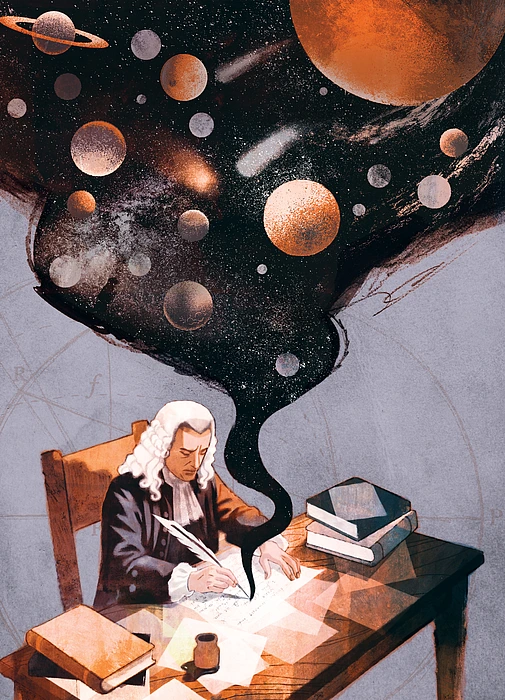
An engineering major before he moved into mathematics, Govind Menon has, in some sense, been studying the work of Isaac Newton (1642–1727) for 35 years. But when, in the seminar, he read excerpts from Newton’s Principia Mathematica, he found himself “unlearning” what he thought he knew. “I felt I was seeing the material for the first time,” said Menon. He experienced it as an encounter with the thoughts of another human being, a “kindred spirit.” That experience is just what the seminar was intended to foster.
Historians have produced a rich literature examining the life and work of Newton. A tiny sliver of that literature provided enriching background for the seminar readings, as did illuminating comments by Myles Jackson and Alma Steingart. But the mathematicians in the seminar were seeking something complementary to historical knowledge: a mathematical communion with Newton.
One of the readings this spring explored Newton’s derivation of Kepler’s laws of planetary motion. Although Newton developed calculus in the Principia, his treatment of Kepler’s laws is based not on calculus but on Euclidean geometry. Assuming centripetal force acting on the planets, he uses ratios, similar triangles, and parallelograms to construct the curved paths of the planets. From this he deduces the “inverse-square law” of gravitation, which describes planetary motion.
The seminar participants noted that, in contrast to modern treatments, one can feel physical reality in Newton’s writings. Students today are taught that the planets move in the way they do because they obey Newton’s inverse-square law. Newton’s derivation goes the opposite way: Kepler’s data about the motion of the planets led Newton to his law. Seminar participants found Newton’s approach to be “clear, simple, straightforward.” By contrast, many modern approaches feel “industrialized,” “ultra-processed,” and unconnected to the primal notions at the core of the field.
Alongside the Newton readings, the seminar explored a thimbleful out of the ocean of writings of Gottfried Wilhelm Leibniz (1646–1716). Leibniz and Newton independently developed calculus around the same time; it was Leibniz who created the better notation, which is still in use today. The contrast between the two thinkers was palpable in the readings. Newton strived for unifying explanations of many different phenomena, whereas Leibniz sought a symbolic, algorithmic approach that he believed could be adapted to solve all kinds of problems.
Leibniz had a dream of building a calculus ratiocinator, which would resolve any dispute by using symbols to calculate a rational solution. Perhaps an echo of his dream is present in today’s AI chatbots, whose answers to mathematical queries are starting to become trustworthy and knowledgeable, even insightful.
The theme of religious belief as inspiration arose in the seminar readings of Kepler, Leibniz, Newton, and several others. Although he is not religious, this theme resonated with Asvin G., Member (2025–26) in the School of Mathematics. He said that, in some sense, the greatest challenge in research is believing that there is a possibility of understanding the world, and that belief is not so different from religious belief. “Whenever I think about why I do science, it seems audacious to think that I, as a little individual human, can set out to understand the world and have any hope of succeeding,” he said. “But, also, it seems so beautiful and so magical that I have to try.”
Riemann: A New Conception of Geometry
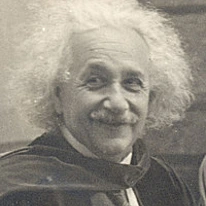
Early last fall, the group read an 1854 lecture by the young Bernhard Riemann (1826–66), which changed the course of mathematics. The lecture, part of Riemann’s habilitation at the University of Göttingen, was delivered before a small audience that included Carl Friedrich Gauss (1777–1855).
Through his extensive investigations of surfaces in three-dimensional space, Gauss had invented what became known as Gaussian curvature, thereby launching the field of differential geometry. His monumental Theorema Egregium showed that curvature is intrinsic to the surface; in other words, curvature depends only on measurements done on the surface and is independent of how the surface is placed in the surrounding three-dimensional space.
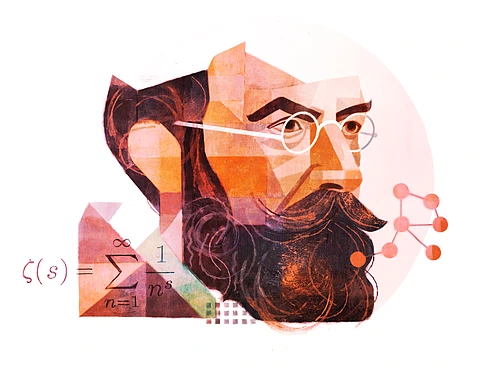
Riemann’s lecture gave a profound generalization of the Theorema Egregium. He conceived of surfaces as abstract geometric objects, or manifolds, independent of any surrounding space, and extended this conception to include manifolds of any dimension. He showed that, once one has a way to do measurements on a manifold, one can define curvature, and that curvature is intrinsic to the manifold. In this conceptual leap, he expanded what geometry could be.
By this time, the primacy of Euclidean geometry as the single true geometry of our world was being questioned. Riemann’s work showed definitively that there is not one geometry, but infinitely many. His ideas propagated across mathematics, blossoming into the area known as Riemannian geometry. This conceptual leap turned out to be exactly what founding IAS Professor (1933–55) Albert Einstein needed to formulate his theory of general relativity.
Riemann’s lecture was not an easy read for the seminar participants, and its challenges were compounded by infelicities of translation from German into English. Nevertheless, the participants could feel the power of the work, calling it “fresh” and “timeless,” with “awe-inspiring” intuition.
Riemann explored fundamental questions about the nature of space and what unites geometry. He mused on how, in a world dominated by the discrete, one can conceive of continuous spaces (he proposed color as an example). He had no “headline theorem,” as is typical in modern mathematics papers, and used very few symbols. His work is ambiguous and philosophical. “What can we learn from this?” asked Asvin G. “What have we lost in becoming more rigorous and more axiomatic?”
Venkatesh mentioned his own “long and tragic relationship with curvature,” a notion he’d never understood deeply. In Riemann’s work he found a beauty, clarity, and richness lacking in modern treatments that aim at precision and efficient delivery of material. Because it was written in natural language and did not resort to technicalities, the insights in Riemann’s work remain accessible more than a century and a half after it was written.
A Framework for the Future
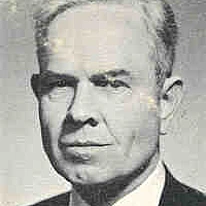
The seminar spanned a range of themes and thinkers, from the celestial spheres of Kepler and the geometry of Descartes to Einstein, Mach, Maxwell, and Wiener on the theory of atoms and random motion. It further examined the work of John von Neumann, Professor (1933–55) in the School of Mathematics, on the brain; and David Mumford, Member (1962–63, 1981–82) in the School, on “the age of stochasticity.”
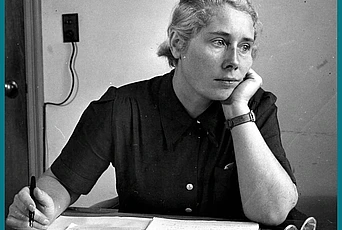
Some lighter readings, including mathematics popularizations chosen by science writer Evelyn Lamb, focused on more modest figures, such as amateur mathematician Marjorie Rice. A 1970s homemaker with five children, Rice got hooked on polygonal tilings of the plane through a Scientific American article by legendary mathematical expositor Martin Gardner. Rice discovered a host of new tilings that professional mathematicians didn’t know about. Working on her kitchen counter in between household tasks, she invented her own ingenious notation that distilled information about properties of polygons and allowed her to organize and analyze them. In her story, the seminar participants found an inspiring example of the mathematical spirit.
For one seminar session, Alma Steingart chose a collection of Depression-era letters exchanged by Norman E. Steenrod and Raymond L. Wilder, Member (1933–34) in the School of Mathematics. When the correspondence began, Steenrod was 22 years old and struggling to scrape together enough money to attend graduate school in mathematics. Wilder had been his undergraduate teacher at the University of Michigan. In June 1934, Steenrod wrote to Wilder:
“I don’t like simple and elegant proofs. And I don’t think anyone else does. They fool you completely. They have to be memorized thoroughly before they stick. But a straightforward, hammer-and-tongs proof is the kind that appeals and is most easily remembered. For this is the way anyone would go about the proof—not the most elegant way.”
These sentiments were something of a surprise, as Steenrod became well known for his highly abstract work in algebraic topology. The seminar participants read some of his papers, including a classic work from the 1940s, in which he and Samuel Eilenberg developed axiomatic homology theory.
The Steenrod–Wilder letters touched many seminar participants. Menon said, “To get to know Steenrod as a person, in his own voice, as he went from raw undergraduate working at a tool shop, to becoming increasingly sophisticated, to becoming a luminary in mathematics, really brought home the importance of looking at original sources.”
One session was devoted to artificial intelligence: Constantin Kogler, Member (2025–27) in the School of Mathematics, chose as readings four recent preprints by mathematicians who had used AI tools. One of the papers presented a collection of problems designed to challenge AI and reported on the results, while the other papers discussed problems for which AI either found a solution on its own or had contributed substantially to a solution. The intense and wide-ranging discussion surfaced a host of questions. Will mathematicians gravitate towards problems suited to solution by AI? Will AI influence, or overtake, human mathematical intuition? Will chatbots replace collaborators? Will AI set the course for the mathematics of the future?
Such questions weigh on the mathematical community, especially on its youngest members. No easy answers came out of the seminar. However, in providing mathematicians an opportunity to step back and ponder their field—its origins, its wellsprings, and its meaning—the seminar offered a framework for considering its future.
The seminar might not continue in exactly the form it took this year, but Menon and Venkatesh are thinking about ways to keep its spirit alive. The moment feels urgent. As Menon put it, “We are facing a battle for the soul of our discipline.”