IAS Co-Founds Advanced Research Consortium
The Institute for Advanced Study has joined with the Max Planck Society for the Advancement of Science in Germany and the Weizmann Institute of Science in Israel to establish the Advanced Research Consortium (ARC), a new institution dedicated to fundamental, curiosity-driven research and scholarly collaboration across geographic and disciplinary boundaries.
ARC extends internationally a model that the Institute has pursued since its founding in 1930: bringing exceptional scholars together, freeing them from ordinary obligations, and giving them the time and independence to follow fundamental questions wherever they lead. Abraham Flexner, the Institute’s founding Director, built IAS on the conviction that the free pursuit of knowledge, undertaken without regard to immediate application, is the wellspring of lasting discovery, and ARC carries that conviction into a new era of global collaboration.
Like the Institute’s own visiting Memberships, ARC’s research program will bring scholars from around the world together for defined periods, in ARC’s case ranging from a week to one year, giving them the time, space, and resources to work collaboratively on fundamental questions across the natural, exact, and social sciences, as well as the humanities. Rather than building a permanent faculty, ARC will continually renew its research program through the scholars and projects it brings together. It will reinforce existing networks and create new pathways for collaboration across disciplines and borders, providing the conditions in which new research communities and even new fields of inquiry can emerge.
ARC will also establish a postdoctoral fellowship program for early-career scholars, who will conduct research at two of the three founding institutions. Supporting scholars at the formative stage of their careers has been central to the Institute’s work for nearly a century; through ARC, fellows will be integrated into international research networks that advance their careers and strengthen the flow of talent and ideas across borders. Initially, the program will be open only to scholars in the natural and exact sciences.
“At a time when geopolitical pressures can fragment the global scientific community and the value of fundamental research is increasingly questioned, ARC will affirm the importance of open, independent inquiry across borders,” said David Nirenberg, the Institute’s Director and Leon Levy Professor. “Our shared commitment to excellence in research depends on the free exchange of ideas.”
Each founding institution brings its own unique strengths to ARC, and each is committed to the independent pursuit of knowledge at the highest level. By combining their resources and networks, the three institutions will offer opportunities to pursue complex questions beyond the reach of any one scholar, discipline, or institution.
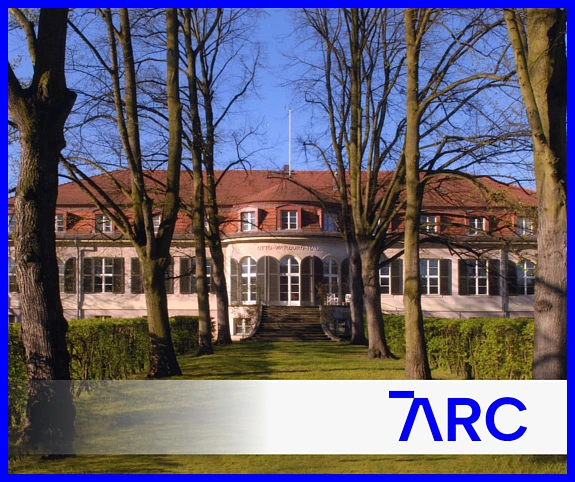
Based at Otto Warburg Haus in Dahlem, Berlin’s historic center of scientific discovery, ARC will be an independent organization governed by a directorate with faculty representatives from each of the three founding organizations. The inaugural directors are Irit Dinur, Betsey Lombard Overdeck Theory of Computing Professor in the School of Mathematics at the Institute for Advanced Study; Nicole Dubilier from the Max Planck Society; and Ziv Reich from the Weizmann Institute.
For further information, visit the ARC website.
About the Institute
The Institute for Advanced Study has served as one of the leading independent centers for theoretical research and intellectual inquiry since its establishment in 1930, advancing the frontiers of knowledge across the sciences and humanities. From founding IAS Faculty Albert Einstein, Erwin Panofsky, and John von Neumann to influential figures Emmy Noether, George Kennan, and J. Robert Oppenheimer to the foremost thinkers of the present, IAS is dedicated to enabling independent inquiry and fundamental discovery.
Each year, the Institute welcomes more than 250 of the world’s most promising post-doctoral researchers and scholars who are selected and mentored by a permanent Faculty, all of whom are preeminent leaders in their fields. Among present and past Faculty and Members, there have been 37 Nobel Laureates, 49 of the 68 Fields Medalists, and 25 of the 29 Abel Prize Laureates, as well as winners of the Turing Award; the Pulitzer Prize in History; the Wolf, Holberg, and Kluge prizes; and many MacArthur and Guggenheim fellows, among other honors.