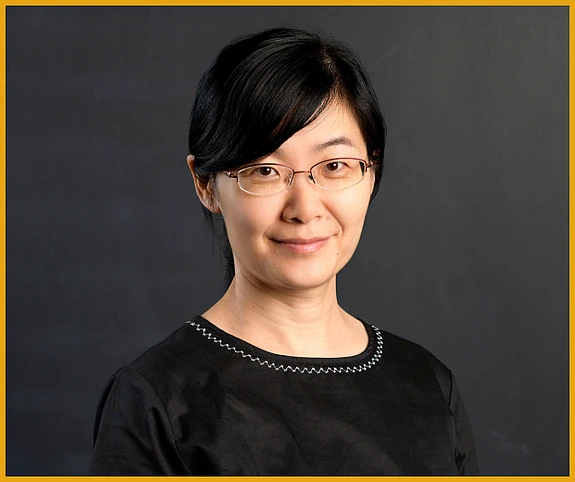
Yingyao Wang, Wolfensohn Family Member in the School of Social Science, is a sociologist who studies how political institutions and social networks shape economic development. Much of her work has focused on the political economy of China, but in recent years she has turned to the rise of "Global China" and its implications for development beyond China's borders. Wang comes to IAS from the University of Virginia, where she serves as an Assistant Professor of Sociology. Her first book, Markets with Bureaucratic Characteristics: How Economic Bureaucrats Make Policies and Remake the Chinese State, published with Columbia University Press, won the American Sociological Association's 2025 Sociology of Development Best Book Award.
What is your elevator pitch for describing your research?
I am a sociologist who studies how political institutions and social networks shape economic development. Empirically, much of my research has focused on the political economy of China, but in recent years I have increasingly turned to the rise of Global China and its implications for development beyond China's borders. At IAS, I am pursuing a project on Chinese investment and industrial relocation in Southeast Asia. I situate these contemporary shifts within a longer history of industrial relocation across Asia over the past half century, asking how successive waves of capital, production, and knowledge transfer have contributed to the emergence of East and Southeast Asia as major regions of global development.
What changes or evolutions currently occurring within your field do you find most exciting?
The study of contemporary China has historically tended to treat China as a relatively bounded national entity. China's rapidly expanding global engagement, however, has increasingly challenged the adequacy of the nation-state as the container of China research. China studies have been globalized, and "Global China" has emerged as a distinctive field of inquiry. This shift calls for greater attention to the interface between China's domestic political economy and its activities abroad—the research of Wendy Leutert, Richard B. Fisher Member in the School of Social Science, for example, illustrates this approach—and it creates opportunities for dialogue between China specialists and scholars of other regions, allowing China to be observed not only from Beijing outward but also from Southeast Asia, Africa, Latin America, and elsewhere.
Global China thus offers more than an expansion of the geographical scope of China studies. It provides an analytical meeting ground where scholars can connect theoretical and empirical debates that have often developed separately—on empire and hegemony, globalization and development, supply chains and industrial relocation, state capitalism, nationalism, and transnational networks. Seen from this vantage point, Global China becomes a particularly productive site for understanding the interconnectedness, complexity, and precarity of the current world-historical moment.
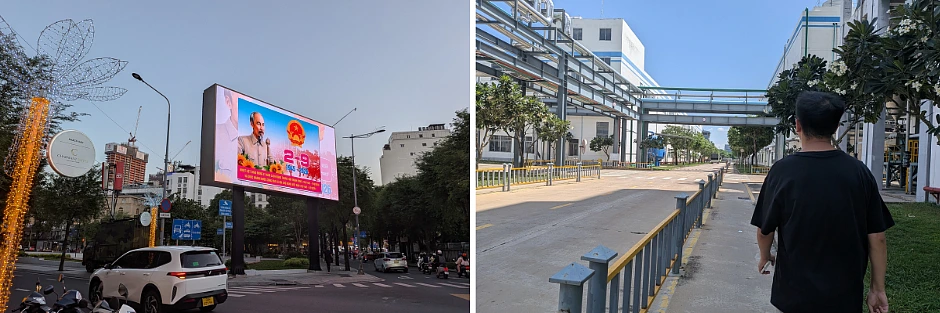
Princeton offers a very specific, quiet Northeastern U.S. environment. How does this geographic setting and climate contrast with where you are moving from, and how do you think the change in scenery will impact your daily routine?
In central Virginia, where I work, we usually receive one or two rounds of snow each winter, and the city often falls into a kind of paralysis, because cities in the South are not particularly well prepared for snow. I look forward to experiencing snow again—not only its beauty, which I remember from my years studying in New Haven, Connecticut, but also life after the snow.
As someone who is always interested in how people build and maintain infrastructure, I am curious about how snow is handled in places where snowy weather is a routine part of life: how cities integrate it into the management of roads and transportation, and how people adapt their daily routines and navigate everyday life around it.
IAS has a long-standing tradition of afternoon tea. As an incoming IAS scholar, how do you drink your tea?
Having made it to afternoon tea twice, I am already confident that this ritual will become one of my favorite memories of IAS. At a time when our minds and bodies are so easily dispersed across the digital—and increasingly artificial—world, it is a wonderful idea to bring them back together in one place, through face-to-face conversations in a room filled with the fragrance of tea and coffee. In the culture I grew up in, tea is essentially social. Granted, there is an entire industry of production, preparation, and grading built around it. Yet, one of the most important roles tea plays remains remarkably simple: it is something we enjoy together, creating a moment to slow down and connect with one another—and perhaps with nature—through this simple ritual.