IAS Faculty and Members Named American Political Science Association Award Winners
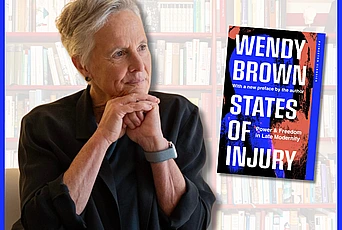
Wendy Brown, Professor Emerita in the School of Social Science, was recently announced as the winner of the American Political Science Association (APSA)'s Benjamin E. Lippincott Award for her 1995 book States of Injury: Power and Freedom in Late Modernity. The award recognizes "exceptional work by a living political theorist that is still considered significant after a time span of at least 15 years since the original publication."
Described in the award citation as "a defining work of political theory, feminist theory, critical theory, and democratic thought," States of Injury explores how woundedness became a basis for contemporary political identity. How, Brown asks, might wounded attachments foreclose the emancipation and equality to which Left social movements aspired? She also develops an original theoretical practice that weaves together Nietzsche, Marx, Weber, Foucault, and cultural theories of gender and race to analyze contemporary political predicaments. Since its publication, the book has been translated into French, Italian, Greek, Spanish and Chinese, with selected chapters translated into a dozen other languages. States of Injury was also re-issued in 2025 as part of Princeton University's Princeton Classics collection, featuring a new preface by Brown that addresses changing conditions for wounded identity claims, especially those of white men.
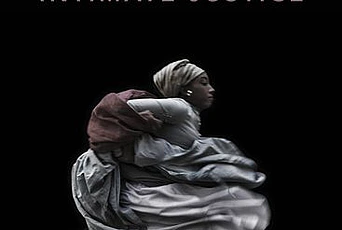
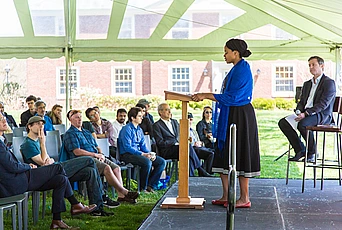
The Labors of Resurrection: Black Women, Necromancy, and Morrisonian Democracy, a book by Shatema Threadcraft, Ralph E. and Doris M. Hansmann Member (2017–18) in the School of Social Science, was also recognized by APSA, becoming the first book to win both the Ralph J. Bunche Award and the Victoria Schuck Award in the same year. Her acclaimed volume was also named the 2026 Gold Winner for Women's Issues by the Independent Book Publisher Awards and the 2025 Silver Winner for Women's Studies by Foreword Indies.
The Labors of Resurrection, which was praised in the Ralph J. Bunche Award citation as being "a theoretically rich" and "methodologically sophisticated" book that "brings a deft understanding of the modes of analysis in multiple fields," was based on research that Threadcraft conducted during her IAS Membership. Reflecting on the impact of her time at the Institute, Threadcraft stated: "I began and ended this project on fellowships in Princeton, so I associate the place with the time, community, and conditions to think. My book is without question better because of Princeton in general and the Institute in particular. I came to IAS as an exhausted newly tenured scholar with an idea for a second project but not much else. I joined a group of scholars who were excited about thinking: a tremendous gift. I spent the time reading, eating great food, chatting, and taking walks."
She continued: "When I came back to town on a Princeton University fellowship five years later, I was at the end of the project and that called for less wandering and way more discipline. IAS (and Joan Scott, Professor Emerita in the School of Social Science, specifically) helped me with that too, graciously providing space for a writing group my friends and I organized. I am eternally grateful for the conversations I've had with Faculty and Members from the School, including Joan, Wendy, Professor Emeritus Didier Fassin, and Harold F. Linder Professor Alondra Nelson."
Finally, Peter J. Katzenstein, Member (2009–10) in the School of Social Science, was announced as the winner of the APSA's James Madison Award, which is presented to "an American political scientist who has made a distinguished scholarly contribution to political science." Katzenstein, who is based at Cornell University, works at the intersection of international relations and comparative politics, addressing issues of political economy, security, and culture in world politics. He has written, co-written, edited, or co-edited over forty books and has published more than one hundred articles and book chapters. His most recent book, Entanglements in World Politics: The Power of Uncertainty, published with Cambridge University Press in 2025, examines differences in context, process, and language, to specify how risk and uncertainty intertwine.
Read more about the awards on the APSA website.