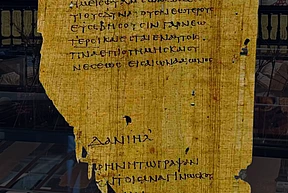
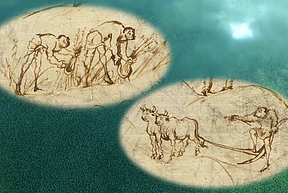
In a recent exhibition, Sofía Torallas Tovar, Distinguished Visiting Professor in the School of Historical Studies, and co-curator Raquel Martín Hernández explored an extraordinary papyrus codex whose pages are now dispersed across the globe. It offers a rare window into the production and circulation of biblical texts in Roman Egypt.
Gilles Bransbourg, Infosys Member in the School of Historical Studies (2024–25), describes the nexus of community and thought that Rubenstein Commons provides to scholars at the Institute for Advanced Study, recounting how small talk at the bar led to a significant insight in his research into economic and monetary history.
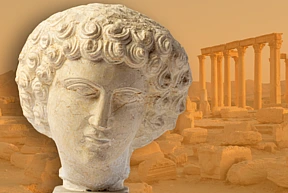
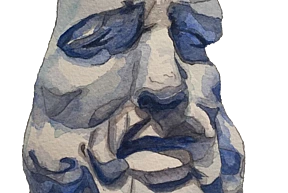
Rubina Raja, Member (2019) in the School of Historical Studies, explains how archaeological context can transform understanding of ancient societies. By analyzing a "loose head" from Palmyra, Syria, she demonstrates how local craftsmen were not merely imitating foreign styles but creating distinct works, fundamentally reshaping our view of Palmyra's cultural identity.
Introducing Celia Sánchez Natalías, William D. Loughlin Member in the School of Historical Studies, whose research focuses on lead curse tablets, or defixiones, from the Roman period. In this Q&A, she discusses her ‘autopsy’ work, being motivated by curiosity, and her fascination with virtually unrolling papyri.
In celebration of the appointment of Maria Hsiuya Loh to the School of Historical Studies Faculty, Visitor (2021–22) and Research Associate (2022) Abbey Ellis explores how Loh's work reshapes traditional views of a great Renaissance artist and grafts new stems onto the legacy of art historical scholarship at the Institute.
Patrick Geary is co-PI of the European Research Council funded research project HistoGenes, which uses a combination of genomic, archaeological, anthropological, and historical methods to study over six-thousand burial sites in the Carpathian Basin between the fifth and tenth centuries.
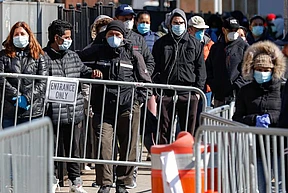
In the summer of 430 B.C.E., a ship from Egypt arrived in
Piraeus with an uninvited guest onboard: the "plague." The symptoms
of this yet-to-be-identified disease—hypotheses range from typhoid
fever to viral hemorrhagic fever—are described by the...
In 327–326 B.C.E., Alexander the Great, after having defeated
the Persian King and conquered the Persian Empire, crossed eastern
Iran, Afghanistan, and Bactria, testing the limits of his
abilities. He attacked the fortress of Aornos, on Mount Pir...
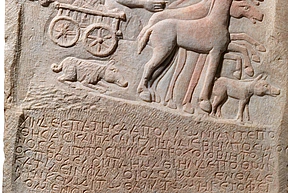
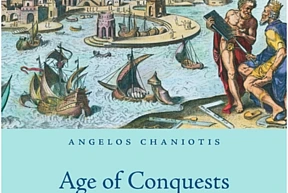
Harvard University Press has published Age of Conquests: The
Greek World from Alexander to Hadrian by Angelos Chaniotis, Professor in the
School of Historical Studies, which provides a compelling narrative
of the main events that shaped ancient...