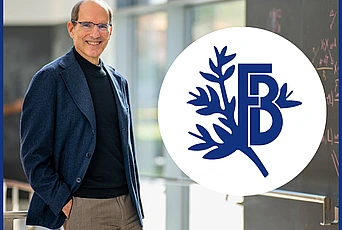
Biblical Scholar Martti Nissinen Named Academician of Science
Martti Nissinen, Member (2008–09, 2016) and Visitor (2011) in the School of Historical Studies, has received the honorary title of Academician of Science, the highest honor that can be bestowed on any individual scientist or scholar in Finland. The title was conferred by the President of the Republic of Finland on October 9, 2026, based on nominations made by the Research Council of Finland (RCF).
Nissinen has been Professor of Old Testament Studies at the University of Helsinki since 2007 and is widely regarded as a leading figure in his field. His research covers the literature of the ancient Near East, prophecy, the historical and cultural connections of Old Testament texts, and gender and sexuality in antiquity. According to the RCF, his work has "significantly enhanced our understanding of how biblical texts were formed," placing them within the broader cultural and religious world of the ancient Near East. The RCF also notes that his scholarship has shaped both academic debate and public understanding of how religion, culture, and history relate to one another.
Nissinen dedicated his two IAS Memberships to the study of prophecy in ancient Near Eastern and Greek sources—mainly Assyrian oracles and letters from the site of Mari in Syria as well as the Hebrew Bible and the records of Greek prophecy at the temples of Apollo at Delphi, Didyma, Dodona, and Claros. His book Ancient Prophecy: Mesopotamian, Greek, and Biblical Perspectives, published with Oxford University Press in 2017, was the product of his intensive periods of research at IAS. The shorter visit that Nissinen paid to the Institute in 2011 also resulted in the publication of a chapter titled "Outlook: Aramaeans Outside of Syria" in the 2014 edited volume The Aramaeans in Ancient Syria (Leiden: Brill).
The title of Academician of Science is a significant distinction: no more than sixteen Finnish scientists and scholars may hold it at any one time. Reflecting on his receipt of the title, Nissinen stated: "I consider it as a token of appreciation, not only of my own scholarly career, but also my fields of study—theology, ancient Near Eastern studies, and gender studies—whose representatives have never before been rewarded with this honorary title."
Read more about the 2026 Academicians of Science on the RCF website.