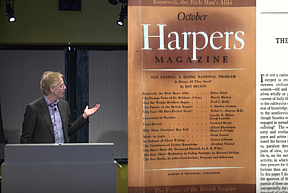
John Timmer of Ars Technica reviews The Usefulness
of Useless Knowledge (Princeton University Press, March 2017)
by founding IAS Director Abraham
Flexner with a companion essay by current IAS Director Robbert Dijkgraaf. Of the book, Timmer
writes,...
Though it may seem far removed from the noise of the
contemporary world, the Institute for Advanced Study (IAS) has a
long history of combating threats to its scholars and their work.
Recent executive orders by President Trump attempting to
enforce...
"Flexner makes two points that seem to me particularly important
right now, especially for policy makers thinking about higher
education in the United States. One is that it is impossible to
predict what research will turn out to be "useful" and...
“In some sense, the evidence of the usefulness of science is all
around us,” Robbert Dijkgraaf said. “It’s in our back pockets, in
our blood streams. We are governed by science—everybody is, even
the people who aren’t supportive of it. But we are...
On the face of it, usefulness seems more definable in the fields
of science, where it can be expressed in theses, discoveries,
inventions and products. But even here usefulness can be
elusive.
"Almost every discovery has a long and precarious history.
Someone finds a bit here, another a bit there. A third step
succeeds later and thus onward till a genius pieces the bits
together and makes the decisive contribution."—from the essay
“The...
Gillian Tett of the Financial Times reviews The Usefulness of Useless
Knowledge (Princeton University Press), founding Director Abraham Flexner's influential 1939 essay
newly republished with a companion essay by Robbert Dijkgraaf, Director and
Leon...
Joseph E. Davis of the Hedgehog Review reflects on
The Usefulness of Useless Knowledge (Princeton University
Press, March 2017) by founding IAS Director Abraham Flexner with a companion essay by
current IAS Director Robbert
Dijkgraaf. Davis writes,...