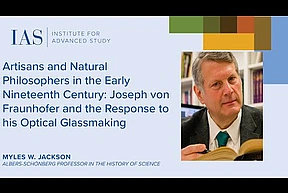
This talk deals tells the story of one of the leading
achromatic-lens makers of the 19th century who revolutionized
astronomy, the German optician Joseph von Fraunhofer, whose name is
associated with the dark lines that transect the solar
spectrum...
Clifford Geertz once quipped: “It is difficult to see what is
always there. Whoever discovered water, it was not a fish.” In the
same way, seeing familiar environments can prove challenging. Those
of us who live our lives in a given space become...
“Negative Energy, Quantum Information and
Causality”
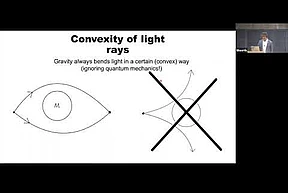
Einstein’s equations of gravity show that too much negative
energy can lead to causality violations and causal paradoxes such
as the so-called "grandfather paradox.”...
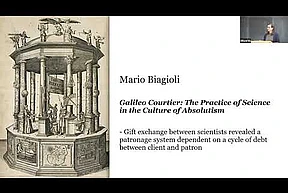
Historians of Science and Medicine emphasize how the circulation
of human biological material for global science involves complex
exchange systems amongst foreign and local scientists. Here,
notions of the gift and reciprocity underpin the idiom of...
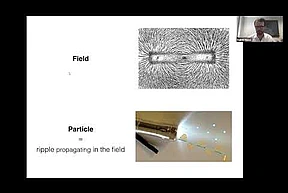
Developments in fundamental physics over the last century have
led to the formulation of a universal language successfully
describing Nature from the subatomic scale to the universe as a
whole. This language is known as quantum field theory. In...
Histories of ancient cultures often present the image of clearly
recognizable peoples. Those who are centered in historical
canons—Egyptians, Greeks, Romans—are often subject to the most
longstanding and unyielding historical expectations. In this...
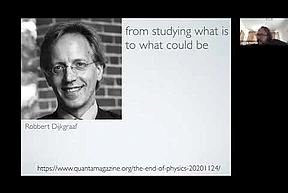
IAS Director Robbert Dijkgraaf recently remarked that 21st
century scientists are shifting “from studying what is to what
could be.” We urgently need a social science of what could be, if
we are to face challenges from inequality and racial...
Most readers of Toni Morrison know her best as a novelist. She
is the author of 11 extraordinary works of fiction, including the
1987 masterpiece, Beloved, and her work is assigned
in high school and college classrooms and debated at book
club...
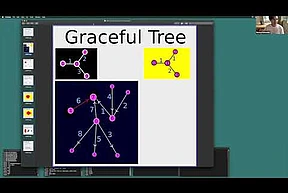
Mathematics is an extremely deep and extensive subject, but
amazingly we are surrounded by easily stated mathematical problems
about which almost nothing is known. These kinds of problems
tantalize mathematicians with their combination of
simplicity...