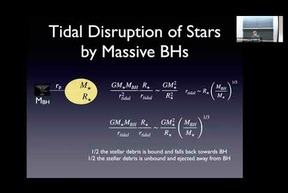
Stars orbiting sufficiently close to massive black holes
inevitably inspiral towards the black hole due to gravitational
wave radiation. The fate of such stars is subtle and depends on an
interplay between tidal heating of the star, mass transfer...
Observations of fluctuations in the CMB provide information
about primordial inhomogeneities in the universe. However, the
B-mode polarization of the inflationary gravitational wave is
contaminated by the Galactic dust and synchrotron foreground...
Pulsar timing array (PTA) experiments aim to detect
nHz-frequency gravitational waves using high-precision timing of
millisecond pulsars. Multiple PTA collaborations have recently
reported evidence for a stochastic gravitational wave
background...
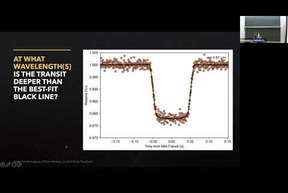
A large fraction of exoplanetary systems contain planets that
orbit very close to their host stars. With orbital periods in the
range of days to weeks, tidal forces become important and lead to
significant orbital and physical effects on the planets...
The search for signs of life beyond Earth is a key motivator in
exoplanet research. A suitable “biosignature gas” is one
that: can accumulate in an atmosphere against atmospheric radicals
and other sinks; has strong atmospheric spectral features...
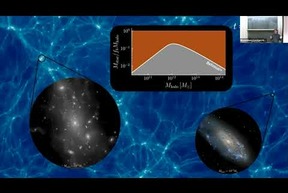
Galaxies are at the core of nearly all modern astrophysical
studies. They serve as essential cosmological probes, tracing the
structure of the universe, while also providing the stage on which
stars form and black holes grow. Despite their...