Histories of Native American Treaties and Anti-Chinese Violence Win Bancroft Prize
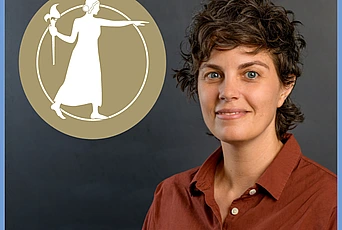
Both of the scholars awarded this year’s Bancroft Prize have ties to the Institute for Advanced Study: Emilie Connolly, Member (2024–25) in the School of Historical Studies, and Beth Lew-Williams, Visitor (2015–16) in the School of Social Science. The New York Times announced the awards, describing the prize as "one of the most prestigious honors for scholars of American history."
Connolly was recognized for Vested Interests: Trusteeship and Native Dispossession in the United States (Princeton University Press, 2025), a study of the financial aspects of treaty relationships between Native nations and the United States. Rather than paying for land outright, the Times reports, many agreements kept most compensation in trust, with future payments conditioned on continued Native compliance. As noted in the Times piece, the Bancroft jury emphasized that while histories of westward expansion often foreground violence and forced removal, Connolly "reveals a quieter but no less devastating set of Native encounters with U.S. power," charting the rise of what they called "fiduciary colonialism" and the multigenerational expropriation of Native wealth.
Lew-Williams was honored for John Doe Chinaman: A Forgotten History of Chinese Life Under American Racial Law (Belknap Press of Harvard University Press, 2025), which the Times describes as a "sweeping history of the thousands of laws enacted across the United States to discriminate against people of Chinese origin," beginning with an 1852 California tax on foreign gold miners. The prize committee, quoted in the Times, praised the book as "a rich and vibrant history of unnamed (and misnamed) Chinese men and women and their world in the 19th-century Pacific West," highlighting not only legal oppression but also resistance.
The Bancroft Prize was created in 1948 by Columbia University trustees through a bequest from historian Frederic Bancroft; this year, 246 books were submitted and evaluated for "scope, significance, depth of research and richness of interpretation."
Read the article in full via The New York Times.