Dwarf Planet is a Giant Discovery

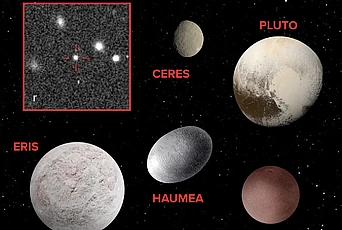
In May 2025, Sihao Cheng, Martin A. and Helen Chooljian Member (2022–25) in the School of Natural Sciences, led a team to the discovery of an extraordinary trans-Neptunian object (TNO), named 2017 OF201, at the edge of our solar system. The TNO is potentially large enough to qualify as a dwarf planet, the same category as the much more well-known Pluto. News of this discovery attracted media attention from outlets across the globe, including The New York Times. Below, Cheng shares—in his own words—a close-up look at how the new object was discovered and a reflection on how his time at IAS was pivotal to making the detection.
“When I first started searching for new objects beyond Neptune, I was motivated by the mystery of the rumored ninth planet in our solar system, known as Planet Nine. Mike Brown from Caltech had given a talk at Princeton University about all the failed searches, and I thought maybe I had something new to contribute. I’ve always been interested in image processing and discovering new things, and my background as an amateur astronomer meant I was used to tinkering with data.
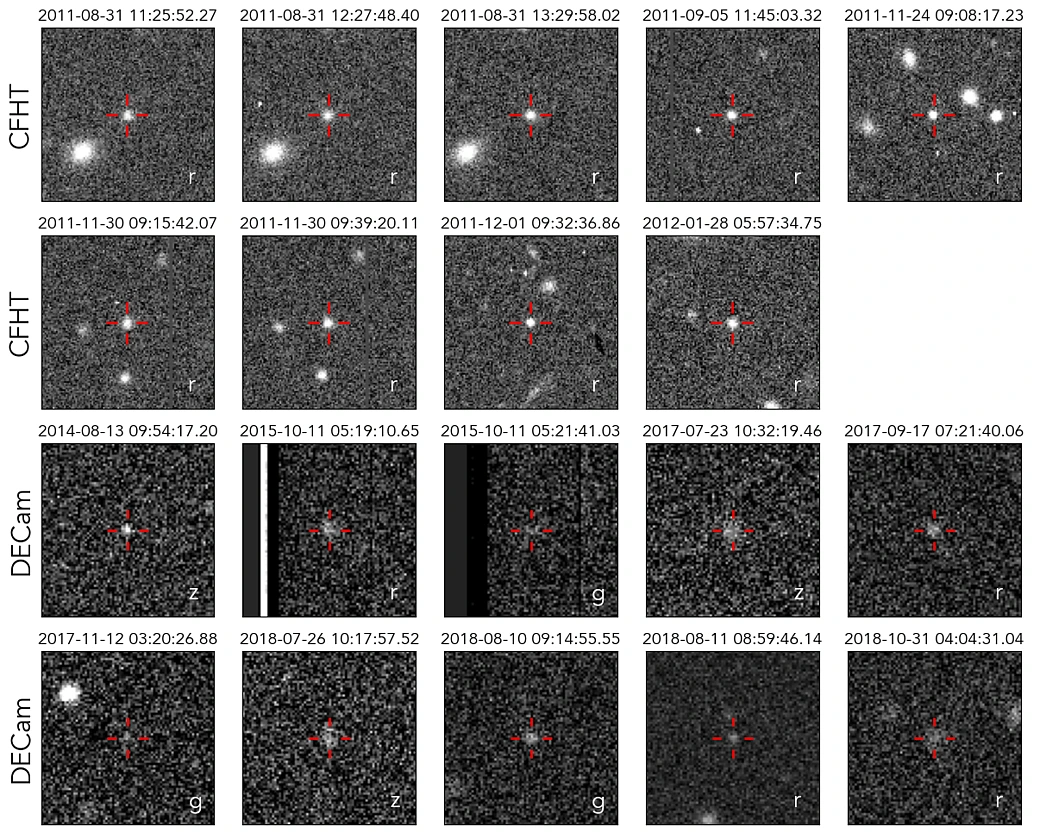
What made our discovery possible was looking where no one else had. I used the Dark Energy Camera Legacy Survey, which was built for studying distant galaxies, not for spotting moving objects in our own solar system. That meant its images were spaced months or even years apart—far from ideal for tracking solar system bodies. To use the data for our purpose, I had to write entirely new algorithms and run them for days on computing clusters. It was a real computational challenge, but I was excited by the possibility of finding something new, even if Planet Nine itself wasn’t there.
Being a Member at the Institute was crucial for this. IAS is a rare place that encourages you to take risks—where you can spend a year pursuing an uncertain project, and that’s considered valuable, whether or not you find what you set out to. That freedom made it possible to invest the time and effort needed for a search like this, not knowing what the outcome would be.
When I finally found this new TNO, its orbit stood out right away: extremely elongated, coming as close as Neptune but stretching over a thousand astronomical units from the Sun. Based on its brightness and distance, we estimate that it measures about 700 km across, likely large enough to be round and even qualify as a dwarf planet.
The orbit also hints at a hidden population of more objects like it: finding even one object like this suggests there are a hundred times more out there, not seen with current data. Our object is also an outlier; its orbit doesn’t fit the expected clustering you’d expect to see if Planet Nine really is out there. It puts new constraints on where Planet Nine could be, but the real lesson is how much we still have to learn from the available data—especially when you have the freedom to look with fresh eyes.”