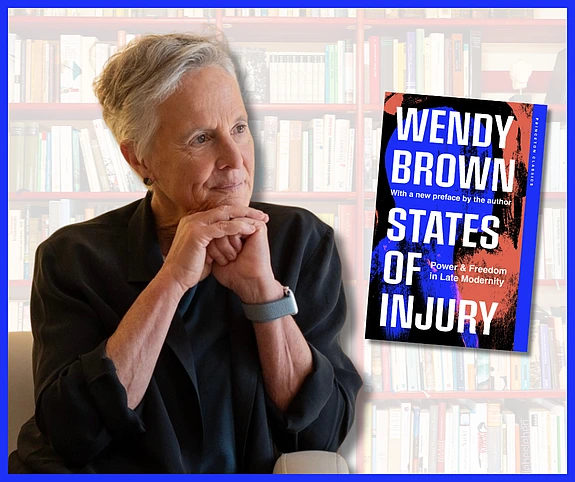
In 1995, Wendy Brown, UPS Foundation Professor in the School of Social Science and American political theorist, published States of Injury: Power and Freedom in Late Modernity. In 1996, it won the Choice Outstanding Book Award, and has since been translated into French, Italian, Greek, Spanish and Chinese, with selected chapters translated into a dozen other languages. The book responded to specific predicaments of the Left at the close of the twentieth century; Brown focused especially on the politics of identity, its formation at the site of a wound, and the dangers of enshrining such wounds as a political position, or even in the law. How, Brown asked, might wounded attachments foreclose the emancipation and equality to which Left social movements aspired?
Thirty years later, Princeton University Press has recognized both the achievement of Brown’s theoretical intervention in the nineties and its startling prescience for the contemporary political landscape, issuing the book as part of the Princeton Classics collection. States of Injury (2025) therefore joins the ranks of “works by leading scholars and writers that have made a lasting impact on intellectual life around the world.” Other titles include those as definitive as Walden and Mimesis.
The 2025 edition features a new preface from Brown, which situates the book in the context of what has changed politically and intellectually— and what has not—since its original publication. She writes of the American political circumstances that originally animated States of Injury, describing how the Right mobilized notions of “freedom” in order to take down redistributive policies and programs, and the Left’s reactive tempering of its own political aims. Of the ways in which the modern political landscape echoes, but also recasts, that earlier dynamic, Brown concludes: “Given the perennial appeal of freedom, and its importance to human thriving and democracy, leftist reclamations of the term along with articulations of its value and conditions have never been more important. If the challenge of the early 1990s was to recuperate Left struggles for freedom as emancipation, today we are challenged to integrate that struggle with one for freedom as democratic rule.”