How has choice become a defining feature of modern freedom? This was not always the case: the option to choose where to live, what to buy, and what to believe was neither universally available nor consistently desired throughout history.
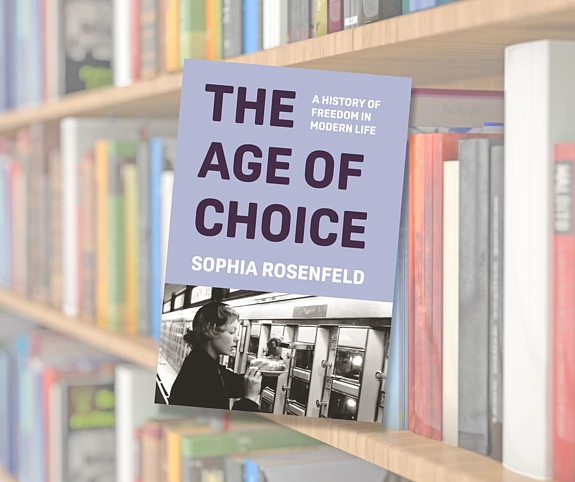
Drawing from diverse sources including novels, restaurant menus, and the latest research in psychology and economics, Sophia Rosenfeld, Ed Kaufmann Founders' Circle Member (2014–15) in the School of Social Science, traces the evolution of choice from the seventeenth century to today. Rosenfeld’s book, The Age of Choice: A History of Freedom in Modern Life, written during her IAS Membership, highlights how, despite often having fewer options themselves, women were a key driver in the rise of choice.
The book also addresses a paradox inherent in the concept of choice: while commonly associated with freedom and autonomy, an abundance of options can lead to anxiety and other social costs. In her work, Rosenfeld offers a thought-provoking analysis of a fundamental aspect of modern life that can often be taken for granted.