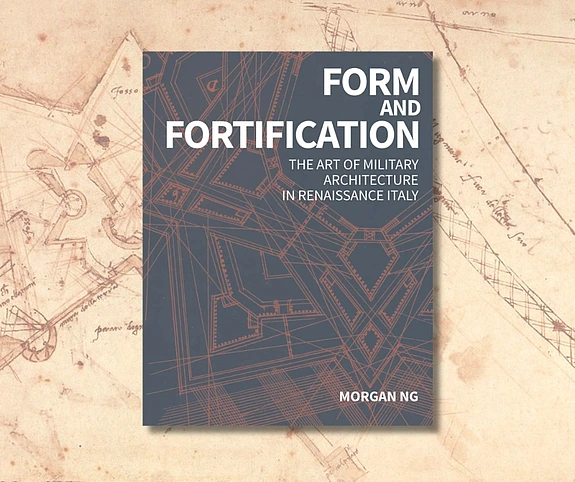
In a new book completed during his IAS Membership (2023–24) in the School of Historical Studies, Morgan Ng reconsiders the Italian Renaissance through unexpected, monumental works of art: urban fortifications. Form and Fortification: The Art of Military Architecture in Renaissance Italy shows that ramparts and citadels were not merely instruments of war but laboratories through which sculptors, painters, architects, humanists, and military commanders tested new ideas about geometry, construction, and the shape of the city itself.
By analyzing drawings, archival manuscripts, printed treatises, and built works—from Michelangelo and Leonardo to Francesco Paciotto—Ng maps the exchanges between defense, garden design, hydraulics, and courtly display. His key notion of “cognate technologies” illuminates how earthworks echoed terraced landscapes, artillery chambers resembled grottoes and tunnels, and fortified corridors evolved into palatial galleries.
The study restores military architecture to the center of Renaissance creativity, revealing how protection and beauty advanced together, and offers a fresh vocabulary for reading walls as both technical and artistic-cultural artifacts.