During his most recent visit to the Institute, Daniel J. Sherman, Member (1993–94; 2016) in the School of Historical Studies, was interested in “unearthing”—in more than one sense of the word—and its politics. Sensations: French Archaeology between Science and Spectacle, 1890–1940, published in 2025, is one artifact of that historical digging.
In the book, Sherman examines the impact of French cultural and intellectual forces on archaeology at the precipice between the field’s “heroic age” and its professionalization. He ultimately argues that archaeology, as we understand it today, is a legacy of the tension between archaeologists’ desire for recognition and for scientific rigor.
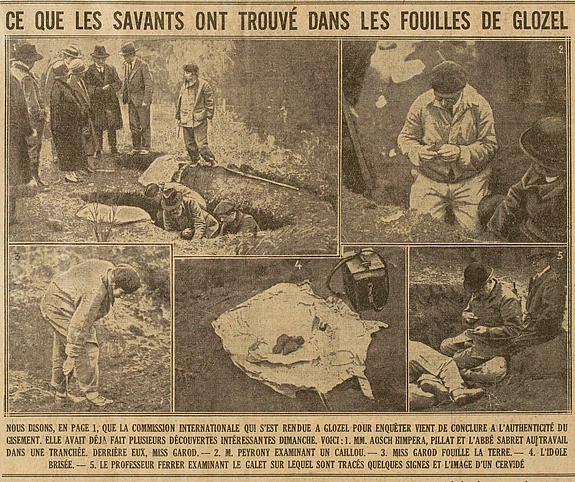
Two French controversies ground this argument. The first concerns state-sponsored excavations in Tunisia, for which French directors of antiquities incurred the censure and critique of amateur archaeologists. The second centers on a debate over the authenticity of a purportedly groundbreaking Neolithic discovery in central France. Through detailed accounts of these disputes and the various media narratives that swirled around them, Sherman asks: “In what ways was archaeology legitimated, and for whom?”
“Critical histories” of archaeology are a relatively new phenomenon. In treating archaeology as an object of historiography—the study of how history is interpreted over time—Sensations makes a unique intervention, placing archaeology alongside other histories of scientific enterprise.