Sabine Schmidtke to Lecture on Muslim Perceptions and Receptions of the Bible
PRESS CONTACT: Alexandra Altman, (609) 951-4406
On Friday, October 24, Sabine Schmidtke, Professor in the School of Historical Studies at the Institute for Advanced Study, will give a public lecture, “Muslim Perceptions and Receptions in the Bible,” which will take place at 5:30 p.m. in Wolfensohn Hall on the Institute campus.
The Qurʾān defines itself as the last, perfect link in a chain of progressive divine revelations. This determines the ambivalent attitude of the Qurʾān and the Muslim tradition towards the two earlier monotheistic religions: Judaism and Christianity, and their scriptures.
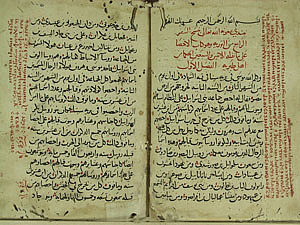
In this lecture, Schmidtke will investigate, in a diachronic manner, the ways in which Muslim scholars perceived, used—or avoided—the earlier scriptures, and will discuss the most pressing desiderata in research and other challenges to scholarship in this field. Schmidtke will explain the commonly employed polemical tropes—abrogation and distortion of the earlier scriptures on the one hand, and the identification of (alleged) scriptural predictions of Muḥammad on the other. Moreover, Schmidtke will show the impact of historical events and internal discussions among Jewish and Christian intellectuals on the Muslim attitude towards the Bible. The much-debated issue of when and through which channels Muslim scholars became familiar with the Bible will be summarized, as well as the emergence of a so-called Muslim Bible scholarship from the 13th century onwards.
Schmidtke is known for her pioneering research that has transformed perspectives about the interrelations and connections among different strands of intellectual inquiry, across time, place, religions, and philosophical schools. She has played a central role in the exploration of heretofore unedited and unknown theological and philosophical writings and is regarded internationally as a leading philologist. Schmidtke is currently working on the history of Islamic thought in the post-classical period (13th to 19th centuries), with a focus on reconstructing the textual heritage and the intellectual import of the Islamic intellectual world, from Iran and Central Asia to Turkey and Spain.
Schmidtke and her work have been recognized by numerous awards including the World Prize for the Book of the Year (2002) of the Islamic Republic of Iran for her work Theologie, Philosophie und Mystik im zwölferschiitischen Islam des 9./15. Jahrhunderts: Die Gedankenwelt des Ibn Abī Jumhūr al-Aḥsāʾī (2000).
Schmidtke received her D.Phil. in 1990 from the University of Oxford. From 1991 to 1999, she was a diplomat at the German Foreign Office. Schmidtke served as Lecturer in Islamic Studies at the University of Bonn from 1997 to 1999, where she also received her Habilitation in 1999. She was Visiting Professor of Islamic Studies at the Freie Universität Berlin from 1999 to 2001, after which time she became Professor and served until 2014. Additionally, in 2011 Schmidtke founded the Research Unit on the Intellectual History of the Islamicate World. After having visited the Institute for Advanced Study on two occasions (2008-09, 2013-14), she joined the Faculty of the School of Historical Studies in 2014.
This lecture is free and open to the public. For more information on other lectures at the Institute, visit http://www.ias.edu/news/public-events.
About the Institute for Advanced Study
The Institute for Advanced Study is one of the world’s leading centers for theoretical research and intellectual inquiry. The Institute exists to encourage and support curiosity-driven research in the sciences and humanities—the original, often speculative thinking that produces advances in knowledge that change the way we understand the world. Work at the Institute takes place in four Schools: Historical Studies, Mathematics, Natural Sciences and Social Science. It provides for the mentoring of scholars by a permanent Faculty of approximately 30, and it ensures the freedom to undertake research that will make significant contributions in any of the broad range of fields in the sciences and humanities studied at the Institute.
The Institute, founded in 1930, is a private, independent academic institution located in Princeton, New Jersey. Its more than 6,000 former Members hold positions of intellectual and scientific leadership throughout the academic world. Thirty-three Nobel Laureates and 40 out of 56 Fields Medalists, as well as many winners of the Wolf and MacArthur prizes, have been affiliated with the Institute.