Political Economist Dani Rodrik Appointed to Faculty at Institute for Advanced Study
PRESS CONTACT: Christine Ferrara, (609) 734-8239
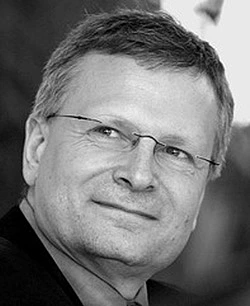
Dani Rodrik, a leading political economist whose prescient and imaginative exploration of complex issues in international development, globalization and economic policy have transformed the field and precipitated change, has been appointed as Albert O. Hirschman Professor in the School of Social Science at the Institute for Advanced Study, with effect from July 1, 2013. Rodrik comes to the Institute from Harvard University, where he is Rafiq Hariri Professor of International Political Economy at the John F. Kennedy School of Government. He succeeds Eric S. Maskin, who served on the Institute Faculty from 2000–12. At the Institute, Rodrik will bridge the realms of theory and public policy by combining rigorous research with an innovative examination of ideas across the field of economics—qualities embodied by development economist Albert O. Hirschman, a founder of the Institute’s School of Social Science and former Professor who died in December 2012.
The School’s intensive selection process for the appointment was open to all fields of economics at the international level. Didier Fassin, James D. Wolfensohn Professor in the School, stated, “Not only is Dani Rodrik one of the most distinguished economists worldwide, but he is also deeply involved in a dialogue between disciplines, which makes him a perfect successor to Albert Hirschman and a crucial addition to our School of Social Science.”
“Dani Rodrik’s engagement with challenging issues in global economics and his ability to address them with clarity and imagination are unmatched in the field,” added Robbert Dijkgraaf, Director and Leon Levy Professor at the Institute. “I am extremely pleased that Dani is joining the Faculty at the Institute, where he will help to sustain and enhance the School of Social Science’s intensely active, comparative and international approach to research across the field.”
Joseph E. Stiglitz, University Professor at Columbia University and recipient of the Nobel Prize in Economic Sciences in 2001, describes Rodrik as having “broken the mold of a conventional economist,” and notes that “the economics field has progressively subscribed to the ideas and modes of analysis that he helped pioneer.” One of the most widely published and cited economists of his generation, Rodrik’s current research centers on the future of economic growth and the role of ideas in political economy. Rodrik’s interests are diverse, spanning international development, the consequences of globalization, the role of national institutions, the challenges of inequality and the tensions between the market and the state, and are in active dialogue with the research pursued by the Faculty and Members in the School of Social Science.
“I cannot imagine a greater honor than being a Professor at the Institute and holding a chair bearing Albert Hirschman’s name,” said Rodrik. “I am tremendously excited by the prospect of joining the Institute’s Faculty and contributing to its life.”
Rodrik’s books The Globalization Paradox: Democracy and the Future of the World Economy (2011), One Economics, Many Recipes: Globalization, Institutions, and Economic Growth (2007) and Has Globalization Gone Too Far? (1997) have challenged orthodoxy and yet have become standard texts in the field. His arguments, which explore the boundaries between economic theory and policy, have endured, moving debates forward and influencing courses of action. The Euro zone crisis has highlighted the relevance of the “trilemma” theory that Rodrik conceived of in the early 2000s, which states that any given country can achieve at most only two of the following: national sovereignty, democracy and global integration. In contrast to a set of ideas developed in the 1970s and early 1980s known as the Washington Consensus—which adopted a comprehensive and broad approach to development policy—Rodrik maintains that successful institutional design policies take into account preexisting local conditions, market arrangements, distortions and constraints. Rodrik argues for customizable development strategies underpinned by effective basic principles—property rights; macroeconomic and political stability; processes for innovation, diversification, and regulation; and social cohesion—but implemented through nonstandard policies, which recognize, in Rodrik’s words, that “binding constraints on growth differ across countries and over time.”
Born in Istanbul in 1957, Rodrik attended Harvard University, where he earned his A.B. in 1979. He received his M.P.A. in 1981 from the Woodrow Wilson School of Public and International Affairs at Princeton University, and his Ph.D. in economics from Princeton in 1985. His early research centered on examining the ways that rural political mobilization in Egypt and Turkey in the 1950s led to entirely different consequences in each country—a revolution in the first case, and a conservative government in the second. In 1980 and in 1981–82, he served as Assistant Economic Affairs Officer at the United Nations Conference on Trade and Development, where he analyzed trade problems confronting developing countries. Rodrik’s Ph.D. dissertation three years later focused on applied trade theory and generated unexpected results using conventional methods. His published articles at the time centered on the efficiency of trade restrictions and the economic rationale for the use of overvalued currencies in developing nations. Rodrik’s compelling perspective on the issues challenged generally accepted views and sparked new dialogues in the field.
At the John F. Kennedy School of Government at Harvard, where Rodrik served as an Assistant Professor from 1985–89 and then an Associate Professor from 1989–92, he worked on the normative and positive economics of trade and development. In his research, he addressed the question of what type of trade policy serves developing countries best, and analyzed the advantages of different trade policies, such as import tariffs, quantitative restrictions, export subsidies and performance requirements. His interests continued to broaden thematically and internationally, and he published surveys on “real world” problems present in Africa, Eastern Europe and Asia, where he challenged the dominant views that coalesced around the Washington Consensus. From 1992–96, Rodrik served as Professor of Economics and International Affairs at Columbia University, and focused his work on the reasons why the public sector expanded so rapidly in advanced economies in the decades following World War II. Rodrik’s econometric analysis of 100 countries demonstrated a correlation between the expansion and the openness of international trade. This research led to a broader preoccupation with the consequences of economic globalization, and resulted in his influential book, Has Globalization Gone Too Far?
Rodrik returned to Harvard in 1996 and centered his research on institutions and economic growth, which was facilitated by the greater availability of large cross-national data sets. In a paper published in the Quarterly Journal of Economics, he posited that, despite the fact that cross-national distribution of wages is determined largely by labor productivity, politics play a clear role: in democratic regimes, workers are able to bargain for better wages and obtain these at no cost to overall economic performance. Through this and other research published in the American Economic Review, Rodrik demonstrated that democratic regimes worked better than authoritarian ones, even in developing countries, and pointed to the need for governmental reform grounded in local innovation and experimentation. Also at Harvard, Rodrik initiated a research effort concerned with a new general theory of growth using the language of constrained optimization, supplemented by an empirical strategy called Growth Diagnostics. His 2007 book, One Economics, Many Recipes, synthesizes these ideas, which were soon adopted by the World Bank and the Inter-American Development Bank, as well as several national governments.
Rodrik and his work have been recognized by major awards, fellowships, lectureships and honorary doctorates. He was awarded the Social Science Research Council’s first annual Albert O. Hirschman Prize in 2007 and the Leontief Prize for Advancing the Frontiers of Economic Thought in 2002 by the Global Development and Environmental Institute at Tufts University. He is a member of the Science Academy of Turkey and serves on the Scientific Council of the Paris School of Economics and the Committee on International Economic Policy Reform. Rodrik also has served as an advisor to many national governments and institutions, including the World Bank. He is co-editor of the Journal of Globalization and Development, and is on the editorial and advisory boards of leading economic and policy publications. His monthly columns for Project Syndicate appear in many publications worldwide.
About the Institute for Advanced Study
The Institute for Advanced Study is one of the world’s leading centers for theoretical research and intellectual inquiry. The Institute exists to encourage and support curiosity-driven research in the sciences and humanities—the original, often speculative thinking that produces advances in knowledge that change the way we understand the world. Work at the Institute takes place in four Schools: Historical Studies, Mathematics, Natural Sciences and Social Science. It provides for the mentoring of scholars by a permanent Faculty of approximately 30, and it ensures the freedom to undertake research that will make significant contributions in any of the broad range of fields in the sciences and humanities studied at the Institute.
The Institute, founded in 1930, is a private, independent academic institution located in Princeton, New Jersey. Its more than 6,000 former Members hold positions of intellectual and scientific leadership throughout the academic world. Thirty-three Nobel Laureates and 40 out of 56 Fields Medalists, as well as many winners of the Wolf and MacArthur prizes, have been affiliated with the Institute.