Joshua Fogel to Discuss Modern Sino-Japanese Relations at Institute for Advanced Study
PRESS CONTACT: Alexandra Altman, (609) 951-4406
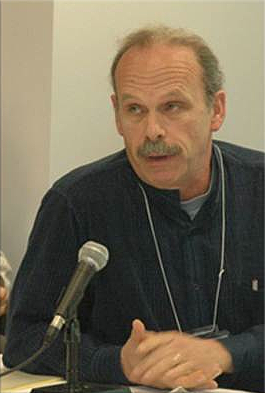
PRINCETON, N.J.– In 1862, the Japanese government, seeing the writing on the wall of international relations and recognizing that it would be impossible to continue keeping itself from much greater foreign contacts, launched its first foreign mission. In the lecture, “Maiden Voyage: The Senzaimaru and the Creation of Modern Sino-Japanese Relations,”Joshua Fogel, Canada Research Chair and Professor at York University and former Mellon Visiting Professor (2001–03) in the School of Historical Studies, will discuss how this mission revolutionized Sino-Japanese relations. The lecture will take place Monday, March 31, at 6:00 p.m. in the Dilworth Room in Simons Hall on the Institute campus.
This lecture is supported by the Dr. S.T. Lee Fund for Historical Studies.
Fifty-one Japanese sailed aboard the newly purchased and renamed Senzaimaru to Shanghai, where the entire panoply of Western powers could be viewed in microcosm. They met with French, British, Dutch and Chinese officials and merchants, and a handful of the Japanese kept detailed travel accounts of their adventures. The Chinese bureaucracy also kept extensive records of meetings with these unexpected visitors—right in the midst of attacks on the city of Shanghai by the Taiping rebels. Only a few years later, the government that sent them was overthrown and the new Meiji regime installed. By 1871, the two countries had signed a completely equal Treaty of Amity. Sino-Japanese relations had been completely transformed.
A leading scholar of East Asian studies, Fogel focuses on the importance of Japan in China's modern development and the changing attitudes of Chinese towards Japan, from the fourteenth through to the nineteenth century. Fogel examines modern China through a pan-Asian lens to understand the cultural, political and economic interactions between China and Japan.
Fogel received his Ph.D. from Columbia University in 1980. He has served on the faculties of Harvard University and the University of California, Santa Barbara, where he was also the Chair of the East Asian Languages and Cultural Studies Department. Fogel also has been awarded fellowships and grants from the Fulbright Foundation, National Endowment for the Humanities, Japanese Ministry of Education, Japan Foundation and the Chiang Ching-kuo Foundation.
Fogel has authored many books largely devoted Sino-Japanese cultural relations including Japanese Historiography and the Gold Seal of 57 C.E.: Relic, Text, Object, Fake (Brill, 2013); Articulating the Sinosphere: Sino-Japanese Relations in Space and Time (Harvard University Press, 2009); and The Literature of Travel in the Japanese Reediscovery of China, 1862-1945 (Stanford University Press, 1996). . Additionally, Fogel has published edited and translated many volumes . Fogel is currently the editor of the online journal Sino-Japanese Studies.
For more information on this and other lectures at the Institute, visit http://www.ias.edu/news/public-events.
About the Institute for Advanced Study
The Institute for Advanced Study is one of the world’s leading centers for theoretical research and intellectual inquiry. The Institute exists to encourage and support curiosity-driven research in the sciences and humanities—the original, often speculative thinking that produces advances in knowledge that change the way we understand the world. Work at the Institute takes place in four Schools: Historical Studies, Mathematics, Natural Sciences and Social Science. It provides for the mentoring of scholars by a permanent Faculty of approximately 30, and it ensures the freedom to undertake research that will make significant contributions in any of the broad range of fields in the sciences and humanities studied at the Institute.
The Institute, founded in 1930, is a private, independent academic institution located in Princeton, New Jersey. Its more than 6,000 former Members hold positions of intellectual and scientific leadership throughout the academic world. Thirty-three Nobel Laureates and 40 out of 56 Fields Medalists, as well as many winners of the Wolf and MacArthur prizes, have been affiliated with the Institute.