Institute For Advanced Study Appoints Caroline Walker Bynum To Faculty In School Of Historical Studies
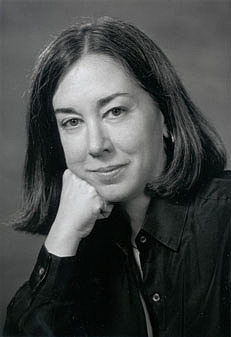
The Institute for Advanced Study has announced the appointment of Caroline Walker Bynum to the Faculty of the Institute’s School of Historical Studies as Professor of Medieval European History. Dr. Bynum, an historian of medieval religious thought and practice with a special interest in women’s piety, is currently University Professor at Columbia University, and will begin her appointment at the Institute for Advanced Study on January 1, 2003.
"Caroline Walker Bynum is a scholar of great originality whose work shows that the study of an apparently distant world can enrich our own," commented Phillip A. Griffiths, Director of the Institute. "She has given us a new understanding of how and why medieval people depicted life in the ways they did, and what they must have felt and thought. We are very pleased to welcome such an influential and widely-admired historian to the Institute."
Over the course of her career, Professor Bynum has taught all aspects of late antique and medieval history (political, military, social, economic, religious, and intellectual); church history from the early church through the Reformation; and intellectual history from Plato to the 17th century.
"Caroline Bynum’s research and writing have broad implications not only for other medievalists but for historians generally," stated Professor Glen Bowersock, Executive Officer of the Institute’s School of Historical Studies. "She has discovered new perspectives from which to examine medieval life, and her research and writing have transformed medieval religious studies as well as medieval cultural and intellectual history. Working in frontier areas where she creates intersections of intellectual history (especially the history of theology), the history of women, the history of the body, and modern writings on the nature of selfhood and identity, she has made many significant scholarly contributions with important implications for the development of history as a discipline."
Dr. Bynum’s scholarly interests, which initially focused on aspects of the spirituality of monks and canons in the 12th century, grew to include analyses of the concepts of individuality and community in religious orders. Observing that men - particularly men concerned about their authority as religious leaders - often used images of themselves as women, Dr. Bynum began to consider how religious women used similar kinds of gender images, focusing her work on an exploration of people’s self-conceptions and of how gender images relate to their self-conceptions. Her book Jesus as Mother, published in 1982, explores the issue of gender and of men’s use of female images. Her next book, Holy Feast and Holy Fast: The Religious Significance of Food to Medieval Women (1987), developed from her examination of the differences in images that men and women use to think about themselves, and her observation that food imagery was critical not only to women’s writing, but also to their actual religious behavior. Holy Feast and Holy Fast, published at a time when writings by medieval religious women were relatively unknown, explored a variety of images in women’s practices and writing as well as images of the female body. The book has become a classic of women’s history and has been repeatedly mentioned as one of the most influential books in medieval European history written in the late 20th century. Dr. Bynum then published Fragmentation and Redemption: Essays on Gender and the Human Body in Medieval Religion (1991), which contained her initial investigations into body history and defined the field for medieval studies. Her next book, The Resurrection of the Body in Western Christianity: 200-1336 (1995), explores "last things" such as immortality, resurrection, heaven and hell, and considers how medieval views of the afterlife expressed and influenced people’s understanding of body and self. "In considering the issue of what survives after death, the book explores identity," Dr. Bynum has commented. "It is about how medieval people thought about ‘Who I am.’" Her most recent book, Metamorphosis and Identity, appeared in 2001, and continues the exploration of identity and survival through studying ideas of change, wonder, and narrative.
Professor Bynum’s appointment continues the tradition of work in medieval history at the Institute that began with the Faculty appointment in 1951 of Ernst Kantorowicz, a scholar with an unusual talent for bridging the gap between medieval specialists and the larger world of historians. Kenneth Setton, a well-known authority on the Crusades, was appointed to the Faculty after Kantorowicz retired, and after Setton’s retirement in 1984, Giles Constable joined the faculty. He has fostered research over a broad spectrum of medieval topics and further strengthened the School’s international reputation in the subject. Over the past half-century, most of the major medievalists in the western world have been visiting scholars at the Institute for varying periods of time.
Caroline Walker Bynum received her B.A. degree with high honors from the University of Michigan in 1962. She received M.A. and Ph.D. degrees from Harvard University in 1963 and 1969, respectively, and taught in Harvard’s history department from 1969-1973. In 1973, she moved to the Department of Church History at Harvard Divinity School, and in 1976 she accepted a position at the University of Washington, where she served as a professor of History (and as an adjunct professor in Religious Studies and Women’s Studies) from 1976-1988. In 1988, she became a Professor of History at Columbia University, where she held the Morris A. and Alma Schapiro Chair in History prior to being named University Professor, Columbia’s highest faculty honor, in 1999. She is the first woman to be named University Professor at Columbia.
The co-editor of five volumes and the author of numerous articles and reviews, Dr. Bynum has also written six books, of which several have won awards. Holy Feast and Holy Fast: The Religious Significance of Food to Medieval Women (1987) was awarded the Governor’s Award of the State of Washington in 1988 and the Philip Schaff Prize of the American Society for Church History in 1989. Fragmentation and Redemption: Essays on Gender and the Human Body in Medieval Religion (1991) was awarded the Trilling Prize in 1992 and the AAR Award for Excellence in the Study of Religion, Analytical-Descriptive Category, in 1992. The Resurrection of the Body in Western Christianity: 200-1336 (1995) was awarded the Phi Beta Kappa Emerson Prize for best book on "the intellectual and cultural condition of man" in 1995, and the Jacques Barzun Prize of the American Philosophical Society for the best book in cultural history in 1996.
Dr. Bynum is the recipient of many awards and honors. During the early stages of her career, she received fellowships from the Woodrow Wilson Foundation, Harvard University, the American Council of Learned Societies, and the National Endowment for the Humanities. From 1986 through 1991 she was a MacArthur Fellow, and in March of 1999 she was chosen by the National Endowment for the Humanities as the Jefferson Lecturer in the Humanities. In June 2001, she received the Centennial Medal of the Harvard Graduate School of Arts and Sciences for contributions to society.
She has been a Fellow or Visiting Professor at the Bunting Institute of Radcliffe College, The Getty Center for the Arts and Humanities, the Wissenschaftskolleg zu Berlin, and the Aby Warburg Stiftung. Most recently, Dr. Bynum has been awarded a Berlin Prize Fellowship by the American Academy in Berlin for the fall of 2002. Dr. Bynum currently serves as a member of the editorial boards of Church History; the Journal of Marian Studies; History of Religions; the Journal of the American Academy of Religion; and Magistra (formerly Vox Benedictina).
Dr. Bynum is a past president of the American Catholic Historical Association, the American Historical Association, and the Medieval Academy of America. The recipient of eight honorary degrees, she is a Fellow of the Medieval Academy of America and a member of many professional organizations, including, among others, the American Historical Association, the Medieval Academy of America, the American Academy of Arts and Sciences and the American Philosophical Society.