Eric Wieschaus To Speak At Institute For Advanced Study
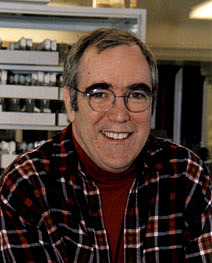
Eric Wieschaus will speak on "Why Cells in an Embryo Do What They Do: What We Still Need to Know" on February 20 at 4:30 p.m. in Wolfensohn Hall on the campus of the Institute for Advanced Study.
Wieschaus is Professor of Molecular Biology at Princeton University, and a Howard Hughes Medical Institute Investigator. He was co-winner of the 1995 Nobel Prize in Medicine for his work on genetic control of embryonic development.
The event is sponsored by the Institute's Program in Theoretical Biology. A reception in the Common Room of Fuld Hall will follow the lecture.
"The past 25 years have seen remarkable advances in our understanding of how differing populations of cells are established in the embryo, and how these groups of cells are organized into reproducible patterns," Wieschaus observes. "Many of the gene products required for the process are known, and their activities are being elucidated using a variety of molecular and cellular techniques."
Wieschaus's talk "will review these recent advances, particularly those made in model organisms such as Drosophila, and attempt to formulate generalizable mechanisms that may apply to all organisms."
Also discussed will be "some of the difficulties in extrapolating from these genetic and molecular mechanisms to the actual mechanics of cellular processes, and to the overall robustness of developmental systems."
A graduate of the University of Notre Dame, Wieschaus earned his Ph.D. in biology at Yale University and did postdoctoral work in developmental genetics at the University of Zurich. He was a short-term fellow at the Laboratoire de G�n�tique Moleculaire in Gif-sur-Yvette, France, in 1976, and a visiting researcher at the Center of Pathobiology at the University of California, Irvine, in 1977. A group leader at the European Molecular Biology Laboratory in Heidelberg, Germany, in the late '70s and early '80s, he joined the Princeton University faculty in 1981.
He is a fellow of the American Academy of Arts and Sciences, and a member of the National Academy of Sciences and the American Philosophical Society.
For more information, call the Institute for Advanced Study's Program in Theoretical Biology at 609-734-8118 or see www.pt.ias.edu