Astrophysicist Scott Tremaine Joins The Faculty Of The Institute For Advanced Study
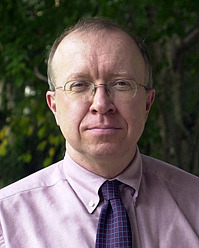
Astrophysicist Scott Tremaine has been appointed the Richard Black Professor of Astrophysics in the School of Natural Sciences at the Institute for Advanced Study. Dr. Tremaine will join the Faculty of the Institute on January 1, 2007.
Dr. Tremaine succeeds the late John Norris Bahcall (1934-2005), who joined the Faculty of the Institute in 1971, and served as the Richard Black Professor from 1997 until his death in August 2005.
A specialist in astrophysical dynamics, including the formation and evolution of planetary systems, comets, black holes, star clusters, galaxies and galaxy systems, Dr. Tremaine is presently Charles A. Young Professor at Princeton University, where he has served as Chair of the Department of Astrophysical Sciences since 1998.
"Scott Tremaine is one of the world's leading scientists, distinguished for his contributions to research, for his academic leadership, and for his ability to communicate his subject to all audiences," commented Peter Goddard, Director of the Institute for Advanced Study. "He is widely respected for his exceptional intellectual depth and rigor, his sound judgment and his remarkable ability as a mentor. His appointment will ensure the continuance of the Institute's unsurpassed reputation as a center for astrophysical research and the development of young astrophysicists."
"The Institute for Advanced Study pursues two very simple goals at the highest possible level: to support research and to develop young researchers," said Scott Tremaine. "Institutions with tightly focused goals such as these can exert an influence far out of proportion to their size, and the Institute offers unparalleled opportunities to develop my own research, and, following John Bahcall's vision, to help exceptional young astrophysical theorists develop their full potential."
Raised in Toronto, Canada, Dr. Tremaine received his undergraduate education at McMaster University. He was awarded a Ph.D. in physics from Princeton University in 1975, and he held postdoctoral fellowships at Caltech and Cambridge University. Dr. Tremaine was a long-term Member at the Institute for Advanced Study from 1978 to 1981, before joining the Faculty of MIT. From 1985 to 1997, he was Professor in the Departments of Physics and Astrophysics of the University of Toronto, where he also served as founding Director of the Canadian Institute for Theoretical Astrophysics from 1985 to 1996, establishing it as a leading international research center. Dr. Tremaine is the author with James Binney of the influential textbook Galactic Dynamics (1987) and has contributed over 150 papers to the Astrophysical Journal, Icarus, and other journals. A Fellow of the Royal Societies of London and of Canada and a member of the National Academy of Sciences, Dr. Tremaine received the 1997 Dannie Heineman Prize for Astrophysics.
Dr. Tremaine's research focuses on understanding the dynamics of astrophysical systems on a broad range of scales, from comets to clusters of galaxies. His major contributions include: the prediction of the Kuiper belt of comets beyond Neptune; the prediction, with Institute Professor Peter Goldreich, of shepherd satellites and density waves in Saturn's ring system, and the phenomenon of planetary migration; investigations of the evolution of the solar system and other planetary systems over very long times; methods for measuring the rotation speed of barred spiral galaxies and the phase-space distribution of the stars in elliptical galaxies; the interpretation of double nuclei of galaxies such as the nearby Andromeda galaxy as eccentric stellar disks; and elucidation of the role of dynamical friction in galaxy evolution. He is a member of a collaborative group investigating the properties of black holes in galaxies that found that almost every galaxy contains a massive black hole at its center, and that the masses of these black holes are strongly correlated with the dynamics of the surrounding galaxy.
About the Institute for Advanced Study
The Institute for Advanced Study is one of the world’s leading centers for theoretical research and intellectual inquiry. The Institute exists to encourage and support curiosity-driven research in the sciences and humanities—the original, often speculative thinking that produces advances in knowledge that change the way we understand the world. Work at the Institute takes place in four Schools: Historical Studies, Mathematics, Natural Sciences and Social Science. It provides for the mentoring of scholars by a permanent Faculty of approximately 30, and it ensures the freedom to undertake research that will make significant contributions in any of the broad range of fields in the sciences and humanities studied at the Institute.
The Institute, founded in 1930, is a private, independent academic institution located in Princeton, New Jersey. Its more than 6,000 former Members hold positions of intellectual and scientific leadership throughout the academic world. Thirty-three Nobel Laureates and 40 out of 56 Fields Medalists, as well as many winners of the Wolf and MacArthur prizes, have been affiliated with the Institute.