Art and Its Spaces Lecture Series Continues
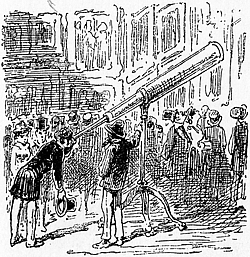
The lecture series Art and Its Spaces, a collaboration between the Institute for Advanced Study and Princeton University, continues on April 3 with a lecture at the Institute by Martha Ward, Associate Professor of Art History at the University of Chicago. In "Crowded Walls: Twentieth-Century Nostalgia for Nineteenth-Century Installation," Ward will examine the nostalgia for densely hung exhibitions that developed among some French museological circles in the 1920s and 1930s, which has much to tell us about interpreting display practice. The lecture is supported by the Dr. S. T. Lee Fund for Historical Studies. The series will conclude with a lecture at the Institute on April 17 by Mignon Nixon, Professor at the Courtauld Institute of Art, University of London, who in "Sperm Bomb: Art, Feminism, and the American War in Vietnam" will return to the scene of war resistance and nascent feminism in the Vietnam era, reflecting on newly pressing questions of what art concerned with subjectivity brings to a situation of war. Both lectures will take place in Wolfensohn Hall at the Institute and will begin at 5 p.m.
Art and Its Spaces is the fourth lecture-series collaboration between the Institute and Princeton University to address contemporary issues in art history. The 2011–12 series is organized by Yve-Alain Bois, Professor in the School of Historical Studies at the Institute, and Nathan Arrington, Assistant Professor in the Department of Art and Archaeology at the University.
“In recent years the disciplines of art history, architecture and archaeology have examined how objects and images are framed and shaped, limited and enabled by their spaces, both physical and conceptual,” said Arrington. “This series brings together speakers with expertise in a rich variety of geographical and chronological fields to explore the interaction between things and their spaces, from museum gallery to cityscape, from the body of a vase to the prejudices of the mind.”
Professors Bois and Arrington have invited leading scholars from a broad range of art historical disciplines to present the lectures. The series began on December 5 at Princeton University with a lecture by Juliet Koss, Associate Professor and Chair of the Department of Art History at Scripps College, about the way in which Soviet models from the 1920s and 30s—from children’s building blocks to designs of professional architects and artists—operated equally in the present and in the nation’s idealized future. On January 24, the series continued with Darcy Grimaldo Grigsby, Professor of Art History at the University of California, Berkeley, who discussed Sojourner Truth’s cartes-de-visite.
Tradition of Art History at the Institute
The history of art has been represented at the Institute since 1935, when Erwin Panofsky (Professor, 1935–62, Emeritus, 1962–68) was appointed to the Faculty of what was then the School of Humanistic Studies. Formalized as the School of Historical Studies in 1949, the School has been home to some of the world's leading art historians, including Millard Meiss (Professor, 1958–74, Emeritus, 1974–75), Irving Lavin (Professor, 1974–2001, Emeritus, 2001–present) and Kirk Varnedoe (Professor, 2002–03). A specialist in 20th-century European and American art, Yve-Alain Bois joined the Faculty in 2005.
Publications by Faculty in the School of Historical Studies have become key references for generations of art historians, and each year the School hosts scholars from around the world, who come to pursue their studies in a range of areas within art history. These scholars work alongside fellow Members specializing in the range of humanistic disciplines, from socioeconomic developments, political theory, and modern international relations, to the history of art, science, philosophy, music, and literature. In geographical terms, the School concentrates primarily on the history of Western, Near Eastern, and Far Eastern civilizations, with emphasis on Greek and Roman civilization, the history of Europe (medieval, early modern, and modern), the Islamic world, and East Asia. The School has also supported scholars whose work focuses on other regions, including Central Asia, India, Africa, and the Americas. The School actively promotes interdisciplinary research and cross-fertilization of ideas. It thereby encourages the creation of new historical enterprises.
About the Department of Art and Archeology at Princeton University
The Department of Art and Archaeology at Princeton University, founded in 1883, has long been a leading center for the study of art, architecture and archaeology. Besides covering all periods of European art and architecture, current faculty members teach in areas as diverse as Chinese bronzes, pre-Columbian objects, Islamic art, Japanese prints, African art, American art, the history of photography and theory and criticism.
About the Institute for Advanced Study
The Institute for Advanced Study is one of the world’s leading centers for theoretical research and intellectual inquiry. The Institute exists to encourage and support curiosity-driven research in the sciences and humanities—the original, often speculative thinking that produces advances in knowledge that change the way we understand the world. Work at the Institute takes place in four Schools: Historical Studies, Mathematics, Natural Sciences and Social Science. It provides for the mentoring of scholars by a permanent Faculty of approximately 30, and it ensures the freedom to undertake research that will make significant contributions in any of the broad range of fields in the sciences and humanities studied at the Institute.
The Institute, founded in 1930, is a private, independent academic institution located in Princeton, New Jersey. Its more than 6,000 former Members hold positions of intellectual and scientific leadership throughout the academic world. Thirty-three Nobel Laureates and 40 out of 56 Fields Medalists, as well as many winners of the Wolf and MacArthur prizes, have been affiliated with the Institute.