The Age of Networks and Individual Freedom Explored in Two Lectures at Institute for Advanced Study
PRESS CONTACT: Christine Ferrara, (609) 734-8329
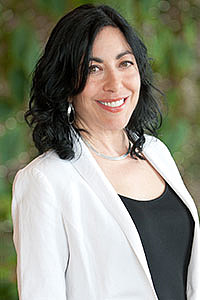
On Friday, November 8, two former Members of the Institute for Advanced Study will return to give a pair of public lectures—one on the pervasiveness and use of networks across disciplines and one on the definitions and concepts of individual freedom. Jennifer Chayes, Distinguished Scientist and Managing Director of Microsoft Research New England and New York City, will explore “The Age of Networks,” and Quentin Skinner, Barber Beaumont Professor of the Humanities at Queen Mary, University of London, will ask “How Should We Think About Freedom?” The lectures will begin at 4:30 p.m. in Wolfensohn Hall on the Institute campus, and are sponsored by the Association of Members of the Institute for Advanced Study (AMIAS).
In the first lecture, Chayes will look at some of the models used to describe networks in the high-tech realm, economics, epidemiology, world health and biomedical research, and will share the algorithms that have been devised for these networks. Chayes will also explore the methods that are being developed to indirectly infer network structure from measured data. As Chayes notes, networks can be used to describe relevant interactions. In the high-tech world, there is the Internet, the World Wide Web, mobile phone networks and a variety of online social networks. In economics, people experience both the positive and negative effects of a global-networked economy. In epidemiology, there is disease spreading over the ever-growing social networks, complicated by mutation of the disease agents. In problems of world health, distribution of limited resources, such as water resources, quickly becomes a problem of finding the optimal network for resource allocation. In biomedical research, there is new understanding of the structure of gene-regulatory networks, with the prospect of using this understanding to manage the many human diseases. Chayes will discuss models and techniques that cut across many disciplinary boundaries.
.jpg) |
|
Quentin Skinner (Photo by Nigel Luckhurst)
|
In the second talk, Skinner will discuss the concept of individual freedom, arguing that the usual practice of defining it in negative terms as “absence of interference” is in need of qualification and perhaps abandonment. Because the concept of interference is such a complex one, there has been much dispute, even within the liberal tradition, about the conditions under which it may be legitimate to claim that freedom has been infringed. This lecture will consider these disputes, but will then focus on those critics who have challenged the core liberal belief about absence of interference. Some doubt whether freedom is best defined as an absence at all, and instead attempt to connect the idea with specific patterns of moral behavior. Others agree that freedom is best understood in negative terms, but argue that it basically consists in the absence not of interference but of arbitrary power. Skinner will conclude by drawing some implications of this view for the proper conduct of democratic government.
Both lectures are free and open to the public. For more information about these and other events at the Institute, visit http://www.ias.edu/news/public-events.
About Jennifer Chayes and Quentin Skinner
Jennifer Chayes, a Member in the Institute’s School of Mathematics in 1994–95 and 1997, is well known for her work on phase transitions, in particular for laying the foundation for the study of phase transitions in discrete mathematics and theoretical computer science. In addition to phase transitions, Chayes’s research areas include discrete mathematics and computer science, structural and dynamical properties of self-engineered networks, and algorithmic game theory. She is also one of the world’s experts in modeling and analyzing random, dynamically growing graphs, which are used to understand the Internet and other technological and social networks.
Chayes earned her Ph.D. at Princeton University in 1983 in mathematical physics. Following postdoctoral research at Cornell and Harvard, she became Professor of Mathematics at the University of California, Los Angeles. In 1997, she joined Microsoft Research, where she cofounded the Theory Group, followed by Microsoft Research New England, which she cofounded in 2008, and Microsoft Research New York City, which she cofounded in 2012.
Quentin Skinner has been a Member of both the School of Historical Studies (1974–75) and the School of Social Science (1976–79) at the Institute. His research covers broad interests in philosophy and modern intellectual history, with particular attention to early modern Europe. He has published books on Machiavelli, early Renaissance political painting, the philosophy of Thomas Hobbes, the relationship between rhetoric and philosophy, the nature of interpretation and historical explanation, and the concept of political liberty. His best-known work, The Foundations of Modern Political Thought (2 volumes, 1978), was included by the Times Literary Supplement in its list of the 100 most influential books published since World War II.
Skinner was educated at the University of Cambridge, where he served successively as Professor of Political Science (1978-96) and as the Regius Professor of History (1996-2008), before moving to his present post at the University of London. He also served as Pro-Vice-Chancellor of the University of Cambridge in 1999.
About the Institute for Advanced Study
The Institute for Advanced Study is one of the world’s leading centers for theoretical research and intellectual inquiry. The Institute exists to encourage and support curiosity-driven research in the sciences and humanities—the original, often speculative thinking that produces advances in knowledge that change the way we understand the world. Work at the Institute takes place in four Schools: Historical Studies, Mathematics, Natural Sciences and Social Science. It provides for the mentoring of scholars by a permanent Faculty of approximately 30, and it ensures the freedom to undertake research that will make significant contributions in any of the broad range of fields in the sciences and humanities studied at the Institute.
The Institute, founded in 1930, is a private, independent academic institution located in Princeton, New Jersey. Its more than 6,000 former Members hold positions of intellectual and scientific leadership throughout the academic world. Thirty-three Nobel Laureates and 40 out of 56 Fields Medalists, as well as many winners of the Wolf and MacArthur prizes, have been affiliated with the Institute.