Patrick Geary to Discuss Barbarian Invasions and Genomic History
PRESS CONTACT: Christine Ferrara, (609) 734-8329
Historians have debated for centuries the magnitude, nature and impact of population movements from the borders of the Roman Empire into its heart between the fourth and seventh centuries. Were barbarian peoples distinct ethnic groups whose arrivals in the Empire ended centuries of wandering, or were they heterogeneous coalitions formed in the recent past on the Empire’s borders? Did they replace local populations, simply dominate them or rapidly merge with them? Did they cause the disintegration of the Roman Empire? Did these migrations even take place at all? Does this distant past hold any lessons for dealing with contemporary migration into Europe?
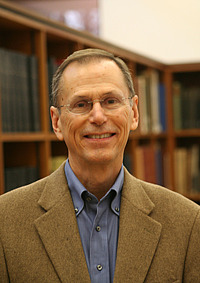
On Wednesday, November 13, Patrick J. Geary, Professor in the School of Historical Studies at the Institute for Advanced Study, will give a public lecture, “Rethinking Barbarian Invasions through Genomic History,” which will take place at 4:30 p.m. in Wolfensohn Hall on the Institute campus.
Geary is a leading historian of the Middle Ages whose research has opened new ways to understand, interpret and define the medieval past. In this lecture, he will look at the conceptual, technical and computational challenges of using genetic data to help answer these fundamental questions about the dynamics of populations in a crucial period of European history. In recent years, geneticists have begun to attempt to provide clarity to these questions through the analysis of the biological data contained in the human genome. But if romantic, nationalist and revisionist studies of migrations have proven problematic, ideological, and at times even dangerous, genetic approaches carry the risks of over simplification, essentializing and distorting the past as well.
Geary’s work covers a vast range of topics, including religion, language, ethnicity, social structure and political organization, and many of his essays and books have become standard literature in the field, with translations into multiple languages. Currently he is leading a major project to study the migration of European societies through the analysis of ancient DNA found in Central Europe and Italy. He also directs the St. Gall Plan Project, which provides online tools for the study of Carolingian monasticism.
Geary received his Ph.D. from Yale University in 1974. He has served on the faculties of Princeton University, the University of Florida and the University of California, Los Angeles, where he was Professor from 1993–2004, Distinguished Professor of History from 2004–11 and Director of the UCLA Center for Medieval and Renaissance Studies (1993–98) and of the UCLA Humanities Consortium (1996–98). He also served as Professor of History and Robert M. Conway Director of the Medieval Institute at the University of Notre Dame in 1998–2000. He visited the Institute for Advanced Study as a Member in 1990–91 and joined its Faculty in 2012.
This lecture is free and open to the public. For more information on this and other lectures at the Institute, visit www.ias.edu/news/public-events.
About the Institute for Advanced Study
The Institute for Advanced Study is one of the world’s leading centers for theoretical research and intellectual inquiry. The Institute exists to encourage and support curiosity-driven research in the sciences and humanities—the original, often speculative thinking that produces advances in knowledge that change the way we understand the world. Work at the Institute takes place in four Schools: Historical Studies, Mathematics, Natural Sciences and Social Science. It provides for the mentoring of scholars by a permanent Faculty of approximately 30, and it ensures the freedom to undertake research that will make significant contributions in any of the broad range of fields in the sciences and humanities studied at the Institute.
The Institute, founded in 1930, is a private, independent academic institution located in Princeton, New Jersey. Its more than 6,000 former Members hold positions of intellectual and scientific leadership throughout the academic world. Thirty-three Nobel Laureates and 40 out of 56 Fields Medalists, as well as many winners of the Wolf and MacArthur prizes, have been affiliated with the Institute.