Dani Rodrik to Lecture on Economic Convergence
PRESS CONTACT: Christine Ferrara, (609) 734-8239
Developing countries, led by Asia, have grown significantly more rapidly than mature economies over the last two decades, closing the gap between them. This experience is quite anomalous, since historically economic convergence has been the exception rather than the rule.
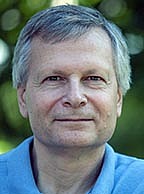
On Friday, October 25, Dani Rodrik will give his first public lecture as Albert O. Hirschman Professor in the School of Social Science, examining how economic growth shapes global inequality and what determines it in turn, paying particular attention to the role of industrialization in driving patterns of convergence and divergence. Rodrik will conclude by speculating about the future of economic growth. The lecture, “The Past, Present, and Future of Economic Convergence,” will take place at 5:30 p.m. in Wolfensohn Hall on the Institute campus.
Rodrik is a leading political economist who has transformed the understanding of international development, globalization and economic policy. His work bridges theory and public policy, combining rigorous research with ideas across the field of economics, including the consequences of globalization, the role of national institutions, the challenges of inequality and tensions between the market and the state. His current research centers on the future of economic growth and the roles of ideas in the political economy.
Rodrik received his Ph.D. from Princeton University in 1985. He served as Assistant Professor and then Associate Professor at Harvard University’s John F. Kennedy School of Government from 1985–92, Professor at Columbia University from 1992–96 and most recently Rafiq Hariri Professor of International Political Economy at Harvard from 1996–2013. He became Albert O. Hirschman Professor at the Institute, succeeding Eric S. Maskin, in July 2013.
Rodrik is one of today’s most published and cited economists. His books Has Globalization Gone Too Far? (1997), One Economics, Many Recipes: Globalization, Institutions, and Economic Growth (2007) and The Globalization Paradox: Democracy and the Future of the World Economy (2011) have become standard texts in the field. His monthly columns for Project Syndicate appear in publications worldwide.
For further information about the lecture, which is free and open to the public, visit the Institute website, www.ias.edu.
About the Institute for Advanced Study
The Institute for Advanced Study is one of the world’s leading centers for theoretical research and intellectual inquiry. The Institute exists to encourage and support curiosity-driven research in the sciences and humanities—the original, often speculative thinking that produces advances in knowledge that change the way we understand the world. Work at the Institute takes place in four Schools: Historical Studies, Mathematics, Natural Sciences and Social Science. It provides for the mentoring of scholars by a permanent Faculty of approximately 30, and it ensures the freedom to undertake research that will make significant contributions in any of the broad range of fields in the sciences and humanities studied at the Institute.
The Institute, founded in 1930, is a private, independent academic institution located in Princeton, New Jersey. Its more than 6,000 former Members hold positions of intellectual and scientific leadership throughout the academic world. Thirty-three Nobel Laureates and 40 out of 56 Fields Medalists, as well as many winners of the Wolf and MacArthur prizes, have been affiliated with the Institute.