Peter Galison to Discuss the Limits of Scientific Sight in Lecture at Institute for Advanced Study
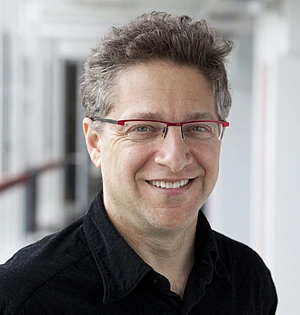
Peter L. Galison, Joseph Pellegrino University Professor in the Department of Physics at Harvard University, will present “Objectivity: The Limits of Scientific Sight” on Friday, November 11, at 5:00 p.m. in Wolfensohn Hall on the Institute campus. The lecture is sponsored by the Association of Members of the Institute for Advanced Study (AMIAS) and is being held in conjunction with their annual membership meeting.
Galison, a noted historian of science, is also Director of the Collection of Historical Scientific Instruments in the History of Science Department at Harvard. He was a Member in the Institute’s School of Social Science in 1994–95 and a Trustee of the Institute from 2004 to 2009.
In this talk, Galison will discuss the evolution and limits of objectivity and how reproduction of images has begun to cede to something more directly productive of new objects—presentation instead of representation. He will explain how, in the early nineteenth century, it was not at all obvious that objectivity would triumph as a goal of science. Natural philosophers had to invert their old epistemic virtues—previously, they had sought ideal forms that lay beyond the variations of this or that individual. Where genius was, plain-sight mechanical observation came to dominate.
The fate of objectivity kept turning: twentieth century scientists questioned image-based mechanical objectivity; they demanded more interpretation and modification of images than mechanical objectivity allowed. With that shift toward a “trained eye” came a new view of how to cultivate the right scientific self, one that explicitly used intuition, expertise, and the unconscious. Galison will show how, in the early twenty-first century, scientists are perched between scientific, engineering and entrepreneurial forms of sight.
After earning his B.A. and M.A. degrees in the History of Science at Harvard in 1977, Galison went on to obtain a M. Phil. in the History and Philosophy of Science from University of Cambridge the following year. He returned to Harvard and earned a Ph.D. in Physics and the History of Science in 1983. He joined the faculty of Stanford University and was Assistant Professor of Philosophy from 1982–85, Associate Professor of Philosophy from 1985–90 and Professor of Philosophy and Co-Chair of the Program in the History of Science from 1990–92. In 1992, Galison joined the faculty of Harvard University as Professor of the History of Science and Professor of Physics. He served as Chair of the Department of the History of Science at Harvard from 1993–97 and was named Mallinckrodt Professor of the History of Science and of Physics in 1994. From 2001–06 he was Harvard College Professor, and he was named Joseph Pellegrino University Professor in 2006.
In addition to his faculty positions, Galison has served in a series of visiting professorships. He was Professor at the Center for Sociology of Innovation of L’École des Mines and in the Department of Philosophy at L’École Normale Supérieure, both in Paris, in 2005–06. In 2010 he was a member of the visiting faculty at the Gallatin School of Individualized Study at New York University, and in the same year he held the Treaty of Utrecht Visiting Professorship at Utrecht University, The Netherlands.
Galison is the author of numerous books, including Objectivity with Lorraine Daston (Zone Books, 2007), Einstein’s Clocks, Poincaré’s Maps (W. W. Norton and Company, 2004) and Big Science: The Growth of Large Scale Research (Stanford University Press, 1992). In 1997 he was awarded a MacArthur Fellowship and in 1999 he received the Max Planck Prize, awarded by the Max Planck Gesellschaft and Humboldt Stiftung.
For further information about the lecture, which is free and open to the public, please call (609) 734-8175, or visit the Public Events page on the Institute website, www.ias.edu.
About the Institute for Advanced Study
The Institute for Advanced Study is one of the world’s leading centers for theoretical research and intellectual inquiry. The Institute exists to encourage and support curiosity-driven research in the sciences and humanities—the original, often speculative thinking that produces advances in knowledge that change the way we understand the world. Work at the Institute takes place in four Schools: Historical Studies, Mathematics, Natural Sciences and Social Science. It provides for the mentoring of scholars by a permanent Faculty of approximately 30, and it ensures the freedom to undertake research that will make significant contributions in any of the broad range of fields in the sciences and humanities studied at the Institute.
The Institute, founded in 1930, is a private, independent academic institution located in Princeton, New Jersey. Its more than 6,000 former Members hold positions of intellectual and scientific leadership throughout the academic world. Thirty-three Nobel Laureates and 40 out of 56 Fields Medalists, as well as many winners of the Wolf and MacArthur prizes, have been affiliated with the Institute.