Institute For Advanced Study Appoints Eric Maskin To Faculty Of School Of Social Science
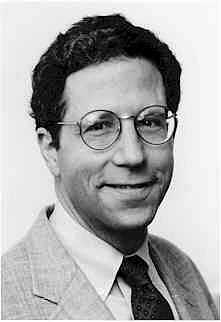
September 27, 2000: The Institute for Advanced Study has announced the appointment of Eric S. Maskin, an internationally-recognized authority on economic theory, to the permanent faculty of the School of Social Science as the first Albert O. Hirschman Professor.
Maskin has worked in many areas of economic theory, including game theory, the economics of incentives, and social choice theory. His current projects involve designing auctions, comparing different electoral rules such as majority voting, understanding the role of monetary policy, and studying the advantages and drawbacks of protecting intellectual property.
"We are very pleased to have Eric Maskin join our faculty," said Phillip Griffiths, director of the Institute. "His work is wide-ranging, touching on many issues of broad interest to social scientists, and consistently innovative, with important policy implications."
Maskin received his A.B. degree in mathematics from Harvard University in 1972, and his A.M. and Ph.D. degrees in applied mathematics from Harvard in 1974 and 1976, respectively. He also holds an honorary M.A. from Cambridge University.
Following a year (1976-77) as research fellow at Jesus College, Cambridge, Maskin taught economics at the Massachusetts Institute of Technology: as assistant professor, then associate professor and, from 1981 to 1984, professor. In 1985 he moved to Harvard University as professor of economics, and was named the Louis Berkman Professor of Economics in 1997.
Maskin is a Fellow of the American Academy of Arts and Sciences and of the Econometric Society. The author of numerous journal articles and book chapters, he is also editor of three books, most recently Planning, Shortage, and Transformation (with A. Simonovits, MIT Press, 2000), and editor of Economics Letters.
The Institute for Advanced Study is a private, independent center founded in 1930 to support advanced scholarship and fundamental research across a wide range of disciplines. It comprises four Schools: Historical Studies, Mathematics, Natural Sciences and Social Science, each with a small permanent faculty of distinguished scholars. In addition, the Institute hosts approximately 180 members each year, from postdoctoral students to senior scholars, who come from more than a hundred institutions worldwide for periods ranging from six months to several years.