Caroline Walker Bynum To Speak On The Prominence Of Blood In Practice And Iconography In 15th Century Europe
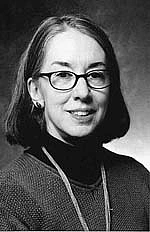
Caroline Walker Bynum, a leading scholar instrumental in introducing the concept of gender into the study of medieval Christianity, will present "Living Blood Poured Out: Piety, Practice, and Theology in Northern Europe in the Fifteenth Century" on Wednesday, February 22, at 4:30 p.m. in Wolfensohn Hall on the campus of the Institute for Advanced Study. Dr. Bynum is a Professor in the School of Historical Studies at the Institute.
The hundred and fifty years before the Protestant Reformation used to be seen as a period of religious decadence. More recently, they have been understood as an era of rather anxious piety, in which the faithful purchased indulgences, went on pilgrimage, and engaged in a variety of superstitious practices to ward off the ills of a violent society. Yet the prominence of blood in the cult, prayers, art, and theological disputes characteristic of the period has been ignored.
In her lecture, Professor Bynum will discuss the widespread prominence of images of the bleeding Christ in the iconography and piety of the period and the many university-level theological debates about blood relics and miracles, including anti-Jewish host desecration libels. She will argue that the fifteenth-century concern with the blood of Christ was not simply a matter of superstition or a reflection of social unrest but rather a site where profound philosophical and religious questions such as the nature of identity, or the interaction of matter and spirit, were explored.
Professor Bynum received her BA from the University of Michigan in l962 and her Ph.D. from Harvard in l969. She taught at Harvard from l969-76, at the University of Washington from l976-88, and at Columbia University from l988 to 2003. From 1990-98, she held the Morris A. and Alma Schapiro Chair in History; in January, l999, she became University Professor, the first woman to hold this title at Columbia. In January 2003 she joined the Faculty at the Institute.
She served as President of the American Historical Association in 1996 and as President of the Medieval Academy of America in l997-98. She was a MacArthur Fellow from 1986-1991 and holds honorary degrees from eleven American and foreign universities. Professor Bynum is a Fellow of the American Philosophical Society and the Medieval Academy of America and a member of the American Academy of Arts and Sciences. She received the Distinguished Teacher Award from the University of Washington in l981, Columbia's Presidential Award for Outstanding Teaching in l997, and the Mark van Doren Teaching Award of Columbia College in 2002. In June 2001 she received the Centennial Medal of the Harvard Graduate Society, and in January 2005 the Distinguished Career Award from the American Society of Church History.
Her articles and books have received a range of prestigious awards. Her book Holy Feast and Holy Fast received the Governor's Award of the State of Washington and the Philip Schaff prize of the American Society of Church History. Fragmentation and Redemption received the Trilling Prize for the Best Book by a Columbia Faculty Member and the Award for Excellence in the Study of Religion: Analytical-Descriptive Category from the American Academy of Religion. The Resurrection of the Body received the Ralph Waldo Emerson Prize of Phi Beta Kappa, given for the best book of the year on "the intellectual and cultural condition of man," and the Jacques Barzun Prize of the American Philosophical Society for the best work in cultural history. Her most recent book, Metamorphosis and Identity (New York: Zone Books, 2001; paperback, 2005), explores medieval conceptions of self, survival, and mutability.
For further information about this event, which is free and open to the public, please call (609) 734-8175.