Mathematician Peter Sarnak Joins the Faculty of the Institute for Advanced Study
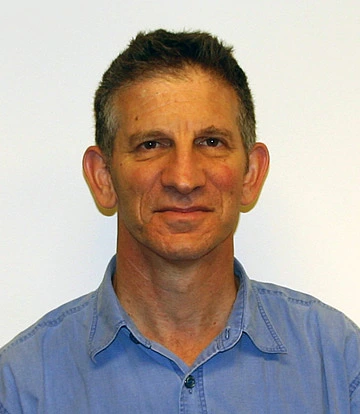
Peter Sarnak has been appointed to the Faculty of the School of Mathematics of the Institute for Advanced Study, effective July 1, 2007. Dr. Sarnak is the Eugene Higgins Professor of Mathematics at Princeton University, and he will continue to hold this appointment in conjunction with his professorship at the Institute.
Dr. Sarnak, born in South Africa, has made major contributions to number theory, and to questions in mathematics related to number theory. He has had a wide and profound influence on many areas of mathematics. His research focuses on the theory of zeta functions and automorphic forms with applications to number theory, combinatorics, and mathematical physics. Dr. Sarnak was a Member in the School of Mathematics at the Institute from 1999 to 2002, and also from 2005 to 2007.
"Peter Sarnak combines distinction as one of the world's leading number theorists with outstanding talents as a mentor of younger mathematicians," commented Peter Goddard, Director of the Institute. "He inspires enormous enthusiasm for his subject and fosters interactions across disciplinary boundaries."
Enrico Bombieri, IBM von Neumann Professor in the School of Mathematics at the Institute, stated, "Peter Sarnak is a mathematician with an extraordinary range of interests. His presence will be a fundamental factor in achieving full coverage of all aspects of mathematics in our School."
Regarding his appointment, Dr. Sarnak said, "I am delighted to join the Institute for Advanced Study and to participate in its primary missions of scholarship, research and mentoring. To step into the unique intellectual environment that has defined the Institute since its beginnings is a challenge and an opportunity that I am grateful to embrace."
After earning an undergraduate degree from the University of Witwatersrand in Johannesburg in 1974, Dr. Sarnak obtained his Ph.D. from Stanford University in 1980. He joined the Courant Institute of Mathematical Sciences of New York University in 1980 as an Assistant Professor, becoming Associate Professor in 1983. In 1987, he returned to Stanford University as Professor of Mathematics. Dr. Sarnak joined the Princeton University faculty in 1991 and was the Henry Burchard Fine Professor of Mathematics from 1995 to 1996, when he became Chair of the Department of Mathematics. From 2001 to 2005, he was a Professor at the Courant Institute at New York University, during which time he was named to his current position as Eugene Higgins Professor of Mathematics at Princeton.
Dr. Sarnak's work has been recognized by a number of awards and distinctions, including the Frank Nelson Cole Prize of the American Mathematical Society (2005), the Levi L. Conant Prize (2003), the Ostrowski Prize (2001), SIAM's Polya Prize (1998), and in 1985, he received a National Science Foundation (NSF) Presidential Young Investigator Award. He is a member of the National Academy of Sciences and is a Fellow of The Royal Society of London.
About the Institute for Advanced Study
The Institute for Advanced Study is one of the world’s leading centers for theoretical research and intellectual inquiry. The Institute exists to encourage and support curiosity-driven research in the sciences and humanities—the original, often speculative thinking that produces advances in knowledge that change the way we understand the world. Work at the Institute takes place in four Schools: Historical Studies, Mathematics, Natural Sciences and Social Science. It provides for the mentoring of scholars by a permanent Faculty of approximately 30, and it ensures the freedom to undertake research that will make significant contributions in any of the broad range of fields in the sciences and humanities studied at the Institute.
The Institute, founded in 1930, is a private, independent academic institution located in Princeton, New Jersey. Its more than 6,000 former Members hold positions of intellectual and scientific leadership throughout the academic world. Thirty-three Nobel Laureates and 40 out of 56 Fields Medalists, as well as many winners of the Wolf and MacArthur prizes, have been affiliated with the Institute.