2026-2027 Members
2026–27 Members in the School of Social Science
The School of Social Science provides a collaborative and generative environment for curiosity-driven social research. The 2026–27 Member cohort brings together 21 scholars from institutions across the United States and around the world, each pursuing independent projects that together reflect the remarkable depth and breadth of contemporary social science—touching on questions of global political economy, technology and power, race and democracy, and law and social control, among others.
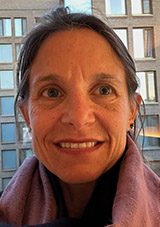
Ana Aliverti
Criminology and Law
University of Warwick
Aliverti joined the University of Warwick in 2013 as Assistant Professor and was awarded a Chair in Law in 2022. She was previously a Howard League Post-Doctoral Research Fellow in the Centre for Criminology at the University of Oxford, and Stipendiary Lecturer in Criminal Law at Wadham College, Oxford, having also taught criminal law and criminology at Oxford and in Buenos Aires. She practiced international human rights law as staff attorney at the Center for Justice and International Law (CEJIL) in San José, Costa Rica, and Washington DC.
Project: Moral Bureaucracies: Care and Control in the British Asylum System
This project explores the place of moral sentiments within bureaucratic power. Drawing on an ethnographic study conducted with frontline caseworkers and claimants, the project analyzes the moral work of the British asylum system focusing on the place of care and control within it. The project reveals the complex moral tensions and contradictions of the asylum bureaucracy and explores the theoretical and policy implications of recognizing these complexities. In doing so, the project contributes to debates on asylum, morality and affects in criminology of borders, the sociology of emotions and the anthropology of the state.
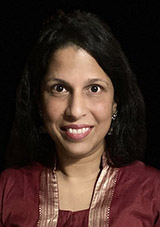
Sareeta Amrute
Anthropology
The New School
Amrute is an anthropologist who investigates data-centric technologies and societies, centering race and caste as analytics of power within technological domains. At IAS, she will be writing her next book, "For Unsafe Times," which explores community security as a site of transnational imagination.
Project: For Unsafe Times
How does digital surveillance affect communities of struggle? This book-in-progress, tentatively titled For Unsafe Times, shows that efforts by communities to protect online communications force a deeper relationship with the goals of struggle itself. Namely, by reckoning with disparities within groups made evident through online harassment, communities of struggle also reckon with the ongoing process of pursuing dignity through, rather than in spite of, those differences. For Unsafe Times uses the experiences of caste in Silicon Valley as a way to approach the relationship between dignity and safety in South Asian diasporas.
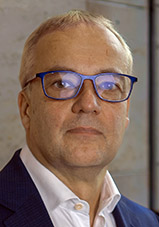
Jens Beckert
Sociology
Max Planck Institute for the Study of Societies
Beckert has been Director of the Max Planck Institute for the Study of Societies (MPIfG) since 2005. He has previously held professorships and visiting positions in Göttingen, Bremen, New York, Princeton, Paris, and at Harvard University. He is a member of the Berlin-Brandenburg Academy of Sciences and was awarded the Leibniz Prize of the German Research Foundation in 2018. Jens received the Karl Polanyi Prize from the German Sociological Association for his book Imagined Futures. Fictional Expectations and Capitalist Dynamics (Harvard University Press, 2016).
Project: The Society Capital Creates
At the center of this book project are the social and political implications of the growing concentration of wealth and the increasing power of capital in contemporary political economies. Beckert’s goal is to analyze the characteristics of the emerging social order of an “asset society” using the tools of political economy and sociology. The project is rooted in Beckert’s work with the “Wealth and Social Inequality” research group, which he has been directing at the MPIfG. The project is part of the School’s 2026-27 theme: Emerging Forces in Global Political Economy.
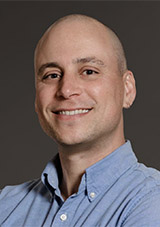
Benjamin Bradlow
Sociology
Princeton University
Bradlow is an Assistant Professor of Sociology and International Affairs at Princeton University, jointly appointed in the School of Public and International Affairs and the Department of Sociology. He is also a Visiting Researcher at the Southern Center for Inequality Studies at the University of Witwatersrand in Johannesburg, South Africa, and a CIFAR Fellow in the research program on “Humanity's Urban Future,” at the Canadian Institute for Advanced Research. Bradlow's research investigates connections between climate change, urbanization, technological change, and the political challenges for democracy that confront societies across the globe.
Project: The Climate Hinge: Green Industrial Transitions in the Global South
“The Climate Hinge” examines how the global transition to electric vehicles is transforming development in the Global South. Comparing Brazil and South Africa—each continental leaders in auto manufacturing—it asks why climate-driven industrial strategies proceed in some contexts and stall in others. Bradlow argues that “climate developmentalism,” the use of industrial policy as climate policy, is conditioned by underlying energy infrastructures. Renewable “electrostates” can coordinate new industrial coalitions, while fossil “carbon states” confront entrenched ones. Drawing on interviews and extensive fieldwork in the auto sector in both countries, the book shows how energy systems shape the markets, political coalitions, public institutions, and geopolitical alliances for green industrialization.

Elizabeth Chiarello
Sociology
Washington University in St. Louis
Chiarello is an Associate Professor of Sociology at Washington University in St. Louis. She is a medical sociologist and socio-legal scholar who conducts research at the intersection of healthcare and law. Her research centers on how cultural forces such as law, politics, and organizational policy influence decision-making in healthcare and the criminal-legal system and how blurred boundaries between these fields affect professional practice and patient care. Professor Chiarello’s award-winning first book, Policing Patients, centers on the US overdose crisis. She frequently comments publicly on opioid-related topics and has been featured in The New York Times, USA Today, and Bloomberg News.
Project: White Coat Crime
Today's doctors are dancing on a shifting legal carpet. Care they provide today may be illegal tomorrow and choices about what care to provide has a significant impact on patients. Physicians who provide stigmatized care are especially vulnerable. "White Coat Crime" examines the criminalization of medicine by considering how providers of opioids, reproductive health, IVF, gender-affirming care, and immigrant health care in four states contend with a risky legal environment and how enforcement agents in those states pursue cases against providers. Findings will build novel theory about the blurring boundaries between criminal justice and medicine and implications for patient care.
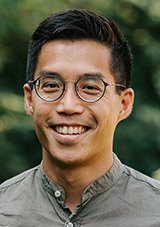
Kevin Duong
Political Science
University of Virginia
Kevin Duong is Associate Professor of Politics and History (by courtesy) at the University of Virginia. His research focuses on expressions of revolutionary agency by “the people” in European thought and visual culture. Beyond democratic theory, he teaches queer theory, political violence, the history of the human sciences, colonialism and empire, and the history of the left. Duong is the author of The Virtues of Violence: Democracy Against Disintegration in Modern France (Oxford University Press, 2020) and serves as contributing editor to Parapraxis magazine.
Project: Freud Against Empire: An Experimental History
"Freud Against Empire" reconstructs a history of Sigmund Freud's anticolonial readers along four axes: the development of international Surrealism in the 1920-30s, the rise of the Négritude movement after the 1940s, the development of structural anthropology after the Second World War, and the institutionalization of anti-racist psychiatry during the early Cold War. These intellectual histories crisscrossed the Atlantic. Together, they bring into focus a surprising fact: perhaps even more than Marxism, psychoanalysis became the lingua franca of global anticolonial thought by the midcentury. Its vocabulary of repression and alienation bridged psychic and social models of colonial domination.

Jason Frank
Political Science
Cornell University
Frank is the John L. Senior Professor of Government at Cornell University, and his primary field is political theory. His areas of research include democratic theory, American political thought, modern political theory, politics and literature, political aesthetics, and the history of popular sovereignty.
Project: The Democratic Theory of Counterrevolution
This project traces counterrevolutionary theories of democracy from the 1790s to the present, emphasizing how during the nineteenth century popular sovereignty went from being conceptualized as counterrevolution’s primary antagonist to its most potent resource of legitimation. The project focuses on four periods of conceptual change: the 1790s and the association of democracy with the project of a self-instituted society; mid-century Caesarism and the rediscovery of the politics of popular acclamation; social scientific investigations of the psychic life of mass democracy through suggestion and identification; the interwar refinement of counterrevolutionary democratic theory in the existential identarianism of Carl Schmitt.

Susannah Glickman
History
Stony Brook University
Glickman’s research focuses on the history and political economy of computation and information through the transformations in global American science that occurred at the end of the Cold War. Her current project examines the infrastructures which make semiconductors and quantum technologies possible historically, with particular attention to how ideology and other narratives get translated into policy and practices, and how reciprocally those material practices get translated into ideology. She has a background in mathematics and anthropology and works between the fields of science and technology studies and history, mixing archival and oral history methods.
Project: Imagined Technologies: The Semiconductor, the Tech Boom, and the Politics of Exponential Growth
How did imagined technologies become the vehicle for world history? What are the effects of this mode of telling history? Using the closely linked histories of quantum technologies, defense industries, and the semiconductor sector, this project argues that figures around these fields have produced and profited from a new way of telling history. This new historical work has profoundly changed the American way of doing politics. How is it that so much relies on models of history that crudely look like a line going up? What about the promises of unrealized technologies so successfully propel flows of capital and attention?
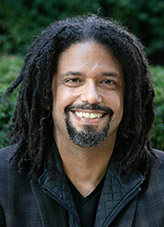
Frank Guridy
History
Columbia University
Guridy is Dr. Kenneth and Kareitha Forde Professor of African American and African Diaspora Studies and Professor of History at Columbia University. His research focuses on sport history, urban history, and the history of transatlantic social movements. Books include The Stadium: An American History of Politics, Protest, and Play, winner of the North American Society for Sports History Book Award, The Sports Revolution: How Texas Changed the Culture of American Athletics, and Forging Diaspora: Afro-Cubans and African Americans in a World of Empire and Jim Crow, which received the Elsa Goveia Book Prize and the Wesley-Logan Book Prize.
Project: City of Solidarity: New York and the Global Social Movements that Changed the World
“City of Solidarity” tells the story of New York City’s ascendance as an epicenter of global social movements throughout the twentieth century. While New York’s emergence as a hub of activism was catalyzed by the arrival of the United Nations, it was the city’s marginalized immigrant communities who pushed it to the forefront of global campaigns for justice and freedom. This is a portrait of New York as a place of possibility for those who were compelled to participate in the major democratic transformations of the century.

Ethan Kleinberg
History
Wesleyan University
Kleinberg is the Class of 1958 Distinguished Professor of History and Letters at Wesleyan University and Editor-in-Chief of History and Theory. He received his BA from UC Berkeley and his PhD from UCLA. In 2021, he was the Reinhart Koselleck Guest Professor at the Center for Theories of Historical Research, Bielefeld University. Kleinberg is the author of Generation Existential: Heidegger’s Philosophy in France, 1927-1961 (Cornell University Press, 2006), Haunting History: For a Deconstructive Approach to the Past (Stanford University Press, 2017), Emmanuel Levinas’s Talmudic Turn (Stanford University Press, 2021), and Temporal Vectors and the Compass of History (Bielefeld University Press, 2025).
Project: The Politics of the Future
This project explores our increasingly impaired relationship to the future, a relationship so damaged that we are unable to confront the pressing crises of the present. Across politics, culture, and theory, our ability to imagine transformative futures has been steadily replaced by recycled visions of the past, and then by fictionalized futures borrowed from popular cinema. This project argues that this impaired relationship to the future is not a cultural side effect but a constitutive political condition of the present and, crucially, a direct result of the ways we currently imagine and represent the past.

Jens van 't Klooster
Political Economy
University of Amsterdam
Van ’t Klooster is an Associate Professor of Political Economy at the University of Amsterdam’s Department of Political Science. He is also a visiting fellow at the London School of Economics and Political Science Grantham Research Institute on Climate Change and the Environment, a policy fellow at Dezernat Zukunft: Institute for Macrofinance, and a member of the European Parliament’s monetary policy expert panel. He has conducted research on climate change and the governance of the financial system, the history of central bank monetary policy operations, the legitimacy of unelected policymakers, the financial system and the international role of the euro.
Project: A Theory of 21st-century Technocratic Legitimacy
How, if at all, should central bankers and financial regulators acknowledge human impact on the planet’s hospitable conditions for human life? As economic coordination increasingly relies on insulated technocratic institutions, what makes such authority permissible? Today’s highly constraining conceptions of legitimacy reflect unrealistic expectations concerning the electoral process and its role in governing 21st-century economies. This project will develop a new account of how unelected policymakers can respect democratic standards of legitimacy while pushing forward fast-paced climate transition policies.
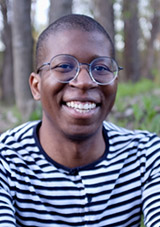
David Knight
Sociology and Black Studies
Yale University
Knight is an Assistant Professor of Sociology and Black Studies at Yale University, where he is also part of the Justice Collaboratory at Yale Law School. A political sociologist of the carceral state, Knight investigates how communities experience mass incarceration and mobilize in response to it. This research agenda sits at the intersection of Black studies and the social sciences, and it spans several cross-disciplinary fields ranging from carceral studies and social movements to public policy and health.
Project: Mobilizations from Within: Political Struggle and Transformation in American Prisons
This book project investigates Black political life and the emergence of Black political mobilization among men incarcerated for extended periods in US prisons. Drawing from interviews, survey data, and archival sources, the book explores the life course and organizational dynamics that produced generations of organizers and activists who, despite their tactical differences, likely would not have become mobilized absent encounters with incarceration. Together, these narratives also reveal a larger story about the rise of a new, often overlooked, anti-carceral human rights movement that has reshaped understandings of justice in the US and beyond.

Wendy Leutert
Political Science
Indiana University
Leutert is Associate Professor and the GLP-Ming Z. Mei Chair of Chinese Economics and Trade at Indiana University’s Hamilton Lugar School of Global and International Studies. Her research focuses on Chinese political economy, specifically the historical evolution and global expansion of China’s state-owned enterprises. Her work also addresses the politics of economic reform, Sino-Japanese policy engagement, corporate governance, and international investment and trade. She is the author of China’s State-Owned Enterprises: Leadership, Reform, and Internationalization (Cambridge University Press, 2024).
Project: China, Policy Diffusion, and Emerging Forces in Global Political Economy
This project examines the historical emergence of China and its companies as forces in global political economy and its contemporary implications. Her book manuscript, “The International Origins of China’s National Champions,” analyzes how Chinese state-owned enterprises became leading actors in the domestic and global economies. It introduces the concept of “policy collage”—seeking, selecting, and combining policy ideas and practices from multiple international sources—to explain China’s distinctive developmental model and non-convergence with advanced capitalist economies. The project extends the book’s analysis to the deepening fusion of public and private power in China and beyond, and its consequences for global governance.
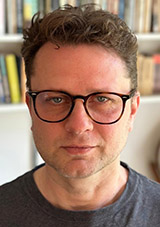
Noam Maggor
History
Queen Mary University of London
Maggor is a historian of the United States in the nineteenth century, focusing on the political and institutional foundations of American capitalism, with broad interests in global economic history, state formation, and comparative development. He is the author of Brahmin Capitalism: Frontiers of Wealth and Populism in America’s First Gilded Age (Harvard University Press, 2017), as well as articles in American Historical Review, Past & Present, and Critical Historical Studies. Maggor has received grants from the British Academy, the Marie Skłodowska-Curie programme, and the Hewlett Foundation. He serves on the editorial board of Past & Present.
Project: Great Leap Forward: The History and Politics of State-Led Development in the United States
This project examines how the nineteenth-century United States transformed from a cotton-exporting slave society into the world’s leading industrial power. It treats the US as a case of state-led development, challenging conventional accounts that attribute prosperity to secure property rights and limited government. Instead, it argues that political conflict, market governance, and public authority redirected capital toward industrial growth, reshaping the nation’s economic trajectory. By revisiting the political origins of modern capitalism in the US, the study offers a new perspective on how modern societies can pursue equitable and sustainable growth.
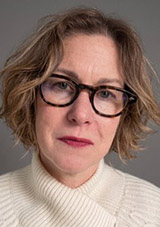
Kathleen R. McNamara
Political Science
Georgetown University
McNamara is Professor of Government and Foreign Service at Georgetown University and Co-Director of the Global Political Economy Project. Her work focuses on markets, culture, and politics in the European Union and the United States, with particular interest in industrial policy, money, and globalization. She is the recipient of the 2018 Distinguished Scholar in International Political Economy award from the International Studies Association and the ISA’s 2020 SWIPE Award for Mentoring Women in International Political Economy. McNamara received her PhD from Columbia University and her BA from McGill University.
Project: The Construction of Value: How Power and Status Structure Markets
What do crypto currencies, a bottle of Château Lafite Rothschild wine, the global market for electric vehicles, getting hired in an investment bank, and Taylor Swift concerts have in common? They all demonstrate the ways in which status and power profoundly construct markets and shape what people think of as valuable and worthy—and thus how wealth itself is distributed. This project explores power and the social construction of value, drawing on work in political science, economic sociology, and anthropology to parse through how particular ideas become taken for common sense understandings of what constitutes merit in markets.
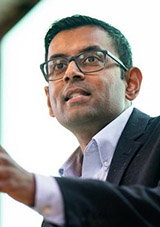
Arvind Narayanan
Computer Science
Princeton University
Narayanan is a Professor of Computer Science at Princeton University and the Director of the Center for Information Technology Policy. He is a co-author of the book AI Snake Oil, the essay "AI as Normal Technology," and a newsletter of the same name which is read by over 75,000 researchers, policy makers, journalists, and AI enthusiasts. His work was among the first to show how machine learning reflects cultural stereotypes. Narayanan was one of TIME's inaugural list of 100 most influential people in AI. He is a recipient of the Presidential Early Career Award for Scientists and Engineers.
Project: AI as Normal Technology
This project will study — and help shape — AI’s transformation of work, institutions, society, and democracy. Building on the paper “AI as Normal Technology,” co-authored by Sayash Kapoor, who will also be a collaborator, the work will appear as a series of essays leading up to a book. The project involves five specific lines of inquiry: AI and institutional reform; AI and the future of work; AI safety and policy; AI, democracy, and the information environment; and anticipatory AI ethics.
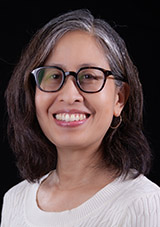
Dina Okamoto
Sociology
Indiana University
Okamoto is Class of 1948 Herman B Wells Professor and served as the Director of the Center for Research on Race and Ethnicity in Society. She received her PhD in sociology from the University of Arizona in 2001 and was Assistant and Associate Professor at the University of California, Davis until 2013. Her research addresses immigrant incorporation as well as intergroup conflict, cooperation, and collective action in the US context. Her current projects investigate the civic and political incorporation of immigrants, the emergence of new panethnic categories, and how organizations deal with increasing ethnic, racial, and language diversity.
Project: Constituting Race: Asian Americans and Interracial Alignments into the New Era
This project focuses on how social actors beyond the state create and sustain race and racial categories. It takes a new, dynamic approach by relying on novel amicus brief data to the US Supreme Court over five decades to map patterns of interracial cooperation and coalition, alongside interviews with organizational leaders, which highlights how organizations engage in race making in high-stakes policy debates. It centers Asian Americans and the advocacy organizations representing them, extending our knowledge about racial formation and dynamics of cooperation across difference, which have implications for the representation of group interests and building a more democratic society.
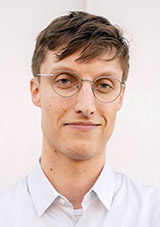
Calvin Thrall
Political Science
Columbia University
Thrall is an Assistant Professor of Political Science at Columbia University. He specializes in international political economy, with substantive interests in international business, global governance, and diplomacy. His work has appeared in International Organization, American Journal of Political Science, and International Studies Quarterly, and has received the David A. Lake Award from the International Political Economy Society. Professor Thrall received his PhD from the Department of Government at the University of Texas at Austin. Prior to joining Columbia, he was a postdoctoral fellow at Princeton University's Niehaus Center for Globalization and Governance.
Project: The Atomizers: Multinational Firms and the Fragmentation of Global Economic Governance
This in-progress book project documents what Thrall calls the atomization of global economic governance: the broad shift over the late 20th century away from multilateral economic agreements and towards bilateral ones. He proposes a new theory of atomization based on the changing structure and preferences of multinational corporations: multinationals prefer bilateralism because it provides exclusive benefits. Thrall uses a range of new data sources to document how multinational enterprises have lobbied for bilateralism over the past four decades. The book will contribute to international political economy, economic history, and our understanding of firms as political actors.

Ntina Tzouvala
Law
University of New South Wales
Tzouvala joined the University of New South Wales in January 2025. Prior to this, she was an Associate Professor at the Australian National University College of Law. Her work focuses on the history, theory and political economy of international law. She is especially interested in historical materialism, deconstruction, feminist, and queer legal theory. Her first monograph, Capitalism as Civilisation: A History of International Law, was published in 2020 by Cambridge University Press. Her work has also appeared in leading international law journals, including the European Journal of International Law, the Leiden Journal of International Law and the Journal of International Economic Law.
Project: International Law after Growth
Modern international law incorporates two assumptions regarding economic growth; first, that growth is desirable and, second, that growth is achievable. The first assumption has come under sustained criticism from critical legal scholars. However, even critics of growth within the field have assumed that economic expansion is achievable and that it constitutes an accurate description of contemporary global capitalism. This project draws from heterodox political economic discussions about secular stagnation to explore how the prolonged and global slowdown of growth not only poses conceptual and ideological problems for international law but it also partially explains its current crisis.

Yingyao Wang
Sociology
University of Virginia
Wang is an Associate Professor of Sociology at the University of Virginia. She works at the intersection of economic sociology, political sociology, and development studies. Her book, Markets with Bureaucratic Characteristics: How Economic Bureaucrats Make Policies and Remake the Chinese State, examines how patterns of bureaucratic careers produce paradigm shifts in China’s economic strategies. She has published articles on China’s industrial policy, financial markets, corruption, and taxation. She is currently working on projects related to China’s outward foreign direct investment, its evolving knowledge structure of the world, and the relationship between corruption, finance, and the making of market frontiers.
Project: Industrial Relocation in the Age of Global Finance: Chinese Investment in Southeast Asia
This project examines the latest wave of manufacturing relocation from China to Southeast Asia and asks whether it will spur industrial upgrading and sustained development, as earlier transfers did in East Asia. It investigates the interplay of global value and wealth chains, tariff-driven strategies, and uneven state capacities in both sending and host countries in directing investment and financial flows. While drawing on traditional political economy analyses of FDI, trade, and institutions, the project also advances a sociological inquiry into the movement of people, skills, and knowledge across borders in shaping capabilities and commitments.

Maya Wind
Anthropology
University of California, Riverside
Maya Wind is a President’s and Andrew W. Mellon Postdoctoral Fellow in the Departments of Black Study and Media & Cultural Studies at University of California, Riverside. She is a scholar of expertise, science and technology, and war. Her book, Towers of Ivory and Steel: How Israeli Universities Deny Palestinian Freedom (Verso 2024) was recognized with the Outstanding Book Award in Curriculum Studies from the American Educational Researcher Association and is published and forthcoming in translation in five languages.
Project: Homefront Experiments: The Global Export of the Israeli Frontier
This book draws on ethnographic and archival research with Israeli security workers to investigate permanent war as a project of managing citizens on the home front.