Alondra Nelson
Science, Technology, and Social Values Lab
School of Social Science
Institute for Advanced Study
Einstein Drive
Princeton, NJ 08540 USA
CV
Academic Assistant:
Nicholas Collins
[email protected]
609-734-8033
Harold F. Linder Professor
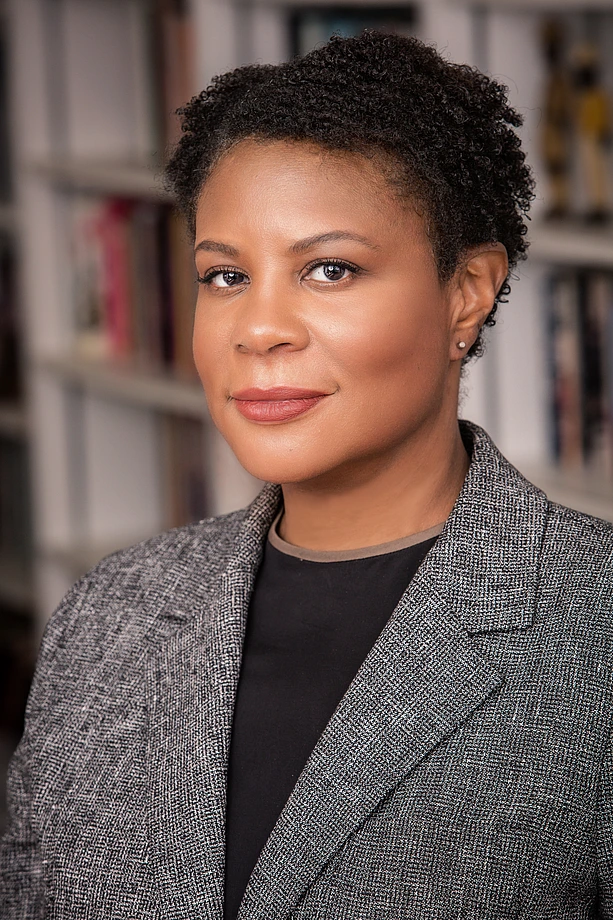
Alondra Nelson is the Harold F. Linder Professor of Social Science and founding director of the Science, Technology, and Social Values Lab at the Institute for Advanced Study, where she has been on the faculty since 2019. The ST&SV Lab examines emerging scientific and technological phenomena where they meet the frustration and fulfillment of civil, political, and social rights, with current projects on the political economy of AI, the democratic governance of science and research, and the cumulative impact of algorithmic systems.
Nelson was previously a professor of sociology at Columbia University, where she established the Division of Social Science and was its founding dean. She served as the 14th president and CEO of the Social Science Research Council, an independent, international nonprofit organization, where she developed programs that applied foundational research to urgent public problems. Her academic career began at Yale University, where she received the Poorvu Family Award for Distinguished Interdisciplinary Teaching.
Nelson’s research offers a critical and innovative approach to the social sciences, in sustained dialogue with other disciplines. Her scholarship lies at the intersection of racial formation and social citizenship, on the one hand, and emerging science and technology, on the other. Across this work, she argues that science and technology are constituted through institutional processes rather than acting on society from the outside, and are therefore explicable by social science and answerable to public authority. Nelson connects these dimensions in books including Auditing AI (2026, as a member of the Marquand House Collective); The Social Life of DNA: Race, Reparations, and Reconciliation after the Genome (2016); Genetics and the Unsettled Past: The Collision of DNA, Race, and History (2012, with Keith Wailoo and Catherine Lee); Body and Soul: The Black Panther Party and the Fight against Medical Discrimination (2011); and Technicolor: Race, Technology, and Everyday Life (2001, with Thuy Linh Tu). Nelson will deliver the Gifford Lectures at the University of Edinburgh in 2027, which will be published as a book.
A co-edited special issue of the Annals of the American Academy of Political and Social Science on how to democratize research by making science more transparent, equitable, and accountable to the public will be published in 2026. The Future of Science Is Civic, co-edited with Elizabeth Good Christopherson, is forthcoming from Johns Hopkins University Press in 2027. Recent essays and articles include “Field Theory: AI as Social Science Question, Object, and Tool” in Daedalus; “Platform Obscurantism” in LIMN; and “The Mirage of AI Deregulation” and “An ELSI for AI: Learning from Genetics to Govern Algorithms” in Science. Her research and writing have also been published in PLOS Computational Biology, PLOS Medicine, Cultural Anthropology, Social Studies of Science, Social Media + Society, the Proceedings of the International Conference on Machine Learning, and the American Journal of Public Health. Nelson’s essays, reviews, commentary, and interviews have appeared in Foreign Affairs, The New York Times, The Washington Post, The Wall Street Journal, TIME, Die Zeit, L’Obs, Wired, and La Recherche.
Between 2021 and 2023, Nelson was Deputy Assistant to the President and Acting Director and Principal Deputy Director for Science and Society of the White House Office of Science and Technology Policy. She was the first to hold the latter role, which integrated social science expertise into federal science and technology strategy and policy. Nelson was the architect of the White House Blueprint for an AI Bill of Rights. Its principles have since informed state legislation, international governance instruments, and institutional AI policies. Nature named her to its global list of “Ten People Who Shaped Science,” and in 2023 she was included on the inaugural TIME100 list of the most influential people in AI.
Nelson was appointed to the United Nations High-level Advisory Body on Artificial Intelligence, which issued the Governing AI for Humanity report in 2024. Since 2024, she has been Senior Adviser to the International AI Safety Report. In the United States, she was a presidentially appointed member of the National Science Board, which oversees the National Science Foundation and advises Congress and the President. She was co-chair of the National Academies of Sciences, Engineering, and Medicine’s Committee on Emerging Science, Technology, and Innovation and a member of the National Academies of Sciences, Engineering, and Medicine’s Committee on Responsible Computing Research: Ethics and Governance of Computing Research and Its Applications. Nelson advises local, state, and federal governments; legislators; multilateral organizations; and the philanthropic sector on domestic and international policy. She has spoken at the UK AI Safety Summit, the AI Action Summit in France, the AI Impact Summit in India, and the World AI Conference in China, and has addressed the U.S. Senate AI Insight Forum on Innovation.
Nelson was named a 2026 AI2050 Senior Fellow by Schmidt Sciences and, in 2025, one of the first Accelerator Fellows of the Institute for Ethics in AI at the University of Oxford. She has held visiting fellowships and appointments at the Max Planck Institute for the History of Science, the BIOS Centre at the London School of Economics, the Bayreuth Academy, and the Bavarian American Academy.
Nelson has received honorary degrees from Amherst College, the CUNY City College of New York, Northeastern University, and Rutgers University. Her other honors include the MIT Morison Prize, the Federation of American Scientists Public Service Award, the NAACP–Archewell Foundation Digital Civil Rights Award, the Miles Conrad Award, the Morals and Machines Prize, and the Sage Publishing and Center for Advanced Study in the Behavioral Sciences (Sage–CASBS) Award from Stanford University for “outstanding achievement in the behavioral and social sciences that advances our understanding of pressing social issues.” The Technical University of Munich awarded her the inaugural Friedrich Schiedel Prize for Social Sciences and Technology for “pioneering work and outstanding, field-building contributions at the intersection of social sciences and technology.”
Nelson has been elected to the American Academy of Arts and Sciences, the American Academy of Political and Social Science, the American Association for the Advancement of Science, the American Philosophical Society, the Council on Foreign Relations, the National Academy of Medicine, and the Sociological Research Association.
Raised in Southern California, Nelson earned a BA in anthropology, magna cum laude from the University of California, San Diego, where she was elected to Phi Beta Kappa, and a PhD in American studies from New York University in 2003.