John von Neumann: Life, Work, and Legacy
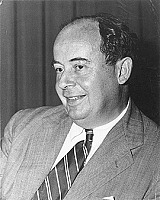
Accepting an invitation from Oswald Veblen to lecture on quantum theory at Princeton University, John von Neumann was one of a group of Hungarian and Jewish intellectuals to escape to the United States from the turmoil of Europe. The newly wed von Neumann, with his wife Mariette Kovesi, arrived in the United States in 1930. Following a year as a guest lecturer, he was appointed to the faculty. At age 30, he became the youngest professor at the Institute for Advanced Study, in the School of Mathematics, where he was frequently mistaken for a graduate student.
In The Legacy of John von Neumann, Proceedings of Symposia in Pure Mathematics, American Mathematical Society, volume 50, Israel Halperin, Professor Emeritus of Mathematics at the University of Toronto, recalled the mathematics environment of Princeton at this time: "During 1933-36 there were at Princeton, among others: the professors Eisenhart, Lefschetz, Wedderburn, Church, H. P. Robertson, Wigner, Bochner, Wilks, Tucker, Bohnenblust, Veblen, von Neumann, Alexander, Weyl, Einstein; and a stream of visitors, among them, Montgomery, Brauer, Coxeter, Gödel, Bernays, Ulam, Albert, Dirac, Pauli, Jessen, Myers, Zippin, Nakayama, Ted Martin, Levinson, Bergman, Infeld, Chabauty, and Bouckaert. . . In this galaxy of stars, von Neumann radiated excitement. His lectures on Hilbert Space, measure theory, rings of operators (called now von Neumann algebras), and continuous geometry, fascinated a large audience. At the daily afternoon tea, he engaged some in a most lively and stimulating discussion. With obvious delight he explained, clarified, and analyzed problems on the spot and gave help to one and all."
Fellow mathematicians and physicists marveled at the speed with which von Neumann could analyze and solve complex problems. "Most mathematicians prove what they can, von Neumann proves what he wants," was a popular saying among mathematicians of his day.
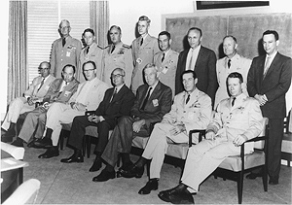
During the war, von Neumann's intellect tackled hydrodynamics, ballistics, meteorology, game theory, and statistics, applying mathematical rigor to practical problems in these fields. He worked on the Manhattan Project and by the latter years of World War II was a consultant to several government committees, moving between groups of scientists in government, university, and industry research laboratories. His broad perspective allowed him to envision applications for computers beyond that of speedy calculating devices and he initiated the Electronic Computer Project at the Institute. His contributions to the war effort were recognized in 1947, when he was awarded the Presidential Medal for Merit and the Distinguished Civilian Service Award; and in 1956, when he received the Presidential Medal of Freedom from President Eisenhower at the White House. In that same year, he received the Albert Einstein Commemorative Award and the Enrico Fermi Award.
Von Neumann's academic career was filled with awards and honors. He was a Member of the American Academy of Arts and Sciences; Academiz Nacional de Ciencias Exactas, Peru; Acamedia Nazionale dei Lincei, Italy; National Academy of Sciences; Royal Netherlands Academy of Sciences and Letters; Information Processing Hall of Fame; and held numerous honorary degrees.
"He not only showed the physicists, economists, and electrical engineers that formal mathematics could yield fresh breakthroughs in their fields," wrote Sylvia Nasar, Director's Visitor (2002-03), "but made the enterprise of applying mathematics to real-world disciplines seem glamorous to the purest of young mathematicians."
In 1954, von Neumann was asked to be one of five atomic energy commissioners. A year later, he was diagnosed with cancer. He died at the age of 53 on February 8, 1957.
Described as the scientific genius who pioneered the modern computer, game theory, nuclear deterrence, and more, John von Neumann illuminated the fields of pure and applied mathematics, computer science, physics, and economics.
Born Janos von Neumann (Jancsi to his family) in Budapest, Hungary, on December 28, 1903, von Neumann was the son of Max Neumann, a successful lawyer and financier. Max Neumann acquired a noble title in 1913 and subsequently his son used the German honorific form von. Jancsi was an intellectually precocious child with a remarkable facility for mental arithmetic; his favorite game was Kriegspiel, a chess-like game of strategy.
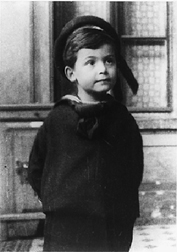
He was a classic child prodigy. Jancsi would entertain family visitors with his ability to memorize a randomly selected list of names, addresses, and numbers from the telephone directory. Although there was a limit on the number of Jewish students who could attend the University of Budapest, as an outstanding student, he was accepted to study mathematics there in 1921. At the same time, because his father feared that mathematics was not a practical subject of study, von Neumann enrolled in the University of Berlin to study chemistry. Instead, he focused on mathematics, attended lectures on statistical mechanics by Albert Einstein, and returned to sit exams at the University of Budapest at the end of each semester. Two years later, he went to Zurich, where he gained a degree in chemical engineering from the Swiss Federal Institute of Technology in 1925. In the spring of 1926, he received his doctorate in mathematics (with minors in experimental physics and chemistry) from the University of Budapest, with a thesis on set theory.
A Rockefeller fellowship enabled him to undertake postdoctoral studies at the University of Göttingen, where he studied with Hilbert. Subsequently he was appointed to faculty positions at the University of Berlin and at the University of Hamburg.
By 1928, when he wrote "The Theory of Parlor Games," which contained a proof of the famous Minimax Theorem, von Neumann had become a wunderkind. Described as the seminal paper on game theory, "The Theory of Parlor Games" concerned two-person zero-sum games (where the gain of one participant is the loss of the other). In the post-WWII era, von Neumann would view the Cold War interaction between the U.S. and the U.S.S.R. as two players in a zero-sum game.
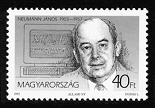
Von Neumann is remembered as a man of warm personality: courteous, charming, and jovial, with an often ribald, sometimes wry, sense of humor that made him excellent company and gained him a reputation as a bon vivant. He was fond of limericks and practical jokes and hosted frequent Princeton parties. He was also well known as a reckless driver, once emerging, so the story goes, from a smashed car with the explanation: "I was proceeding down the road. The trees on the right were passing me in orderly fashion at 60 MPH. Suddenly, one of them stepped out in my path. Boom!"
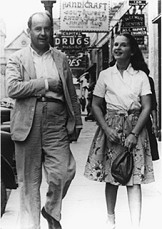
In a 1957 Life magazine article, "The Passing of a Great Mind," Clay Blair, Jr. wrote: "His death, like his life's work, passed almost unnoticed by the public. But scientists throughout the free world regarded it as a tragic loss. They knew that von Neumann's brilliant mind had not only advanced his own special field, pure mathematics, but had also helped put the West in an immeasurably stronger position in the nuclear arms race." The article concluded: "It was characteristic of the impatient, witty and incalculably brilliant John von Neumann that although he went on working for others until he could do no more, his own treatise on the workings of the brain--the work he thought would be his crowning achievement in his own name--was left unfinished.
Early in 1955, von Neumann had been invited by Yale University to give a series of lectures during the spring term of 1956. Because of his illness, the lectures had to be postponed, but he worked to finish them. Although he died before he was able to deliver the Silliman Memorial Lectures, these form the basis of his book, The Computer and the Brain, which presents his views on the analogies between computing machines and the human brain, and was published posthumously by Yale University Press in 1958. In 1966, his Theory of Self-Reproducing Automata was published, reconstructed from his manuscripts and notes by his Electronic Computer Project colleague, Arthur Burks.
In a 1955 article for Fortune magazine, von Neumann posed the question "Can We Survive Technology?" It is clear that von Neumann regarded technology and science as neutral; either could be used for good or for ill. "The problems of the future of humanity," he wrote, "can not be resolved by a single prescription, but only in reliance on day-to-day opportunistic measures, and reliance on the human qualities required: patience, flexibility, intelligence."