
Mission & History
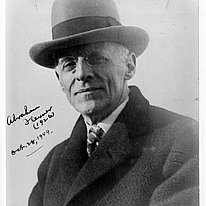
The Institute is pledged to assemble a group of scientists and scholars who with their pupils and assistants may devote themselves to the task of pushing beyond the present limits of human knowledge and to training those who may "carry on" in this sense.
––Mission statement of the Institute for Advanced Study by founding Director Abraham Flexner, Organization Meeting, October 10, 1930
The Institute for Advanced Study is one of the world’s leading centers for curiosity-driven basic research. Since 1930, it has served as a model for protecting and promoting independent inquiry, prompting the establishment of similar institutes around the world, and underscoring the importance of academic freedom worldwide. Current philanthropic support and a reliable stream of endowment-generated revenue allow its permanent Faculty and visiting researchers (known as Members) to freely determine the course of their study.
The Institute’s mission and culture have produced an exceptional record of achievement. Among its present and past Faculty and Members are 35 Nobel Laureates, 44 of the 62 Fields Medalists, and 23 of the 26 Abel Prize Laureates, as well as many MacArthur Fellows and Wolf Prize winners. Past Faculty have included Albert Einstein, one of its first Professors who remained at the Institute until his death in 1955, and distinguished scientists and scholars such as Kurt Gödel, J. Robert Oppenheimer, Erwin Panofsky, Hetty Goldman, Homer A. Thompson, John von Neumann, George Kennan, Hermann Weyl, and Clifford Geertz.


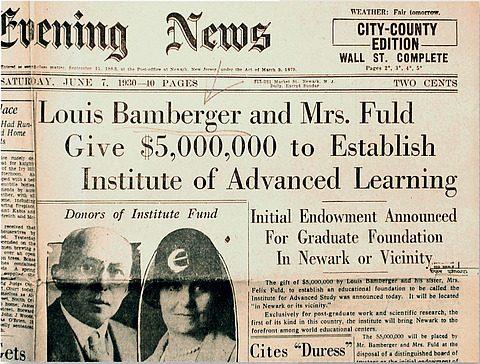
On May 20, 1930, a certificate of incorporation for the “Institute for Advanced Study—Louis Bamberger and Mrs. Felix Fuld Foundation” was filed with the State of New Jersey. Brother-and-sister philanthropists Louis and Caroline Bamberger provided the founding $5 million gift to establish an institution dedicated to the vision of education reformer Abraham Flexner, the Institute’s founding Director:
The Institute should be small and plastic (that is flexible); it should be a haven where scholars and scientists could regard the world and its phenomena as their laboratory, without being carried off in the maelstrom of the immediate; it should be simple, comfortable, quiet without being monastic or remote; it should be afraid of no issue; yet it should be under no pressure from any side which might tend to force its scholars to be prejudiced either for or against any particular solution of the problems under study; and it should provide the facilities, the tranquility, and the time requisite to fundamental inquiry into the unknown. Its scholars should enjoy complete intellectual liberty and be absolutely free from administrative responsibilities or concerns.
In the autumn of 1932, Flexner announced the creation of the Institute’s first school, the School of Mathematics, and its first Faculty appointments, Oswald Veblen and Albert Einstein. On October 11, 1932, when the New York Times announced the appointment of Einstein to the embryonic Institute, it reported that the founders’ intention was to establish a “scholar’s paradise."
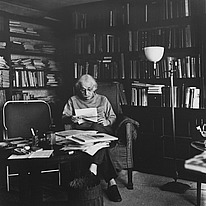
The Institute was founded on two principles: 1) those individuals who work at the Institute should be selected on the basis of their abilities alone and with no regard to race, religion, or gender; 2) the Institute should enable the curiosity-driven pursuit of knowledge with no view to its immediate utility or the expectation of meeting predetermined goals.
In his essay “The Usefulness of Useless Knowledge,” published in Harper’s Magazine in October 1939, Flexner presented the case for self-directed “theoretic” or seemingly useless research, citing, among other examples, the abstract mathematics of non-Euclidean geometry without which Einstein’s theory of relativity would have been impossible. Observing that most of the great discoveries beneficial to humanity were made by men and women “driven not by the desire to be useful but merely the desire to satisfy their curiosity,” he argued that “curiosity, which may or may not eventuate in something useful, is probably the outstanding characteristic of modern thinking. It is not new. It goes back to Galileo, Bacon, and to Sir Isaac Newton, and it must be absolutely unhampered.”
Founded against the backdrop of the rise of Fascism, the Institute became a lifeline in the migration of European scholars to the United States. After Adolf Hitler became Chancellor in January 1933, Hermann Weyl, the mathematician who had succeeded David Hilbert to the world’s most prestigious chair in mathematics at the University of Göttingen, crossed the Atlantic to join the Institute. That same year, Flexner recruited John von Neumann, a young but already renowned mathematician who had fled Europe and was then a visiting professor at Princeton University. By the start of the academic year 1933–34, the Institute had a Faculty of five leading mathematicians and theoretical physicists: James Alexander, Einstein, von Neumann, Veblen, and Weyl, as well as over twenty visitors. In 1934 and 1935, respectively, this group was joined by Paul Dirac and Wolfgang Pauli. Among this first group of Members were two women: algebraist Emmy Noether and topologist Anna Stafford. Women students were not accepted at other leading graduate schools at the time.
By the mid-1930s, the Institute had established scholars in three Schools—Mathematics, Economics and Politics, and Humanistic Studies. The Institute included, in the words of a former IAS Director, the study of the cosmos of culture as well as the study of the cosmos of nature.

Abraham Flexner, “The Usefulness of Useless Knowledge,” Harper’s, 1939
The Institute exists today largely as Flexner conceived it: an institution that crosses disciplinary boundaries; enables scholars and scientists to be driven by their own intellectual curiosity; attracts the ablest researchers from around the world; and remains relatively small so that it retains a sense of community.
Research at IAS has provided foundations for progress in knowledge and applications across the sciences and humanities, including:
the development of one of the first stored-program computers, whose structure (von Neumann architecture) formed the mathematical basis of computer software and influenced the development of modern computing;
the foundations of game theory and much of the basis of modern theoretical meteorology;
pioneering theories in the natural sciences, from string theory and astrophysics to systems biology, and their increasing interactions with mathematics;
wide influence on the fields of global development, international relations, historical practice, and morality and ethics; and
key texts in a range of historical disciplines, including essential contributions to the establishment of art history as a discipline in the United States.
Current research involves new ideas about space and time; the origins and long-term fate of the universe; reconstructing history using novel sources such as ancient DNA; establishing the origins of modern democracy and human rights; and developing an anthropology of morality.
While the Institute has remained small, its influence has been wide, through the work of its Faculty and Members, the impact that time at the Institute has on the careers of Members and the institutions where they base their careers, and the many institutions around the world that have been modeled on or inspired by the Institute.

A Living History
Continue to explore the rich history of the Institute for Advanced Study through firsthand accounts from its Faculty and visiting researchers.